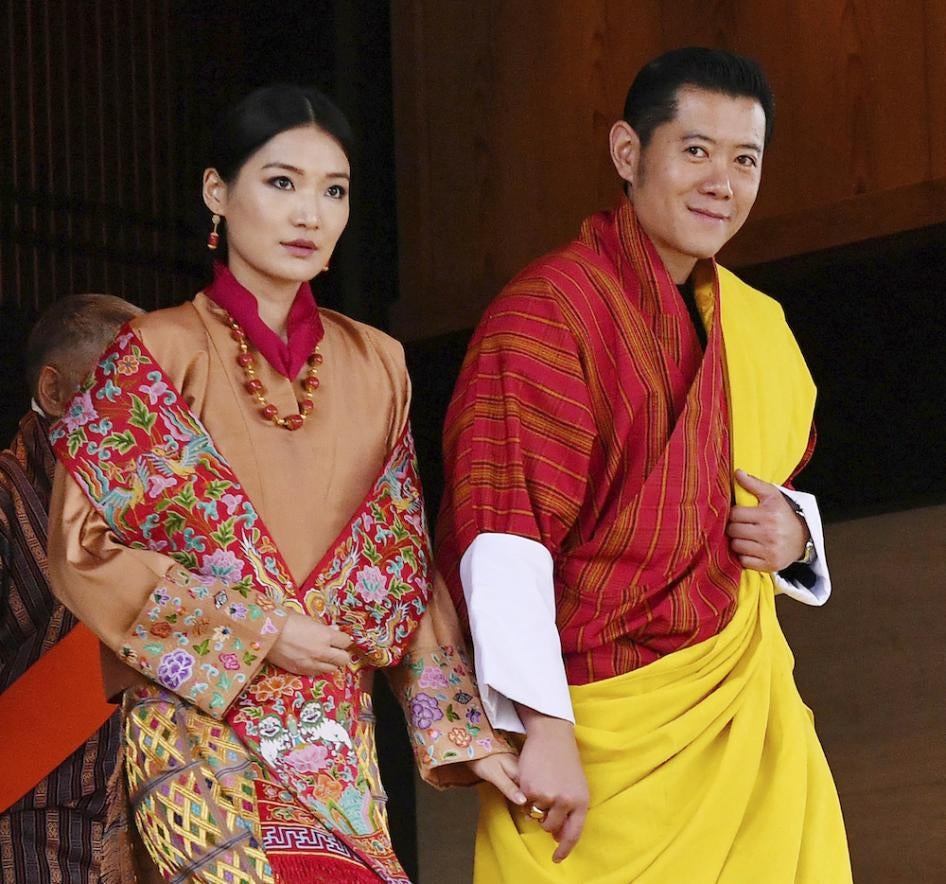
DARJEELING: Bhutanese want mukti from Gorkha Janmukti Morcha dress dikat
Posted by barunroy on November 17, 2009
FROM HINDUSTAN TIMES
BY AMITAVA BANERJEE
A dress code diktat by Gorkha Janmukti Morcha asking all students to wear traditional dress on three days a week has the Bhutnese government worried about its students in Darjeeling. The Bhutanese students have been asked to wear traditional Bhutanese apparel.
A Bhutanese government delegation has sought exemption for its students from the dress code diktat, as it feared that they would become soft targets for anti-Bhutan ultras. It was ironically, a similar decree by Bhutan king that had forced thousands of Bhutanese students of Nepal origin to flee Bhutan and seek refuge in refugee camps in Nepal.
The Gorkha Jamukti Vidhyarthi Morcha, the student’s front of the GJM, has refused to give any concession and said that the code will be strictly enforced. If the Bhutanese students had no objection to following the dress code, why should the Bhutan government and more important, the West Bengal government rush into the matter, it questioned and alleged that it was a conspiracy by the West Benal government to propel a minor issue into an international one.
“No expemption will be allowed,” the Morcha declared.
In Darjeeling there are 400 Bhutanese students and 450 in Kalimpong studying in colleges like St. Joseph’s College, Darjeeling Government College, Ghoom Degree College and Salesian College Sonada, among others.
Now, the Bhutanese govenment plans to take up the issue with the external affairs ministry.
A delegation of Bhutan government officials called on the Inpsector General of North Bengal Kundan Lal Tamta, who assured the delegation of protection to Bhutanese students if they wanted to ignore the dress code. “The Bhutanese students feel threatened and apprehensive. As they are foreign nationals they have nothing to do with the issue. On top of that the Bhutanese Government feels that they coould be the targets of ultra outfits as they would stand out in their Bhutanese traditional outfit” Tamta said after the meeting held on November 12 in Darjeeling.
Keshav Raj Pokhrel, General Secretary of the GJVM questioned “When the Bhutanese students have no problem in sporting their traditional clothes, why is the IG interfering? He has stated that he would be providing police protection to the Bhutanese students. This is a conspiracy hatched by the State Government to disrupt the peace and tranquility in the Hills before the next round of tripartite talks slated for December 21 in Darjeeling. We will foil all such attempts.”
Incidentally after the end of a month-long “cultural revolution” of the GJM (in which Hill residents were asked to wear traditional clothes) on October 25, GJM Supremo Bimal Gurung had asked all college students to sport their traditional attires three days a week (Monday, Tuesday and Wednesday) continuously. Accordingly students sport traditional clothes to college including students from Bhutan wearing traditional Bhutanese clothes.
“From tomorrow checks will be severe. The Youth wing of the GJM has also assured us of all cooperation. If the State Government can use their police force to protect the Bhutanese students then we will ensure that they wear it. Practically there is no existence of police in the Darjeeling Hills, we will further ensure that the police disappear theoretically also” warned Pokhrel.
Janchuk Dorji, President of the Bhutanese Students Association of Darjeeling talking to HT confirmed of the meeting held in Darjeeling. “Officials from the Indian and Bhutanese side along with Bhutanese students were present in the meeting held at the Darjeeling Circuit House. In the meeting we were asked not to wear our traditional clothes.”
KL Tamta, IG, North Bengal stated that the Director Law and Order of Bhutan led a Bhutanese Government delegation that had called upon the State Government asking for help. uld become soft targets to anti-Bhutanese ultra
On January 16, 1989, the King of Bhutan issued a decree requiring all citizens to observe Driglam Namzah – a traditional code of conduct and dress based on the Drukpa culture of the ruling autocracy. Institutes were opened up to teach Driglam Namzah. These institutes taught people how to eat, dress, and speak. “Gho” and “Kira” (Drukpa dresses) were enforced along with Dzongkha language. Soon there was a ban on Nepali language.
The alleged ethnic cleansing gave way to an exodus in 1990 as thousands of Southern Bhutanese fled the country to seek refuge in neighboring India. Now nearly a lakh Bhutanese refugees of Nepali origin languish in refugee camps in Nepal. Many anti-Bhutan ultra outfits are believed to be operational.
http://beacononline.wordpress.com/2009/11/17/darjeeling-bhutanese-want-mukti-from-gorkha-janmukti-morcha-dress-dikat/
Wednesday, November 18, 2009
Courage Beyond their Years
For “lost” refugee children, ‘education is their mother and father.’
By Dori Cahn
Photo credit: Thai Children’s Trust.
The journey a refugee takes is, at best, challenging: leaving home and loved ones behind, surviving war or political turmoil, living in a refugee camp for an uncertain period of time, and eventually ending up in an unfamiliar place and having to learn an entirely new language and culture.
It must be impossibly hard when you are a child with no family.
Every year, unaccompanied refugee children come to the U.S. to find a new life and a new family. They have either lost their parents to war, politics, or disease, or have been separated from their families. Some, like the “lost boys” of Sudan, have endured long treks to safety. They have all spent time in refugee camps, many not knowing if their parents are alive and with little means to communicate back home.
Surprisingly, perhaps, many of these kids are secure and successful in their new lives.
“The kids we work with are incredibly resilient and gracious. They want to be part of a family and they want to go to school,” says Molly Daggett, program manager for Refugee and Immigrant Children’s program of Lutheran Community Services Northwest, the Seattle area agency that resettles unaccompanied refugee minors with foster families. “Our kids overwhelmingly graduate from high school, and many go on to college. They do incredibly well.”
Relief workers first became aware of child refugees traveling on their own in the late 1970’s, when waves of displaced Vietnamese flooded into refugee camps in Southeast Asia. The United Nations created a special designation for these minors, resettling them with foster families in third countries.
LCSNW began placing Vietnamese and later Cambodian and Laotian children, finding foster families and training them for the challenges of caring for refugee youth. Seattle and Tacoma have since been home to hundreds of refugee children, coming from countries as varied as Haiti, Cuba, Rwanda, Somalia and Afghanistan.
Most are older teens when they arrive, but they usually had strong family connection and upbringing before they were displaced.
“For being refugees, most of these kids are different,” says Christy Hedman, who fostered 2 boys from Sudan. “They became refugees at 5, or 6, or 7. They had been raised by their mothers, and despite the horrors they went through, had a strong early raising and good relationships.”
Hedman’s boys were 17 when they arrived in 2000, along with 28 other minors from Sudan. They had both left their homes when they were 5 or 6, and had spent the intervening years in refugee camps in Ethiopia and Kenya. When they arrived in Seattle, “they were really skinny,” Hedman says. “In the camps they were only getting about 1,000 calories a day.”
The years they spent with her were like “18 years of a childhood compressed into three.” She had to show them how to climb stairs and to turn on a light switch. One of them thought that, when they were driving, the car was signaling to her which way to turn. They were curious about everything: “They were like 3 or 4 year-olds, when you can’t keep them out from under your feet,” she said.
But when it came to school they were serious and committed. They adapted quickly because they already spoke English, having learned in the Kenyan refugee camp. Hedman thinks the years spent in camps made them hungry for a chance at a good education.
“They hit the ground running when they got here,” she says. “They knew it was a great opportunity and wanted to take advantage of it.”
“The Sudanese kids had an expression,” says Molly Daggett, “‘Education is my mother and father.’ They had lost their parents, so education was going to be what would guide them.”
In the past year, LCS has resettled a number of Burmese children who were living as refugees in Malaysia. Daggett anticipates more Burmese arrivals, and possibly Bhutanese refugees from Nepal. But she stresses that they never know where the next arrivals may come from.
“They are survivors, they are the kids who had the resiliency, and the ability to engage adults and get the help,” says Daggett. “It is quite amazing. I still marvel at it.”
For more information about the program, or about becoming a foster family, visit www.refugeechildren.net.
For “lost” refugee children, ‘education is their mother and father.’
By Dori Cahn
Photo credit: Thai Children’s Trust.
The journey a refugee takes is, at best, challenging: leaving home and loved ones behind, surviving war or political turmoil, living in a refugee camp for an uncertain period of time, and eventually ending up in an unfamiliar place and having to learn an entirely new language and culture.
It must be impossibly hard when you are a child with no family.
Every year, unaccompanied refugee children come to the U.S. to find a new life and a new family. They have either lost their parents to war, politics, or disease, or have been separated from their families. Some, like the “lost boys” of Sudan, have endured long treks to safety. They have all spent time in refugee camps, many not knowing if their parents are alive and with little means to communicate back home.
Surprisingly, perhaps, many of these kids are secure and successful in their new lives.
“The kids we work with are incredibly resilient and gracious. They want to be part of a family and they want to go to school,” says Molly Daggett, program manager for Refugee and Immigrant Children’s program of Lutheran Community Services Northwest, the Seattle area agency that resettles unaccompanied refugee minors with foster families. “Our kids overwhelmingly graduate from high school, and many go on to college. They do incredibly well.”
Relief workers first became aware of child refugees traveling on their own in the late 1970’s, when waves of displaced Vietnamese flooded into refugee camps in Southeast Asia. The United Nations created a special designation for these minors, resettling them with foster families in third countries.
LCSNW began placing Vietnamese and later Cambodian and Laotian children, finding foster families and training them for the challenges of caring for refugee youth. Seattle and Tacoma have since been home to hundreds of refugee children, coming from countries as varied as Haiti, Cuba, Rwanda, Somalia and Afghanistan.
Most are older teens when they arrive, but they usually had strong family connection and upbringing before they were displaced.
“For being refugees, most of these kids are different,” says Christy Hedman, who fostered 2 boys from Sudan. “They became refugees at 5, or 6, or 7. They had been raised by their mothers, and despite the horrors they went through, had a strong early raising and good relationships.”
Hedman’s boys were 17 when they arrived in 2000, along with 28 other minors from Sudan. They had both left their homes when they were 5 or 6, and had spent the intervening years in refugee camps in Ethiopia and Kenya. When they arrived in Seattle, “they were really skinny,” Hedman says. “In the camps they were only getting about 1,000 calories a day.”
The years they spent with her were like “18 years of a childhood compressed into three.” She had to show them how to climb stairs and to turn on a light switch. One of them thought that, when they were driving, the car was signaling to her which way to turn. They were curious about everything: “They were like 3 or 4 year-olds, when you can’t keep them out from under your feet,” she said.
But when it came to school they were serious and committed. They adapted quickly because they already spoke English, having learned in the Kenyan refugee camp. Hedman thinks the years spent in camps made them hungry for a chance at a good education.
“They hit the ground running when they got here,” she says. “They knew it was a great opportunity and wanted to take advantage of it.”
“The Sudanese kids had an expression,” says Molly Daggett, “‘Education is my mother and father.’ They had lost their parents, so education was going to be what would guide them.”
In the past year, LCS has resettled a number of Burmese children who were living as refugees in Malaysia. Daggett anticipates more Burmese arrivals, and possibly Bhutanese refugees from Nepal. But she stresses that they never know where the next arrivals may come from.
“They are survivors, they are the kids who had the resiliency, and the ability to engage adults and get the help,” says Daggett. “It is quite amazing. I still marvel at it.”
For more information about the program, or about becoming a foster family, visit www.refugeechildren.net.
Labels:
Children
Bhutan: Shangri-La or Ethnic Cleanser?
Tuesday, November 17th, 2009 @ 22:28 UTC
by Sonam Ongmo
A few years ago when the Fourth King of Bhutan voluntarily stepped down to make way for democracy, there was a spate of articles in the media about Bhutan. Almost all these articles – with a few exceptions – could be grouped into two camps: one glorified Bhutan as the last Shangri-la, the others claimed that it practiced ethnic cleansing.
The National Geographic aired a documentary which named Bhutan, the tiny Buddhist kingdom as the world's last Shangri-La. It celebrated its mountains, glacial walls, alpine highlands and misty forests and mentioned “Bhutan is a Living Eden where respect for life, in all its many incarnations, endures like the land itself”.
Landscape of Bhutan. Image by Flickr user Jmhullot, used under a creative commons license
Swaminathan S. Anklesaria Aiyar at Real clear World said:
Bhutan has done many things to deserve its Shangri-La reputation. Its forest cover is a very high 72%, and it has pledged to keep this above 60 % for eternity.
Meanwhile, Nanda Gautam at Ex Ponto countered:
A new trend in the sphere of human rights violations is flourishing! In contrast to Bhutan’s development philosophy called ‘Gross National Happiness,’ which many delegations visiting Bhutan are proclaiming a ‘good lesson’, Bhutan also offers a bad lesson: strategic violence in the form of ethnic cleansing, a lesson the world powers will find difficult to deal with. The ordeal of Tel Nath Rizal reflects how the state’s violation of one person’s rights spilled over to affect an entire minority. The minority population has already been reduced dramatically.
Most of these writers, if not all, were not Bhutanese. So how is it that they came to view this small country – the size of Switzerland and a population of 600,000 – in such extremes?
The first group, the admirers, usually came from the west where capitalism has led to a way of life that may have equipped them with material contents, but left many with a gaping spiritual void. They are people seeking for things they do not find in their own cultures; yet find it elsewhere. Often in places like Bhutan – largely mysterious, exotic and peaceful. So when they find it, they tend to see only the things they want to see and find only the things they want to find.
But this also applies to the second camp, the ones who hate Bhutan. They have little or no understanding of the country’s geo-political situation. They don’t understand the history or the complex nature of the refugee problem; and they are either sympathizing with the cause, or they just need a cause.
For the first camp, the search for Shangri-la didn’t just happen; it has been ongoing since 1933 when James Hilton depicted a Shangri-la in his novel, Lost Horizon based on an article by Joseph Rock about his travels to the Tibetan borderlands. But more often than not, it is Hilton’s version that they are after thus refusing to see Bhutan as a country like any other – inhabited by human beings, with its share of problems.
Bhutan is far from being the Utopia despite its largely tranquil history. As a poor country Bhutan has its share of social problems and challenges and the biggest blight to its good reputation so far has been the issue of the refugees.
A nation-wide census in the 80’s found thousands of illegal settlers along the country’s southern borders. Most of these people were Nepalese people from Nepal and India who came to Bhutan seeking economic opportunities and utilize the large tracts of free agricultural land along porous borders. Free health and educational facilities were also an added attraction. At around this time, some Lhotsampas (Ethnic Nepali-speaking Bhutanese) who were educated by the Bhutanese government in overseas universities like Harvard and Cambridge returned to Bhutan nursing their own political ambitions.
Bhutanese refugees in Nepal. Image by Sudeshna Sarkar, ISN Security Watch
The problem came to a head when the Bhutanese government demanded all illegal settlers, leave the country. This decision was opposed by the ambitious Lhotsampa leaders who sympathized with the settlers and so mobilized protests against the Bhutanese government demanding democracy and overthrow of the monarch. The environment to nurse their political ambitions was extremely favorable. They galvanized the southern people’s discontent with violent protests in which they decapitated heads of two Bhutanese and planted them at a government office. The Bhutanese government who had never experienced anything like this cracked down and arrested many of the leaders while some escaped to Nepal.
What resulted was a situation where both sides accused the other of what unfolded. Lhotsampas claim that anybody who was Nepali-speaking was forced out of the country. As the Bhutanese Community of South Australia blog mentions:
From 1988, the human rights situation aggravated, when Royal Government enacted discriminatory policies to depopulate the Lhotshampas - Southern Bhutanese of Nepalese origin, predominantly Hindus.
The Royal government treats Lhotsampas as second class citizens. They are persecuted, discriminated and denied the most basics like access to education and health facilities. They are deprived of their cultural rights and are forced to adopt the cultural tradition, costume and language of the ruling elite. In the late eighties, the Royal Government adopted retroactive citizenship legislation and started to disenfranchise and depopulate the Lhotshampas. Tens and thousands of them were forcibly evicted, who ended up in the United Nations established refugees camps in Nepal. [..]
Having failed to see the possibility of repatriation, a vast number of Bhutanese refugees have accepted the offer given by Australia, Canada, Denmark, Netherland, New Zealand, Norway and United States for third country resettlement.
The Bhutanese government claimed that while some were asked to leave, many citizens left voluntarily under threats from their own leaders. Bhutan’s first democratically elected Prime Minister Jigme Y. Thinley wrote at Bhutannica:
The situation in the south is not a simple problem. Its causes are complex and perplexing as the resultant human drama that is unfolding before us. Just who is the victim or villain is a valid question. The answer must be sought with a deeper understanding of the problem. [..]
Among the villagers in' the south, every day is a nightmare. But their voice is not heard by the media, and their human rights appear not to be of any importance. Explanations by the Government are dismissed as propaganda and plain untruths. Even concrete evidence is seen as fabrications.
The Bhutanese feel that they have been betrayed by a people they had welcomed, in whom they had placed their trust and with whom they were willing to share a common destiny. But the general attitude of the Bhutanese toward their southern compatriots do not indicate any rancour.
The adoption of human rights is a convenient banner that the dissidents and the Nepalese supporters have raised before the international community. But their greater aim is to generate international sympathy for the dissident cause, which is to grab political power.
The story got complicated as the refugees arrived in Nepal. UNHCR set up camps for the Bhutanse refugees in which free food and stipend was given and in a few years the numbers rose from 5000 (1991) to 100,000. The handouts attracted many people other than Bhutanese to those camps as more than half of Nepal's population live on less than a dollar a day.
Ethnic cleansing is a very serious charge. People who make that accusation about Bhutan should visit the country and see that thousands of Nepali-speaking people still live and work there; that even before the crisis the Fourth King encouraged integration of the ethnic groups through inter marriage with special cash incentives. Many even hold very senior positions in the government.
So what is Bhutan? A ‘Shangri-La' or ‘ethnic cleanser'? Neither, is the answer. And it would be nice if people really stopped imposing their dreams of an Eden, or their disillusionment of failed political causes and ambitions, on this little Country.
http://elitestv.com/pub/2009/11/bhutan-shangri-la-or-ethnic-cleanser
Tuesday, November 17th, 2009 @ 22:28 UTC
by Sonam Ongmo
A few years ago when the Fourth King of Bhutan voluntarily stepped down to make way for democracy, there was a spate of articles in the media about Bhutan. Almost all these articles – with a few exceptions – could be grouped into two camps: one glorified Bhutan as the last Shangri-la, the others claimed that it practiced ethnic cleansing.
The National Geographic aired a documentary which named Bhutan, the tiny Buddhist kingdom as the world's last Shangri-La. It celebrated its mountains, glacial walls, alpine highlands and misty forests and mentioned “Bhutan is a Living Eden where respect for life, in all its many incarnations, endures like the land itself”.
Landscape of Bhutan. Image by Flickr user Jmhullot, used under a creative commons license
Swaminathan S. Anklesaria Aiyar at Real clear World said:
Bhutan has done many things to deserve its Shangri-La reputation. Its forest cover is a very high 72%, and it has pledged to keep this above 60 % for eternity.
Meanwhile, Nanda Gautam at Ex Ponto countered:
A new trend in the sphere of human rights violations is flourishing! In contrast to Bhutan’s development philosophy called ‘Gross National Happiness,’ which many delegations visiting Bhutan are proclaiming a ‘good lesson’, Bhutan also offers a bad lesson: strategic violence in the form of ethnic cleansing, a lesson the world powers will find difficult to deal with. The ordeal of Tel Nath Rizal reflects how the state’s violation of one person’s rights spilled over to affect an entire minority. The minority population has already been reduced dramatically.
Most of these writers, if not all, were not Bhutanese. So how is it that they came to view this small country – the size of Switzerland and a population of 600,000 – in such extremes?
The first group, the admirers, usually came from the west where capitalism has led to a way of life that may have equipped them with material contents, but left many with a gaping spiritual void. They are people seeking for things they do not find in their own cultures; yet find it elsewhere. Often in places like Bhutan – largely mysterious, exotic and peaceful. So when they find it, they tend to see only the things they want to see and find only the things they want to find.
But this also applies to the second camp, the ones who hate Bhutan. They have little or no understanding of the country’s geo-political situation. They don’t understand the history or the complex nature of the refugee problem; and they are either sympathizing with the cause, or they just need a cause.
For the first camp, the search for Shangri-la didn’t just happen; it has been ongoing since 1933 when James Hilton depicted a Shangri-la in his novel, Lost Horizon based on an article by Joseph Rock about his travels to the Tibetan borderlands. But more often than not, it is Hilton’s version that they are after thus refusing to see Bhutan as a country like any other – inhabited by human beings, with its share of problems.
Bhutan is far from being the Utopia despite its largely tranquil history. As a poor country Bhutan has its share of social problems and challenges and the biggest blight to its good reputation so far has been the issue of the refugees.
A nation-wide census in the 80’s found thousands of illegal settlers along the country’s southern borders. Most of these people were Nepalese people from Nepal and India who came to Bhutan seeking economic opportunities and utilize the large tracts of free agricultural land along porous borders. Free health and educational facilities were also an added attraction. At around this time, some Lhotsampas (Ethnic Nepali-speaking Bhutanese) who were educated by the Bhutanese government in overseas universities like Harvard and Cambridge returned to Bhutan nursing their own political ambitions.
Bhutanese refugees in Nepal. Image by Sudeshna Sarkar, ISN Security Watch
The problem came to a head when the Bhutanese government demanded all illegal settlers, leave the country. This decision was opposed by the ambitious Lhotsampa leaders who sympathized with the settlers and so mobilized protests against the Bhutanese government demanding democracy and overthrow of the monarch. The environment to nurse their political ambitions was extremely favorable. They galvanized the southern people’s discontent with violent protests in which they decapitated heads of two Bhutanese and planted them at a government office. The Bhutanese government who had never experienced anything like this cracked down and arrested many of the leaders while some escaped to Nepal.
What resulted was a situation where both sides accused the other of what unfolded. Lhotsampas claim that anybody who was Nepali-speaking was forced out of the country. As the Bhutanese Community of South Australia blog mentions:
From 1988, the human rights situation aggravated, when Royal Government enacted discriminatory policies to depopulate the Lhotshampas - Southern Bhutanese of Nepalese origin, predominantly Hindus.
The Royal government treats Lhotsampas as second class citizens. They are persecuted, discriminated and denied the most basics like access to education and health facilities. They are deprived of their cultural rights and are forced to adopt the cultural tradition, costume and language of the ruling elite. In the late eighties, the Royal Government adopted retroactive citizenship legislation and started to disenfranchise and depopulate the Lhotshampas. Tens and thousands of them were forcibly evicted, who ended up in the United Nations established refugees camps in Nepal. [..]
Having failed to see the possibility of repatriation, a vast number of Bhutanese refugees have accepted the offer given by Australia, Canada, Denmark, Netherland, New Zealand, Norway and United States for third country resettlement.
The Bhutanese government claimed that while some were asked to leave, many citizens left voluntarily under threats from their own leaders. Bhutan’s first democratically elected Prime Minister Jigme Y. Thinley wrote at Bhutannica:
The situation in the south is not a simple problem. Its causes are complex and perplexing as the resultant human drama that is unfolding before us. Just who is the victim or villain is a valid question. The answer must be sought with a deeper understanding of the problem. [..]
Among the villagers in' the south, every day is a nightmare. But their voice is not heard by the media, and their human rights appear not to be of any importance. Explanations by the Government are dismissed as propaganda and plain untruths. Even concrete evidence is seen as fabrications.
The Bhutanese feel that they have been betrayed by a people they had welcomed, in whom they had placed their trust and with whom they were willing to share a common destiny. But the general attitude of the Bhutanese toward their southern compatriots do not indicate any rancour.
The adoption of human rights is a convenient banner that the dissidents and the Nepalese supporters have raised before the international community. But their greater aim is to generate international sympathy for the dissident cause, which is to grab political power.
The story got complicated as the refugees arrived in Nepal. UNHCR set up camps for the Bhutanse refugees in which free food and stipend was given and in a few years the numbers rose from 5000 (1991) to 100,000. The handouts attracted many people other than Bhutanese to those camps as more than half of Nepal's population live on less than a dollar a day.
Ethnic cleansing is a very serious charge. People who make that accusation about Bhutan should visit the country and see that thousands of Nepali-speaking people still live and work there; that even before the crisis the Fourth King encouraged integration of the ethnic groups through inter marriage with special cash incentives. Many even hold very senior positions in the government.
So what is Bhutan? A ‘Shangri-La' or ‘ethnic cleanser'? Neither, is the answer. And it would be nice if people really stopped imposing their dreams of an Eden, or their disillusionment of failed political causes and ambitions, on this little Country.
http://elitestv.com/pub/2009/11/bhutan-shangri-la-or-ethnic-cleanser
Tuesday, November 17, 2009
Let's talk turkey
Let's talk turkey
By DOROTHY DUFFY
Monday, November 16, 2009
From over the river to Grandma's house to over the hill as Grandma we've had so many Thanksgivings with a lot of stuff in between.
Early Thanksgivings were a challenge. Just where to sit everyone, often in houses without dining rooms, meant some sat on the arms of chairs, boxes with pillows or babies on laps. Our mothers cooked "from scratch" on wood stoves. My mother would chop a huge Hubbard squash into workable pieces on the block outdoors, cook it, squash and season it, yet once en route to the table, it slipped from the fingers to the floor. It was hardly missed with all the other root vegetables but love's labor lost!
My dad's job was to amuse us by having Headless Tom turkey trot on the white enameled tabletop. Diddle, diddle, diddle, . . .
I made my first Thanksgiving dinner at age 12 when my mother was bedridden. She instructed me from the pillows to the pot. I don't remember how I did — guess the others were thankful they didn't have to do it.
My second attempt at turkey was in the 50s when I had my first apartment in Long Beach, Long Island — affordable but so desolate and barren in the winter — me and the gulls. I invited my sister, aunt and uncle to dinner. My face was flushed from fuss and flurry as I remembered my mother's to be. The pride soon drained when my uncle, the carver, pulled out a sack of cooked innards from Tom's cavity.
Just as my marriage introduced more ethnic cultures in the family mix, so did the traditions. My siblings married French-Canadians adding toutierre to the menu. My German mother-in-law's rutabaga with potatoes and creamed onions were included with my family's Harvard beets, mincemeat pie and Grammie Lowell's Indian Pudding. Later when the three Italian in-laws joined the family, antipasto and lasagna might appear.
The first time the big Duffy family sat at our table laden and labored over with luscious food, cornucopias, candles and linens, the men asked the ladies to sit back so they could still watch some overgrown kid kick a pigskin about on the television. In a twit, I shut off the TV, slammed the doors shut and with hands planted firmly on each hip, addressed the old sports with, "I spent all day cooking this meal! You better damned well spend a few minutes enjoying it!"
This actually claimed my role in the family. My mother-in-law was beaming. Thanksgiving dinners take 18 hours to prepare. They are consumed in 12 minutes. Half-times take 12 minutes. This is not coincidence. - Erma Bombeck.
When I was expecting my second child, I couldn't stand the smell of turkey. I bundled the bird up and stuck it in freezer. Yet, even much later and thawed, it still nauseated me, so I sent it flying and stuck to my doughnuts.
Over the years, a French exchange student was our guest with "Tres bien, Madame" and a Fresh Air Fund kid from the ghetto who announced, "I don't like white meat." Now he's a cook on Riker's Island. Recently, I have dined with Turkish and Bhutanese refugees who didn't have a clue what they were eating but were truly thankful of the moment.
Thanksgivings stay traditional for most, invite change for others or arouse emotions for many. The turkey itself has changed. Some now are marinated, boneless, smoked, deep-fried. The range-grown lean and lanky turkeys are now like our young ladies, plump and full-breasted — even the Toms. Oh, oh, another quote: I love Thanksgiving turkey. It's the only time in Los Angeles that you see natural breasts. - Arnold Schwarzenegger.
But the saddest for some may be to dine alone. While you can eat what you want, where you want, when you want and with or without half-time frolics and really pampering the palette, it isn't the same without the family hassle.
Bon appétit, mon amis!
By DOROTHY DUFFY
Monday, November 16, 2009
From over the river to Grandma's house to over the hill as Grandma we've had so many Thanksgivings with a lot of stuff in between.
Early Thanksgivings were a challenge. Just where to sit everyone, often in houses without dining rooms, meant some sat on the arms of chairs, boxes with pillows or babies on laps. Our mothers cooked "from scratch" on wood stoves. My mother would chop a huge Hubbard squash into workable pieces on the block outdoors, cook it, squash and season it, yet once en route to the table, it slipped from the fingers to the floor. It was hardly missed with all the other root vegetables but love's labor lost!
My dad's job was to amuse us by having Headless Tom turkey trot on the white enameled tabletop. Diddle, diddle, diddle, . . .
I made my first Thanksgiving dinner at age 12 when my mother was bedridden. She instructed me from the pillows to the pot. I don't remember how I did — guess the others were thankful they didn't have to do it.
My second attempt at turkey was in the 50s when I had my first apartment in Long Beach, Long Island — affordable but so desolate and barren in the winter — me and the gulls. I invited my sister, aunt and uncle to dinner. My face was flushed from fuss and flurry as I remembered my mother's to be. The pride soon drained when my uncle, the carver, pulled out a sack of cooked innards from Tom's cavity.
Just as my marriage introduced more ethnic cultures in the family mix, so did the traditions. My siblings married French-Canadians adding toutierre to the menu. My German mother-in-law's rutabaga with potatoes and creamed onions were included with my family's Harvard beets, mincemeat pie and Grammie Lowell's Indian Pudding. Later when the three Italian in-laws joined the family, antipasto and lasagna might appear.
The first time the big Duffy family sat at our table laden and labored over with luscious food, cornucopias, candles and linens, the men asked the ladies to sit back so they could still watch some overgrown kid kick a pigskin about on the television. In a twit, I shut off the TV, slammed the doors shut and with hands planted firmly on each hip, addressed the old sports with, "I spent all day cooking this meal! You better damned well spend a few minutes enjoying it!"
This actually claimed my role in the family. My mother-in-law was beaming. Thanksgiving dinners take 18 hours to prepare. They are consumed in 12 minutes. Half-times take 12 minutes. This is not coincidence. - Erma Bombeck.
When I was expecting my second child, I couldn't stand the smell of turkey. I bundled the bird up and stuck it in freezer. Yet, even much later and thawed, it still nauseated me, so I sent it flying and stuck to my doughnuts.
Over the years, a French exchange student was our guest with "Tres bien, Madame" and a Fresh Air Fund kid from the ghetto who announced, "I don't like white meat." Now he's a cook on Riker's Island. Recently, I have dined with Turkish and Bhutanese refugees who didn't have a clue what they were eating but were truly thankful of the moment.
Thanksgivings stay traditional for most, invite change for others or arouse emotions for many. The turkey itself has changed. Some now are marinated, boneless, smoked, deep-fried. The range-grown lean and lanky turkeys are now like our young ladies, plump and full-breasted — even the Toms. Oh, oh, another quote: I love Thanksgiving turkey. It's the only time in Los Angeles that you see natural breasts. - Arnold Schwarzenegger.
But the saddest for some may be to dine alone. While you can eat what you want, where you want, when you want and with or without half-time frolics and really pampering the palette, it isn't the same without the family hassle.
Bon appétit, mon amis!
Bhutanese in NH find American Dream elusive
Refugees in NH find American Dream elusive
MICHAEL COUSINEAU
CONCORD
Sunday, Nov. 15, 2009
The American Dream hasn't reached the living rooms of Pema Tamang and Bhakta Dhital. Job rejection letters and public-assistance checks have arrived instead.
"There are no jobs and nothing to do," said Tamang, a Bhutanese refugee who arrived in New Hampshire last December.
The Concord resident worked three months at Walmart before his temporary job ended, and he hasn't received one callback from any of the 150-plus businesses with whom he's left applications. Tamang recently had his electricity turned off briefly after he fell behind on his payments.
"It's not like I don't like to pay for the bill, but I have no money," said the father of two.
"I'm just trying to have a better time and a better life," said Tamang, 27, who attends English classes twice a week. "I hope that this bad time doesn't go like this forever."
Refugees arriving in the United States in the past year have run straight into strong financial headwinds.
In New Hampshire alone, more than 51,000 workers went jobless last month, nearly 23,000 more than a year earlier.
New Hampshire had 561 refugees from nine countries settle here during the fiscal year ending Sept. 30, including 462 from the Asian nation of Bhutan, where thousands fled more than a decade ago and relocated in nearby Nepal resettlement camps. Since the early 1980s, more than 6,500 refugees have made New Hampshire their new home.
Refugees receive a variety of government assistance when they arrive here, including at least four months of rental help, as well as food stamps and medical care.
"Refugees historically would get jobs within three to six months after arrival," said Amy Marchildon, director of new American services for Lutheran Social Services of New England, which settles refugees in the Concord-Laconia area.
"Now, it's probably taking between eight and 12 months. Because there's a higher competition for jobs, the refugees might be at a disadvantage if they don't have the same level of skills," she said.
Public assistance
A half mile from Tamang's apartment, Bhakta Dhital and his wife, Asha, live in another Loudon Road complex. They now rely on city welfare to help pay the rent.
"I'll do any kind of job," said Bhakta Dhital, 28, who arrived here in June. "We want to be independent."
Carol Moore, a Concord psychotherapist who has been helping the Dhital and Tamang families, said she wishes the resettlement groups would do more.
"It drives me nuts," she said.
Marchildon said refugees need to learn to become self-sufficient.
"I think a challenge for resettlement agencies is managing refugees' expectations. Many, but not all, have higher expectations than what the service delivery is," she said. "It's a new system that they have to learn. Refugees have been in situations where other agencies are supporting them and keeping them alive and haven't had to make decisions for them.
"The feeling we should be doing everything for them can be a blow when we're trying to teach them to do things for themselves," Marchildon said.
"With the downturn in the economy, the hope of starting their lives sooner rather than later is exacerbating their feelings of frustration and anger," she said.
Barbara Seebart, the state's refugee coordinator, said the current economic downturn means it's "basically taking longer for refugees to get jobs."
Possible employment
The Dhitals sometimes rely on a Bhutanese friend who lived in their refugee camp. Devi Bhattarai of Concord has a car, a 2000 Nissan, that helps them when searching for work.
Bhattarai and Mr. Dhital believe they have a job lined up for January at a Loudon landscaping business.
"I have to sell my skills," said Dhital, who taught computer science in Nepal.
His wife said she doesn't like being jobless.
"It's makes our body so lazy," she said.
Pema Tamang (left) of Bhutan and his friend Ganga Chimariya have been seeking work to support their families. (THOMAS ROY)
The Dhitals spent 18 years in a refugee camp of 18,000 in Nepal after their families were driven from their Bhutan homeland. They were married in the camp last year.
Sure, their Concord apartment doesn't have cable and they rely on free wireless that fades in and out. But it's a far cry from their Nepal residence, which was made of bamboo and plastic.
Rainy season meant wetness inside and out, Mrs. Dhital said.
"When I was in Nepal, I thought if I get a chance to go to America, I'd make my future bright," Asha Dhital said. "In Nepal, it's very, very hard."
Nepal meant food rations and no driver's license. It also meant no future.
In the United States, they believe in a future, even if it might take longer to brighten. Already, they feel they are ahead in life.
"Compared to Nepal, it's very luxurious here," Mr. Dhital said.
Linked from here: http://www.unionleader.com/article.aspx?headline=Refugees+in+NH+find+American+Dream+elusive&articleId=0967e20d-4a0a-415e-8c3e-f5fb1b68eed4
MICHAEL COUSINEAU
CONCORD
Sunday, Nov. 15, 2009
The American Dream hasn't reached the living rooms of Pema Tamang and Bhakta Dhital. Job rejection letters and public-assistance checks have arrived instead.
"There are no jobs and nothing to do," said Tamang, a Bhutanese refugee who arrived in New Hampshire last December.
The Concord resident worked three months at Walmart before his temporary job ended, and he hasn't received one callback from any of the 150-plus businesses with whom he's left applications. Tamang recently had his electricity turned off briefly after he fell behind on his payments.
"It's not like I don't like to pay for the bill, but I have no money," said the father of two.
"I'm just trying to have a better time and a better life," said Tamang, 27, who attends English classes twice a week. "I hope that this bad time doesn't go like this forever."
Refugees arriving in the United States in the past year have run straight into strong financial headwinds.
In New Hampshire alone, more than 51,000 workers went jobless last month, nearly 23,000 more than a year earlier.
New Hampshire had 561 refugees from nine countries settle here during the fiscal year ending Sept. 30, including 462 from the Asian nation of Bhutan, where thousands fled more than a decade ago and relocated in nearby Nepal resettlement camps. Since the early 1980s, more than 6,500 refugees have made New Hampshire their new home.
Refugees receive a variety of government assistance when they arrive here, including at least four months of rental help, as well as food stamps and medical care.
"Refugees historically would get jobs within three to six months after arrival," said Amy Marchildon, director of new American services for Lutheran Social Services of New England, which settles refugees in the Concord-Laconia area.
"Now, it's probably taking between eight and 12 months. Because there's a higher competition for jobs, the refugees might be at a disadvantage if they don't have the same level of skills," she said.
Public assistance
A half mile from Tamang's apartment, Bhakta Dhital and his wife, Asha, live in another Loudon Road complex. They now rely on city welfare to help pay the rent.
"I'll do any kind of job," said Bhakta Dhital, 28, who arrived here in June. "We want to be independent."
Carol Moore, a Concord psychotherapist who has been helping the Dhital and Tamang families, said she wishes the resettlement groups would do more.
"It drives me nuts," she said.
Marchildon said refugees need to learn to become self-sufficient.
"I think a challenge for resettlement agencies is managing refugees' expectations. Many, but not all, have higher expectations than what the service delivery is," she said. "It's a new system that they have to learn. Refugees have been in situations where other agencies are supporting them and keeping them alive and haven't had to make decisions for them.
"The feeling we should be doing everything for them can be a blow when we're trying to teach them to do things for themselves," Marchildon said.
"With the downturn in the economy, the hope of starting their lives sooner rather than later is exacerbating their feelings of frustration and anger," she said.
Barbara Seebart, the state's refugee coordinator, said the current economic downturn means it's "basically taking longer for refugees to get jobs."
Possible employment
The Dhitals sometimes rely on a Bhutanese friend who lived in their refugee camp. Devi Bhattarai of Concord has a car, a 2000 Nissan, that helps them when searching for work.
Bhattarai and Mr. Dhital believe they have a job lined up for January at a Loudon landscaping business.
"I have to sell my skills," said Dhital, who taught computer science in Nepal.
His wife said she doesn't like being jobless.
"It's makes our body so lazy," she said.
Pema Tamang (left) of Bhutan and his friend Ganga Chimariya have been seeking work to support their families. (THOMAS ROY)
The Dhitals spent 18 years in a refugee camp of 18,000 in Nepal after their families were driven from their Bhutan homeland. They were married in the camp last year.
Sure, their Concord apartment doesn't have cable and they rely on free wireless that fades in and out. But it's a far cry from their Nepal residence, which was made of bamboo and plastic.
Rainy season meant wetness inside and out, Mrs. Dhital said.
"When I was in Nepal, I thought if I get a chance to go to America, I'd make my future bright," Asha Dhital said. "In Nepal, it's very, very hard."
Nepal meant food rations and no driver's license. It also meant no future.
In the United States, they believe in a future, even if it might take longer to brighten. Already, they feel they are ahead in life.
"Compared to Nepal, it's very luxurious here," Mr. Dhital said.
Linked from here: http://www.unionleader.com/article.aspx?headline=Refugees+in+NH+find+American+Dream+elusive&articleId=0967e20d-4a0a-415e-8c3e-f5fb1b68eed4
Meeting on Bhutanese: from Sristi blog
The meeting
I attended a meeting at the University Of Paxton in Oakland. The meeting was held by the Oakland police department. The meeting was held because many of the new Bhutanese refugees were being harasses and robbed by gang members and others in Oakland and Fruitvale areas. Two of the new Bhutanese refugee boys were beaten and robbed and several were pointed gun at and robbed. The Bhutanese social organization was concerned about the new refugees and had contacted the Oakland police department to do something about the problem.
At the meeting some of them complained that they felt threatened and unsafe walking even in daylight to the police officers. At the meeting I heard the police telling the audience that police are their friends and that they should report. He said to Report! Report! Report! He told the refugees that if something seems suspicious they should report immediately. He also asked them to not to stare at the robber or the “bad” guy but instead try to remember what he looks like or what kind of cloths he is wearing. He said to note details such as what kind of hair, skin color, hair color, what kind and color of shoes, what color of stitching on the jeans etc... about the robber.
I thought that the meeting was good very useful and the Oakland police department responded and reacted to the problem promptly and also they were organized and just. They were able to win the confidence of the Bhutanese people and also assure them that there was help available. The information they provided were useful and everybody attending the meeting benefited in some way. They were able to gather a group of people who are very new to the country and teach them about the system of the police and crimes in Oakland. It was a wonderfully done job the Oakland police department
I attended a meeting at the University Of Paxton in Oakland. The meeting was held by the Oakland police department. The meeting was held because many of the new Bhutanese refugees were being harasses and robbed by gang members and others in Oakland and Fruitvale areas. Two of the new Bhutanese refugee boys were beaten and robbed and several were pointed gun at and robbed. The Bhutanese social organization was concerned about the new refugees and had contacted the Oakland police department to do something about the problem.
At the meeting some of them complained that they felt threatened and unsafe walking even in daylight to the police officers. At the meeting I heard the police telling the audience that police are their friends and that they should report. He said to Report! Report! Report! He told the refugees that if something seems suspicious they should report immediately. He also asked them to not to stare at the robber or the “bad” guy but instead try to remember what he looks like or what kind of cloths he is wearing. He said to note details such as what kind of hair, skin color, hair color, what kind and color of shoes, what color of stitching on the jeans etc... about the robber.
I thought that the meeting was good very useful and the Oakland police department responded and reacted to the problem promptly and also they were organized and just. They were able to win the confidence of the Bhutanese people and also assure them that there was help available. The information they provided were useful and everybody attending the meeting benefited in some way. They were able to gather a group of people who are very new to the country and teach them about the system of the police and crimes in Oakland. It was a wonderfully done job the Oakland police department
Labels:
helping hands,
sristi Blog
Thursday, October 29, 2009
Child Labor
Children at work
26 October 2009
For some children, working brings money and dignity. For others, it brings deprivation and shame. Kuenzang C Choden finds out why the concept of child labour is country-specific.
Sonam, a 15-year-old girl from Mongar, has been babysitting for three years. She earns a monthly wage of Nu 1000. She prefers babysitting to working in her village. So she chose the former. “I am happy doing what I do,” she says.
Kavita, 13, from Doban in Sarpang earns Nu 1,500 a month looking after her relative’s child. Her wage is directly sent to her single mother in the village. Her father died when she was eight. So she took up babysitting to support her mother. “I am not happy because I cannot go back home,” she says. Two children at work for different reasons.
What is child labour? The Labour and Employment Act of Bhutan 2007 defines child labour according to the nature of work a child below 18 is subjected to. However, children between the ages of 13 and 17 can be employed under certain defined areas, working terms and conditions, and payment. But there is a thin line between child labour and child employment.
According to the Labour Force Survey 2009, 3,414 children between the ages of 13 and 17 worked for more than a week. Out of them, 1,328 were paid and 2,086, unpaid. Child Labour: The issue in Bhutan The issue of child rights and working age limit cannot be relevant in Bhutanese traditional context, at least for sometime, because working children are considered as additional family asset rather than violation of their rights to develop both physically and emotionally, argues Lham Dorji, a senior researcher with the Centre for Buddhist Studies, in his study Youth of Bhutan: Education, Employment, Development.
An anonymous writer on Opposition Leader Tshering Tobgay’s blog says the western world’s idea that child labour is evil is not relevant to the Asian societies simply because our value systems are different.
S/he argues that the western societies have moved away from the traditional way of thinking while we still value and take pride in family participation. According to him, children in the western societies do not have the safety, freedom, opportunities or environment in which they can safely work and earn. Their environment has become so dangerous that children can no longer work. “It works in the environment in which we work and live so we follow what is ideal for us and should not be cowed down by the western concept. When we arrive at the point where they are now, we may need to re-adjust our thinking,” he says.
According to Lham Dorji, the emerging trend of school-going children doing manual works during the vacation cannot be considered child exploitation. Rather, it can have pedagogical advantages. “We must remember that these children who work are not completely forced. It is their economic condition that drives them to take up such employment,” said a BO source.
Another reason for working children, according to Lham Dorji, is due to outcome of increasing development activities, deterioration of traditional system of labour mobilization, increased mammalian pests and rural-urban migration, and shortage of farm labourers. This has made the farmers turn to their children as an extra hand.
The issue in Asia and the west
The term child labour emerged from the Laissez-faire (refers to various economic philosophies which seek to minimize or eliminate aspects of government intervention) capitalist society. It gained impetus during the industrial revolution where factory managers wanted to produce more at a low cost which became the backbone of mass production. Until the late 18th century, children were termed as non-productive consumers.
It was before philosopher Jean Jacques Rousseau’s theories of childhood came forth. Austrian economist Ludwig Von Mises in his Human Action says that in Asia, children are destitute and starving of low wages compared to America or western European standards. “If the parents are too poor to feed their children adequately, prohibition of child labour condemns the children to starvation,” he says. “The best way to starve people in a Third World nation is to have their government ratify laws forbidding child labour,” says a blogger on the Paleo Blog.
26 October 2009
For some children, working brings money and dignity. For others, it brings deprivation and shame. Kuenzang C Choden finds out why the concept of child labour is country-specific.
Sonam, a 15-year-old girl from Mongar, has been babysitting for three years. She earns a monthly wage of Nu 1000. She prefers babysitting to working in her village. So she chose the former. “I am happy doing what I do,” she says.
Kavita, 13, from Doban in Sarpang earns Nu 1,500 a month looking after her relative’s child. Her wage is directly sent to her single mother in the village. Her father died when she was eight. So she took up babysitting to support her mother. “I am not happy because I cannot go back home,” she says. Two children at work for different reasons.
What is child labour? The Labour and Employment Act of Bhutan 2007 defines child labour according to the nature of work a child below 18 is subjected to. However, children between the ages of 13 and 17 can be employed under certain defined areas, working terms and conditions, and payment. But there is a thin line between child labour and child employment.
According to the Labour Force Survey 2009, 3,414 children between the ages of 13 and 17 worked for more than a week. Out of them, 1,328 were paid and 2,086, unpaid. Child Labour: The issue in Bhutan The issue of child rights and working age limit cannot be relevant in Bhutanese traditional context, at least for sometime, because working children are considered as additional family asset rather than violation of their rights to develop both physically and emotionally, argues Lham Dorji, a senior researcher with the Centre for Buddhist Studies, in his study Youth of Bhutan: Education, Employment, Development.
An anonymous writer on Opposition Leader Tshering Tobgay’s blog says the western world’s idea that child labour is evil is not relevant to the Asian societies simply because our value systems are different.
S/he argues that the western societies have moved away from the traditional way of thinking while we still value and take pride in family participation. According to him, children in the western societies do not have the safety, freedom, opportunities or environment in which they can safely work and earn. Their environment has become so dangerous that children can no longer work. “It works in the environment in which we work and live so we follow what is ideal for us and should not be cowed down by the western concept. When we arrive at the point where they are now, we may need to re-adjust our thinking,” he says.
According to Lham Dorji, the emerging trend of school-going children doing manual works during the vacation cannot be considered child exploitation. Rather, it can have pedagogical advantages. “We must remember that these children who work are not completely forced. It is their economic condition that drives them to take up such employment,” said a BO source.
Another reason for working children, according to Lham Dorji, is due to outcome of increasing development activities, deterioration of traditional system of labour mobilization, increased mammalian pests and rural-urban migration, and shortage of farm labourers. This has made the farmers turn to their children as an extra hand.
The issue in Asia and the west
The term child labour emerged from the Laissez-faire (refers to various economic philosophies which seek to minimize or eliminate aspects of government intervention) capitalist society. It gained impetus during the industrial revolution where factory managers wanted to produce more at a low cost which became the backbone of mass production. Until the late 18th century, children were termed as non-productive consumers.
It was before philosopher Jean Jacques Rousseau’s theories of childhood came forth. Austrian economist Ludwig Von Mises in his Human Action says that in Asia, children are destitute and starving of low wages compared to America or western European standards. “If the parents are too poor to feed their children adequately, prohibition of child labour condemns the children to starvation,” he says. “The best way to starve people in a Third World nation is to have their government ratify laws forbidding child labour,” says a blogger on the Paleo Blog.
Labels:
Child labor
NO to Constituency Development Fund:Bhutan election commission
Election Commission’s dissenting note
CEC writes to PM advising revocation of grant
Constituency Development Grant 29 October, 2009 - Even as National Assembly members prepare plans and projects for the controversial constituency development grant (CDG), the chief election commissioner has written to the prime minister asking the government to revoke CDG.
In the letter he sent earlier this month to Lyonchhoen Jigmi Y Thinley, the chief election commissioner, Dasho Kunzang Wangdi, said that the CDG will compromise the conduct of free and fair elections.
“We know the government is a responsible one and will consider our request,” said Dasho Kunzang Wangdi. He refused to elaborate on what course of action ECB would take if the government refused their request, but said that ECB is ‘keeping an optimistic view’ for now.
The chief election commissioner also raised the objection in a special presentation made during the international democracy conference in Paro recently. The letter was sent to the government just before his presentation to the conference.
“The total amount of Nu 2m per constituency per year is a substantial amount and would definitely influence the outcome of future elections,” he said. “This undermines the core intent of the Bhutanese democratic polity, which is to uphold a system that ensures free and fair elections and a level playing field.”
He said that spending Nu 2m per year by the sitting MP in his or her constituency can be construed as conducting an election campaign.
Election campaign under normal circumstances can take place only when the term of MPs or a political party is over.
The CEC also says that members of national assembly exercising total control over the approval process in the disbursement of state funds for special projects in their constituencies would constitute an office of profit in violation of laws. The ‘office of profit’ is a violation of the Election Act since MPs are not allowed to have an office of profit once they are elected.
“The election commission also has the greatest concern on CDG as it engages the lawmakers with the responsibility of directly managing state funds,” he said in his presentation. The CEC also said that the direct involvement of members of the National Assembly in local government activities is liable to render LG institutions insignificant and may slow down the process of institution building as envisaged in the constitution.
The opposition leader Tshering Tobgay, who also got a copy of the letter said, “The ECB in its letter has said that CDG would compromise their constitutional duty to conduct free and fair elections, that it is an office of profit, can be construed as campaigning, undermines local government and is an infringement on executive authority.”
Also, the National Council, in the last parliament session, had decided that the CDG was unconstitutional, failed in many countries, against the principle of free and fair elections, was vulnerable to mismanagement and by unanimous vote, sent the matter for further guidance to His Majesty the King.
However, the home minister Lyonpo Minjur Dorji defended the government’s decision to go ahead with CDG. He said, “In CDG, the money goes to the dzongkhags and has to be spent, based on what the local government wants and, in my case, the three gewogs, I represent have already divided the Nu 2 million per year among themselves with plans,” he said,
“In a democracy, the elected government must at least have a few rights like CDG as in other democratic countries, otherwise if it is too rigid then democracy itself is at stake,” he added.
CDG is a Nu 2m per year allocated to every national assembly member that was approved by the cabinet in April 2009 as part of the budget.
The funds can only be spent once the intended program has the approval of the gewog tshogde (GT) and the national assembly member concerned.
The works are to be implemented directly by the GT, NGO or a community, with the gup submitting a periodic progress report to the dzongdag, with a copy to the concerned national assembly member. The project will have to benefit a minimum of ten households, fund at least ten activities over a period of five years and be used by activities, not covered by normal budgets.
By Tenzing Lamsang, Kuensel
CEC writes to PM advising revocation of grant
Constituency Development Grant 29 October, 2009 - Even as National Assembly members prepare plans and projects for the controversial constituency development grant (CDG), the chief election commissioner has written to the prime minister asking the government to revoke CDG.
In the letter he sent earlier this month to Lyonchhoen Jigmi Y Thinley, the chief election commissioner, Dasho Kunzang Wangdi, said that the CDG will compromise the conduct of free and fair elections.
“We know the government is a responsible one and will consider our request,” said Dasho Kunzang Wangdi. He refused to elaborate on what course of action ECB would take if the government refused their request, but said that ECB is ‘keeping an optimistic view’ for now.
The chief election commissioner also raised the objection in a special presentation made during the international democracy conference in Paro recently. The letter was sent to the government just before his presentation to the conference.
“The total amount of Nu 2m per constituency per year is a substantial amount and would definitely influence the outcome of future elections,” he said. “This undermines the core intent of the Bhutanese democratic polity, which is to uphold a system that ensures free and fair elections and a level playing field.”
He said that spending Nu 2m per year by the sitting MP in his or her constituency can be construed as conducting an election campaign.
Election campaign under normal circumstances can take place only when the term of MPs or a political party is over.
The CEC also says that members of national assembly exercising total control over the approval process in the disbursement of state funds for special projects in their constituencies would constitute an office of profit in violation of laws. The ‘office of profit’ is a violation of the Election Act since MPs are not allowed to have an office of profit once they are elected.
“The election commission also has the greatest concern on CDG as it engages the lawmakers with the responsibility of directly managing state funds,” he said in his presentation. The CEC also said that the direct involvement of members of the National Assembly in local government activities is liable to render LG institutions insignificant and may slow down the process of institution building as envisaged in the constitution.
The opposition leader Tshering Tobgay, who also got a copy of the letter said, “The ECB in its letter has said that CDG would compromise their constitutional duty to conduct free and fair elections, that it is an office of profit, can be construed as campaigning, undermines local government and is an infringement on executive authority.”
Also, the National Council, in the last parliament session, had decided that the CDG was unconstitutional, failed in many countries, against the principle of free and fair elections, was vulnerable to mismanagement and by unanimous vote, sent the matter for further guidance to His Majesty the King.
However, the home minister Lyonpo Minjur Dorji defended the government’s decision to go ahead with CDG. He said, “In CDG, the money goes to the dzongkhags and has to be spent, based on what the local government wants and, in my case, the three gewogs, I represent have already divided the Nu 2 million per year among themselves with plans,” he said,
“In a democracy, the elected government must at least have a few rights like CDG as in other democratic countries, otherwise if it is too rigid then democracy itself is at stake,” he added.
CDG is a Nu 2m per year allocated to every national assembly member that was approved by the cabinet in April 2009 as part of the budget.
The funds can only be spent once the intended program has the approval of the gewog tshogde (GT) and the national assembly member concerned.
The works are to be implemented directly by the GT, NGO or a community, with the gup submitting a periodic progress report to the dzongdag, with a copy to the concerned national assembly member. The project will have to benefit a minimum of ten households, fund at least ten activities over a period of five years and be used by activities, not covered by normal budgets.
By Tenzing Lamsang, Kuensel
The rise and fall of cardamom
Attacked by viral and fungal infections, Tendu plantations bear crops for only 3 years
WEALTHY AND VULNERABLE : A cash crop that is especially susceptible to disease
29 October, 2009 - When former soldier Dawa Tshering moved from Trashiyangtse in eastern Bhutan to Tendu, Samtse, he pinned his future on cardamom plantations.
It has been four decades among cardamom plantations for the 62-year-old and in that time he has seen the crop flourish and then give in to diseases, crushing the hopes of many Tendu farmers.
“Cardamom had become the main cash crop in this area since 1977. Plantations began to increase from 1985 onwards,” he said. “But that same year, deadly diseases began affecting the plantation.”
Tendu farmers explained that foorkey (bushy dwarf) and another wilt and blight disease caused by an insect took all the hopes of cardamom planters. “Foorkey is a bush of small weeds that appears within the root of the cardamom plant, while the wilt is seen with lots of insect eggs along the leaf of the plant,” according to Dawa Tshering.
A study on cardamom diseases has classified the foorkey as a viral disease and the wilt cum blight as a fungal disease.
According to Dawa’s observations, the plants die the next year after the appearance of foorkey and, within three years, it spreads to the whole plantation.
The blight disease spreads within a year and also takes around three years to kill the whole plantation. “The blight kills the leaf in the first year and gradually reaches the root, killing whole plantations within three years, but any plant that has the foorkey bears no produce and does not survive the next year,” he said.
From his 90 decimal plantation area, Dawa harvested about 560 kg of cardamom last year and sold it for Nu 7,000 a mon (40 kg).
This year the price has reached Nu 11,000 a mon and Dawa is hoping it touches Nu 12,000. “I’ve about 10 mons left and my son wants me to wait and sell it when it touches Nu 12,000,” he said.
Nar Bahadur, 65, also said that every year about half the production gets lost to diseases. “We’ve informed the agriculture officers and they did their best, but the plants couldn’t be protected from this diseases,” he said.
According to Dawa, the plant takes two years to bear fruit. That is when foorkey also starts to appear in one or two plants. “We get just three years to harvest in decreasing yields and, by sixth and seventh years, the plantation has to be cleaned and re-planted,” he said.
By Samten Yeshi, Kuensel
WEALTHY AND VULNERABLE : A cash crop that is especially susceptible to disease
29 October, 2009 - When former soldier Dawa Tshering moved from Trashiyangtse in eastern Bhutan to Tendu, Samtse, he pinned his future on cardamom plantations.
It has been four decades among cardamom plantations for the 62-year-old and in that time he has seen the crop flourish and then give in to diseases, crushing the hopes of many Tendu farmers.
“Cardamom had become the main cash crop in this area since 1977. Plantations began to increase from 1985 onwards,” he said. “But that same year, deadly diseases began affecting the plantation.”
Tendu farmers explained that foorkey (bushy dwarf) and another wilt and blight disease caused by an insect took all the hopes of cardamom planters. “Foorkey is a bush of small weeds that appears within the root of the cardamom plant, while the wilt is seen with lots of insect eggs along the leaf of the plant,” according to Dawa Tshering.
A study on cardamom diseases has classified the foorkey as a viral disease and the wilt cum blight as a fungal disease.
According to Dawa’s observations, the plants die the next year after the appearance of foorkey and, within three years, it spreads to the whole plantation.
The blight disease spreads within a year and also takes around three years to kill the whole plantation. “The blight kills the leaf in the first year and gradually reaches the root, killing whole plantations within three years, but any plant that has the foorkey bears no produce and does not survive the next year,” he said.
From his 90 decimal plantation area, Dawa harvested about 560 kg of cardamom last year and sold it for Nu 7,000 a mon (40 kg).
This year the price has reached Nu 11,000 a mon and Dawa is hoping it touches Nu 12,000. “I’ve about 10 mons left and my son wants me to wait and sell it when it touches Nu 12,000,” he said.
Nar Bahadur, 65, also said that every year about half the production gets lost to diseases. “We’ve informed the agriculture officers and they did their best, but the plants couldn’t be protected from this diseases,” he said.
According to Dawa, the plant takes two years to bear fruit. That is when foorkey also starts to appear in one or two plants. “We get just three years to harvest in decreasing yields and, by sixth and seventh years, the plantation has to be cleaned and re-planted,” he said.
By Samten Yeshi, Kuensel
Labels:
Agriculture,
Cardamum
Civil Society Organisations in limbo
Mitra Raj
The Civil Society Organization (CSO) Act was enacted during the 87th session of the National Assembly two years ago and the budget approved but much remains to be done as far as the functioning of the authority is concerned.
Without any working space or staff, several non-government organisations eager to register with the CSO authority are still waiting for it to become operational.
“We were informed that the CSO authority was established and so we prepared our by-laws and other documents to register with them. But now, forget the registration, the authority doesn’t even have an office,” said Sonam, a member of a three-year-old charitable organization based in Thimphu.
The reason for the delay in establishment of the authority by nearly two years was because the Act did not specify which ministry should spearhead it. However, the government on March 20 this year gave that responsibility to the Home and Cultural Affairs Ministry. And in accordance with the Act, three members from the Finance Ministry, Home and Cultural Affairs Ministry and the Office of the Attorney General were nominated from the government.
But even that hasn’t moved things forward yet.
“As mentioned in the Act, a separate office manned by the civil servants is supposed to be established. So we can hire an office only after the staff is identified by the Royal Civil Service Commission (RCSC),” said CSO member-secretary from the Home and Cultural Affairs Ministry, Kinchho Norbu.
“We had submitted manpower requirements to the RCSC in April this year,” he said.
In response, the commission informed them in July that a separate directive from the government was required for the establishment of the authority and the working office.
But, member of the cabinet, Lyonpo Yeshey Zimba, said that the Act being passed in the National Assembly itself was a go ahead from the government.
“Civil societies are very much a part of the democratic system. And whether it is the RCSC or the home ministry, they should follow the Act,” the Works and Human Settlement minister said.
Even with the government allocating a budget of Nu 800,000 and Danida committing to provide Nu 3.5 million for the establishment, the member-secretary said they have not been able to open up a working office because the staffing factor is still awaiting government approval.
Meanwhile, there are more than 40 applicants listed with the authority waiting to be registered and two interim members from among them. The authority, apart from ensuring transparency and accountability, is expected to help CSOs through donor assistance and build human resource and capacity.
“It would become much easier for us to raise funds if we are registered,” said Sonam Palden who works for a charitable trust that looks after children.
Another member of the authority from the Office of the Attorney General, Sonam Tashi, said, once the applicants are registered, they will be provided with certification and that will give them recognition as a legal entity.
On the other hand, the authority met twice with the stakeholders at two separate meetings in March and September this year. The first meeting was to discuss the formation of the authority and the second, to discuss the draft document on the rules and regulation prepared by a consultant from Vietnam.
“There is nothing much we can do without the office although we have a work plan. Once the office is established we can start our operations,” said Kinchho Norbu.
The Chief Justice, Lyonpo Sonam Tobgye, along with judiciary officials had drafted the Act in order to specify the roles and responsibilities of the various non-government organisations.
According to the Act, any CSO applying for registration has to submit to the authority details including its objectives, scope of activity, funding sources and geographical area of operation. Once accredited by the authority, the CSO will have to submit its annual report, including audited financial statements for its operation in the country.
CSOs refer to associations, societies, foundations, charitable trusts, non-profit organisations or other entities that are not part of government and do not distribute any income or profits to their members, founders, donors, directors or trustees.
The Civil Society Organization (CSO) Act was enacted during the 87th session of the National Assembly two years ago and the budget approved but much remains to be done as far as the functioning of the authority is concerned.
Without any working space or staff, several non-government organisations eager to register with the CSO authority are still waiting for it to become operational.
“We were informed that the CSO authority was established and so we prepared our by-laws and other documents to register with them. But now, forget the registration, the authority doesn’t even have an office,” said Sonam, a member of a three-year-old charitable organization based in Thimphu.
The reason for the delay in establishment of the authority by nearly two years was because the Act did not specify which ministry should spearhead it. However, the government on March 20 this year gave that responsibility to the Home and Cultural Affairs Ministry. And in accordance with the Act, three members from the Finance Ministry, Home and Cultural Affairs Ministry and the Office of the Attorney General were nominated from the government.
But even that hasn’t moved things forward yet.
“As mentioned in the Act, a separate office manned by the civil servants is supposed to be established. So we can hire an office only after the staff is identified by the Royal Civil Service Commission (RCSC),” said CSO member-secretary from the Home and Cultural Affairs Ministry, Kinchho Norbu.
“We had submitted manpower requirements to the RCSC in April this year,” he said.
In response, the commission informed them in July that a separate directive from the government was required for the establishment of the authority and the working office.
But, member of the cabinet, Lyonpo Yeshey Zimba, said that the Act being passed in the National Assembly itself was a go ahead from the government.
“Civil societies are very much a part of the democratic system. And whether it is the RCSC or the home ministry, they should follow the Act,” the Works and Human Settlement minister said.
Even with the government allocating a budget of Nu 800,000 and Danida committing to provide Nu 3.5 million for the establishment, the member-secretary said they have not been able to open up a working office because the staffing factor is still awaiting government approval.
Meanwhile, there are more than 40 applicants listed with the authority waiting to be registered and two interim members from among them. The authority, apart from ensuring transparency and accountability, is expected to help CSOs through donor assistance and build human resource and capacity.
“It would become much easier for us to raise funds if we are registered,” said Sonam Palden who works for a charitable trust that looks after children.
Another member of the authority from the Office of the Attorney General, Sonam Tashi, said, once the applicants are registered, they will be provided with certification and that will give them recognition as a legal entity.
On the other hand, the authority met twice with the stakeholders at two separate meetings in March and September this year. The first meeting was to discuss the formation of the authority and the second, to discuss the draft document on the rules and regulation prepared by a consultant from Vietnam.
“There is nothing much we can do without the office although we have a work plan. Once the office is established we can start our operations,” said Kinchho Norbu.
The Chief Justice, Lyonpo Sonam Tobgye, along with judiciary officials had drafted the Act in order to specify the roles and responsibilities of the various non-government organisations.
According to the Act, any CSO applying for registration has to submit to the authority details including its objectives, scope of activity, funding sources and geographical area of operation. Once accredited by the authority, the CSO will have to submit its annual report, including audited financial statements for its operation in the country.
CSOs refer to associations, societies, foundations, charitable trusts, non-profit organisations or other entities that are not part of government and do not distribute any income or profits to their members, founders, donors, directors or trustees.
Labels:
NGO
Sunday, October 25, 2009
School Back After 19 Years with One Teacher
A one man show
Written by SONAM YANGZOM
For the last four months, he has been single-handedly running a school of 63 students. And all this while, he has been multi-tasking as the bell-ringer, gardener, administrator, supervisor, and teacher in-charge of the school.
D.B. Tamang is the only teacher of Gong Community Primary School (GCPS) under Jigmechoeling gewog in Sarpang dzongkhag.
GCPS has 63 students studying in two sections in Pre-primary level and these students will be the first batch to study in the first standard next year. Of the 63 students 25 are boys and 38 are girls, most of them between six and 14 years of age.
D.B Tamang’s first task was that of the administrator. He started by buying files, furniture and other necessary requirements for the school. He had to then enroll students, talking to parents about the benefits of education.
After the school started, D.B Tamang got another job responsibility- that of the peon. He would rush to ring the bell so that classes could be divided into periods and to give a feel that it is indeed a school like any other with a bell.
However, he has been lucky enough to get help from the non-formal education (NFE) teacher to teach dzongkha and EVS (environmental studies) to the students. The NFE teacher also teaches dzongkha to the villagers after school.
GCPS was shut down for 19 years because of the 90’s anti-national problem. It was reopened in June this year.
GCPS can accommodate 361 students but this year only 63 students were enrolled. About 50 students come from far off villages; most of them have to walk for more than two hours to reach the school.
Some of the students who come from far flung places stay near the school on their own expenses and under the supervision of the teacher in-charge.
Jigmechoeling gewog is the biggest gewog in Sarpang and the farthest from both the dzongkhag and dungkhag office. Although it has 515 households, the pre-primary enrollment is as low as 40.7%.
The Jigmechoeling Gup said the reopening of the school has helped the Gong community a lot. The GCSP is the third community school in the gewog.
Jigmechoeling has three primary schools, Jigmechoeling Primary School, Reti Community Primary School and Gong community primary school.
Gong is two days walk from Jigmechoeling and it was difficult for the villagers to admit their children to school. “Even if the school is run by one teacher the benefit is huge,” the gup said.
GCPS is not the only school in Jigmechoeling gewog where students are taught by few teachers. Reti Community Primary School has 64 students studying in classes PP to six and has only three teachers (a little better off).
The teachers in Reti Community Primary School do multi-grade teaching where two classes are clubbed together. For instance, the school teaches classes one and six together. The sixth standard students help first standard students.
“It is easier to teach where the higher grade students help students from the lower grade,” said the assistant dzongkhag education officer, Tshering Lhendup.
The education ministry is planning to send two more teachers to GCPS next year so that D.B Tamang can be the principal of the school.
That is a consolation of sorts, but until then, he will have to carry on with his multi-tasking job.
Written by SONAM YANGZOM
For the last four months, he has been single-handedly running a school of 63 students. And all this while, he has been multi-tasking as the bell-ringer, gardener, administrator, supervisor, and teacher in-charge of the school.
D.B. Tamang is the only teacher of Gong Community Primary School (GCPS) under Jigmechoeling gewog in Sarpang dzongkhag.

GCPS has 63 students studying in two sections in Pre-primary level and these students will be the first batch to study in the first standard next year. Of the 63 students 25 are boys and 38 are girls, most of them between six and 14 years of age.
D.B Tamang’s first task was that of the administrator. He started by buying files, furniture and other necessary requirements for the school. He had to then enroll students, talking to parents about the benefits of education.
After the school started, D.B Tamang got another job responsibility- that of the peon. He would rush to ring the bell so that classes could be divided into periods and to give a feel that it is indeed a school like any other with a bell.
However, he has been lucky enough to get help from the non-formal education (NFE) teacher to teach dzongkha and EVS (environmental studies) to the students. The NFE teacher also teaches dzongkha to the villagers after school.
GCPS was shut down for 19 years because of the 90’s anti-national problem. It was reopened in June this year.
GCPS can accommodate 361 students but this year only 63 students were enrolled. About 50 students come from far off villages; most of them have to walk for more than two hours to reach the school.
Some of the students who come from far flung places stay near the school on their own expenses and under the supervision of the teacher in-charge.
Jigmechoeling gewog is the biggest gewog in Sarpang and the farthest from both the dzongkhag and dungkhag office. Although it has 515 households, the pre-primary enrollment is as low as 40.7%.
The Jigmechoeling Gup said the reopening of the school has helped the Gong community a lot. The GCSP is the third community school in the gewog.
Jigmechoeling has three primary schools, Jigmechoeling Primary School, Reti Community Primary School and Gong community primary school.
Gong is two days walk from Jigmechoeling and it was difficult for the villagers to admit their children to school. “Even if the school is run by one teacher the benefit is huge,” the gup said.
GCPS is not the only school in Jigmechoeling gewog where students are taught by few teachers. Reti Community Primary School has 64 students studying in classes PP to six and has only three teachers (a little better off).
The teachers in Reti Community Primary School do multi-grade teaching where two classes are clubbed together. For instance, the school teaches classes one and six together. The sixth standard students help first standard students.
“It is easier to teach where the higher grade students help students from the lower grade,” said the assistant dzongkhag education officer, Tshering Lhendup.
The education ministry is planning to send two more teachers to GCPS next year so that D.B Tamang can be the principal of the school.
That is a consolation of sorts, but until then, he will have to carry on with his multi-tasking job.
Friday, October 23, 2009
Himalayan glaciers' melting poses threat to not only Bhutan, but entire South Asia
Turkmenistan News.Net
Friday 23rd October, 2009 (ANI)
London, October 23 : Reports indicate that the melting of the Himalayan glaciers is threatening the kingdom of Bhutan, the impacts of which will adversely affect the entire South Asian region.
According to a report in Nature News, glaciers in the Himalayas are retreating faster than in any other part of the world and they could disappear completely by 2035.
This puts the mountainous nation of Bhutan at a special risk.
In an area smaller than Switzerland, it has 983 glaciers and 2,794 glacial lakes, some of which have burst to produce deadly glacial lake floods.
As a poor nation without even its own helicopter, Bhutan lacks the resources to combat global warming.
It is carrying out the work at Thorthormi glacier with the help of money from various international donors.
As the first nation to get adaptation money from the Least Developed Countries Fund, Bhutan is something of a pioneer among developing nations in their quest to adapt to a warmer future, and the struggles at Thorthormi glacier illustrate the enormous obstacles that adaptation efforts still face.
It is only within the past decade that researchers realized that Thorthormi could pose a threat.
Thorthormi's ponds were expanding and merging to form larger bodies of water. The changes have been dramatic even in the past few months.
"Just before we started our work here in July this year, that part of the lake was water," said Karma Toeb, the project's glaciologist and team leader, pointing down to a number of icebergs. "The ice blocks have been breaking off the mother glacier upstream," he added.
According to Thinley Namgyel, the deputy chief environment officer at the National Environment Commission in Thimphu, "A few decades down the line, the glaciers will retreat and we are not sure what impact it will have on the economy."
But, the impacts of the melting of the Himalayan glaciers will reach far beyond Bhutan's borders.
The glacier-fed rivers that flow south from the Himalayas are the arteries of south Asia.
It is estimated that the retreat of glaciers will affect the water supply of roughly 750 million people across South Asia and China, according to Rajendra Pachauri, the chairman of the Intergovernmental Panel on Climate Change (IPCC).
Across Asia, there are countless cases like Thorthormi, where the needs are great and the resources scarce.
Regarding the effects of climate change and their costs, "every single estimate that people have come up with has been exceeded by reality", said Pachauri.
"The impacts of climate change are clearly turning out to be much worse than what we had anticipated earlier," he added.
Friday 23rd October, 2009 (ANI)
London, October 23 : Reports indicate that the melting of the Himalayan glaciers is threatening the kingdom of Bhutan, the impacts of which will adversely affect the entire South Asian region.

According to a report in Nature News, glaciers in the Himalayas are retreating faster than in any other part of the world and they could disappear completely by 2035.
This puts the mountainous nation of Bhutan at a special risk.
In an area smaller than Switzerland, it has 983 glaciers and 2,794 glacial lakes, some of which have burst to produce deadly glacial lake floods.
As a poor nation without even its own helicopter, Bhutan lacks the resources to combat global warming.
It is carrying out the work at Thorthormi glacier with the help of money from various international donors.
As the first nation to get adaptation money from the Least Developed Countries Fund, Bhutan is something of a pioneer among developing nations in their quest to adapt to a warmer future, and the struggles at Thorthormi glacier illustrate the enormous obstacles that adaptation efforts still face.
It is only within the past decade that researchers realized that Thorthormi could pose a threat.
Thorthormi's ponds were expanding and merging to form larger bodies of water. The changes have been dramatic even in the past few months.
"Just before we started our work here in July this year, that part of the lake was water," said Karma Toeb, the project's glaciologist and team leader, pointing down to a number of icebergs. "The ice blocks have been breaking off the mother glacier upstream," he added.
According to Thinley Namgyel, the deputy chief environment officer at the National Environment Commission in Thimphu, "A few decades down the line, the glaciers will retreat and we are not sure what impact it will have on the economy."
But, the impacts of the melting of the Himalayan glaciers will reach far beyond Bhutan's borders.
The glacier-fed rivers that flow south from the Himalayas are the arteries of south Asia.
It is estimated that the retreat of glaciers will affect the water supply of roughly 750 million people across South Asia and China, according to Rajendra Pachauri, the chairman of the Intergovernmental Panel on Climate Change (IPCC).
Across Asia, there are countless cases like Thorthormi, where the needs are great and the resources scarce.
Regarding the effects of climate change and their costs, "every single estimate that people have come up with has been exceeded by reality", said Pachauri.
"The impacts of climate change are clearly turning out to be much worse than what we had anticipated earlier," he added.
Labels:
catestrophes,
Glacier,
Himalayas
Spill from the first Private news paper.
Kuensel:
Troubled Bhutan Times
Irreconcilable differences with management lead to editorial staff resignations
23 October, 2009 - More than two weeks after the weekly Bhutan Times (BT), the first privately owned newspaper in Bhutan, declared a loss of Nu 5.39 million and underwent a change of management, its editor and six of its 12 reporters resigned yesterday, citing “persistent editorial interference from the management”.
“We’re resigning primarily to protect independent journalism in Bhutan and live up to our professional principles and values,” said editor Gopilal Acharya. He refused to elaborate further. The editor, chief reporter and five reporters submitted a joint resignation letter at 4.10 pm yesterday. The reporters refused to comment.
The resignation letter reads, “Following persistent editorial interference by the management, the following newsroom staff hereby submit our resignation. This is to be taken as a month’s notice from our side, however, our resignation is effective from today.”
The CEO and new chairman of BT, who took over management on October 1, Wangcha Sangey, said they terminated their services themselves, so BT did not have a choice but to comply with their decision. “They were actually conspiring to bring down the company, through which they earned their livelihood for the past three years and got trained,” he said.
Wangcha Sangey said the reason for their resignations was not true at all. “Since I joined, I made one request to them that, while freedom of speech is very important, we shouldn’t forget that we’re Bhutanese and that you can slur a ministry if it’s wrong but not Bhutan as a nation. We shouldn’t be promoting personal agenda.”
Wangcha Sangey showed written commitments by the reporters to give their full support in working towards salvaging the company. The written commitments were given this week, following a meeting between the management and the editorial team.
When asked whether a court case would follow, as the employees had contracts with the company, Wangcha Sangey said, “I don’t have time to dwell on the contracts and the legality involved.”
Over Nu 900,000 of BT’s money is with the employees in the form of loans, said Wangcha Sangey, adding that those, who had submitted resignations, also owed the company.
Since Wangcha Sangey took over the management, he said that he worked for the interest of the company and the shareholders, with emphasis on improving the financial condition of the company. “We managed to bring down the bank overdraft to less than a million.” BT owes Nu 3m in overdraft loan to the bank of Bhutan.
“What happened was not morally correct and they should have supported the new CEO,” said Bhutan Today’s managing director Tenzin Dorji, adding that it was not true that BT reporters were joining his paper.
The Bhutan Observer editor, Nidup Zangpo, said that this would definitely affect the media scenario in Bhutan. “My immediate reaction was it’s doubtful whether the Sunday issue would come out,” he said.
Wangcha Sangey said that BT won’t disappoint its readers and that it will come out with the Sunday issue. “Even if they feel that they don’t have any obligation to the readers, BT has obligations so I’ll make sure that the issue comes out as scheduled.”
“They didn’t walk out on me but the company. We had too little time to know each other well. They might be planning to come out with a paper of their own, so I wish them luck,” he said.
BT is the only public limited private media company that started on April 30, 2006. Bhutan Observer and Bhutan Today are sole proprietorships. BT has 288 shareholders as of last year, with major shareholders holding 82.26 percent of shares and the remaining 17.74 percent by individual investors.
By Kinga Dema
...........................
BBS:
Bhutan Times in crisis

October 22: Bhutan Times, one of the private newspapers, is going through a crisis.
In the latest development, six of its reporters and an editor have submitted their resignation citing persistent interference in the editorial decisions by the management as their reason.
They submitted their resignation late this afternoon.
Bhutan Times editor Gopilal Acharya said their main reason is to protect the independence of journalism in the country and live up to the professional journalistic principles and values.
.............................
Bhutan Observer
BT news team walk out
23 October 2009
Six reporters and the editor of Bhutan Times walked out on the new management yesterday afternoon after tendering their resignation. Gopilal Acharya, the editor, said the editorial team was resigning en masse because of persistent editorial interference from the management. “We are resigning primarily to protect independent journalism in Bhutan and to live up to our professional principles and values,” he said.
However, the paper’s chief executive officer, Wangcha Sangey, who took over the company only a few weeks ago, said, “This is a conspiracy to close the company down.” He said that this week’s issue of the paper would be brought out in spite of a virtually empty newsroom. With seven of the editorial staff having walked out, the paper is left with six reporters, out of which three are undergoing studies in Thailand. With one reporter in the paper’s Trashigang bureau, the newsroom at the headquarters now has only two reporters.
“The company has survived. Just because a section of the company is down doesn’t mean that we have to shut down,” Wangcha Sangey said. According to an outgoing reporter, after the new CEO took over the paper, press releases came to the editor only through the CEO. The CEO also started attending conferences that are more relevant to the editorial staff. “This is the management’s interference in the editorial,” she said.
However, Wangcha Sangey said he “just mentioned to the reporters that they shouldn’t slur the nation”. “If they are not ashamed, I certainly do not have to feel sorry about the decision they have taken,” he said.
The turmoil started when the former managing director of the paper, Tenzin Rigden, was immediately relieved after he applied for a six-month extraordinary leave to the board of directors.
Bhutan Times started as a weekly paper on April 30, 2006, by Bhutan Media Services with Tenzin Rigden as its founding managing director and Tashi P Wangdi as the editor-in-chief. It officially started operating as a public limited company from January 1, 2007.
.................
Troubled Bhutan Times
Irreconcilable differences with management lead to editorial staff resignations
23 October, 2009 - More than two weeks after the weekly Bhutan Times (BT), the first privately owned newspaper in Bhutan, declared a loss of Nu 5.39 million and underwent a change of management, its editor and six of its 12 reporters resigned yesterday, citing “persistent editorial interference from the management”.
“We’re resigning primarily to protect independent journalism in Bhutan and live up to our professional principles and values,” said editor Gopilal Acharya. He refused to elaborate further. The editor, chief reporter and five reporters submitted a joint resignation letter at 4.10 pm yesterday. The reporters refused to comment.
The resignation letter reads, “Following persistent editorial interference by the management, the following newsroom staff hereby submit our resignation. This is to be taken as a month’s notice from our side, however, our resignation is effective from today.”
The CEO and new chairman of BT, who took over management on October 1, Wangcha Sangey, said they terminated their services themselves, so BT did not have a choice but to comply with their decision. “They were actually conspiring to bring down the company, through which they earned their livelihood for the past three years and got trained,” he said.
Wangcha Sangey said the reason for their resignations was not true at all. “Since I joined, I made one request to them that, while freedom of speech is very important, we shouldn’t forget that we’re Bhutanese and that you can slur a ministry if it’s wrong but not Bhutan as a nation. We shouldn’t be promoting personal agenda.”
Wangcha Sangey showed written commitments by the reporters to give their full support in working towards salvaging the company. The written commitments were given this week, following a meeting between the management and the editorial team.
When asked whether a court case would follow, as the employees had contracts with the company, Wangcha Sangey said, “I don’t have time to dwell on the contracts and the legality involved.”
Over Nu 900,000 of BT’s money is with the employees in the form of loans, said Wangcha Sangey, adding that those, who had submitted resignations, also owed the company.
Since Wangcha Sangey took over the management, he said that he worked for the interest of the company and the shareholders, with emphasis on improving the financial condition of the company. “We managed to bring down the bank overdraft to less than a million.” BT owes Nu 3m in overdraft loan to the bank of Bhutan.
“What happened was not morally correct and they should have supported the new CEO,” said Bhutan Today’s managing director Tenzin Dorji, adding that it was not true that BT reporters were joining his paper.
The Bhutan Observer editor, Nidup Zangpo, said that this would definitely affect the media scenario in Bhutan. “My immediate reaction was it’s doubtful whether the Sunday issue would come out,” he said.
Wangcha Sangey said that BT won’t disappoint its readers and that it will come out with the Sunday issue. “Even if they feel that they don’t have any obligation to the readers, BT has obligations so I’ll make sure that the issue comes out as scheduled.”
“They didn’t walk out on me but the company. We had too little time to know each other well. They might be planning to come out with a paper of their own, so I wish them luck,” he said.
BT is the only public limited private media company that started on April 30, 2006. Bhutan Observer and Bhutan Today are sole proprietorships. BT has 288 shareholders as of last year, with major shareholders holding 82.26 percent of shares and the remaining 17.74 percent by individual investors.
By Kinga Dema
...........................
BBS:
Bhutan Times in crisis

October 22: Bhutan Times, one of the private newspapers, is going through a crisis.
In the latest development, six of its reporters and an editor have submitted their resignation citing persistent interference in the editorial decisions by the management as their reason.
They submitted their resignation late this afternoon.
Bhutan Times editor Gopilal Acharya said their main reason is to protect the independence of journalism in the country and live up to the professional journalistic principles and values.
.............................
Bhutan Observer
BT news team walk out
23 October 2009
Six reporters and the editor of Bhutan Times walked out on the new management yesterday afternoon after tendering their resignation. Gopilal Acharya, the editor, said the editorial team was resigning en masse because of persistent editorial interference from the management. “We are resigning primarily to protect independent journalism in Bhutan and to live up to our professional principles and values,” he said.
However, the paper’s chief executive officer, Wangcha Sangey, who took over the company only a few weeks ago, said, “This is a conspiracy to close the company down.” He said that this week’s issue of the paper would be brought out in spite of a virtually empty newsroom. With seven of the editorial staff having walked out, the paper is left with six reporters, out of which three are undergoing studies in Thailand. With one reporter in the paper’s Trashigang bureau, the newsroom at the headquarters now has only two reporters.
“The company has survived. Just because a section of the company is down doesn’t mean that we have to shut down,” Wangcha Sangey said. According to an outgoing reporter, after the new CEO took over the paper, press releases came to the editor only through the CEO. The CEO also started attending conferences that are more relevant to the editorial staff. “This is the management’s interference in the editorial,” she said.
However, Wangcha Sangey said he “just mentioned to the reporters that they shouldn’t slur the nation”. “If they are not ashamed, I certainly do not have to feel sorry about the decision they have taken,” he said.
The turmoil started when the former managing director of the paper, Tenzin Rigden, was immediately relieved after he applied for a six-month extraordinary leave to the board of directors.
Bhutan Times started as a weekly paper on April 30, 2006, by Bhutan Media Services with Tenzin Rigden as its founding managing director and Tashi P Wangdi as the editor-in-chief. It officially started operating as a public limited company from January 1, 2007.
.................
Labels:
Bhutan,
NEWS SITES,
Protest,
UNEMPLOYMENT
Wednesday, October 21, 2009
Former King of Darjelling, Subash Ghising, in Exile in Bhutan
प्रवास»
गोर्खाल्यान्डको मिति पर
पर्वत पोर्तेल/दार्जीलिङ
सन् २०१० मार्च १० सम्ममा गोर्खाल्यान्ड प्राप्त गरछिाड्ने गोर्खा जनमुक्ति मोर्चाको योजना केही समय पछि धकेलिएको छ । गोर्खाल्यान्डको मुद्दामा भारतीय जनता पार्टीले सघाउने सम्बन्धमा एक वर्षअघि सहमति भएको थियो । तर, लोकसभा चुनावमा भाजपाको प्रदर्शन निराशाजनक भएकाले गोर्खाल्यान्ड मुद्दा प्रभावित बनेको छ ।
"भाजपाको सरकार गठन हुन नसक्नु नै हाम्रो दुर्भाग्य भयो," गोर्खा जनमुक्ति मोर्चाका महासचिव रोशन गिरी भन्छन्, "नत्र पूर्वघोषित समयावधिमा गोर्खाल्यान्ड घोषणाको पहल सुरु भइसक्थ्यो ।" तर, गोजमुमोका अध्यक्ष्ा विमल गुरुङले दार्जीलिङमा हालै आयोजित एक कार्यक्रममा सन् २०१० अगावै गोर्खाल्यान्ड घोषणा गर्न सक्ने चेतावनी दिए । गोजमुमोको दोस्रो स्थापना दिवसमा बोल्दै गुरुङले भने, "चाहेँ भने म आजको आजै गोर्खाल्यान्ड घोषणा गरििदन्छु ।" बंगाल र केन्द्र सरकारप्रति इंगित गर्दै उनी भन्दै थिए, "बेलैमा बुद्धि पुर्याउनूस् है !" उनको यो अभिव्यक्ति चेतावनी मात्रै पनि छोइन, आफ्ना कार्यकर्ता एवं समर्थकलाई थप हौस्याउने रणनीति पनि हो । "जनतालाई विचलित हुन नदिन उहाँले आश्वस्त पार्न खोज्नुभएको हुन सक्छ," गोजमुमोका सहसचिव एवं प्रचारप्रसार प्रमुख विनय तामाङ भन्छन्, "तर, २०१० अगावै गोर्खाल्यान्ड स्थापना गर्ने सम्भावना न्यून छ ।"
सन् १९८६ देखि सुवास घिसिङको नेतृत्वमा चर्किएको गोर्खाल्यान्ड आन्दोलनले त्यसताका दार्जीलिङ गोर्खा पार्वत्य परष्िाद्को सीमित उपलब्धिमै चित्त बुझाउन पुग्ोेको थियो । तर, गोर्खा जनमुक्ति मोर्चाले पार्टी स्थापनाको छोटो समयमै उपलब्धि हात पार्दैछ । त्यसको पछिल्लो कडी बनेको छ, छैटौँ अनुसूची र गोर्खा पार्वतीय परष्िाद् खारेजी । भारत सरकार र गोजमुमोको नेतृत्वबीच नयाँदिल्लीमा डेढ महिनाअघि भएको तेस्रो त्रिपक्ष्ाीय वार्ताले छैटौँ अनुसूची र घिसिङले २१ वर्षअघि सहमति जनाएको दार्जीलिङ गोर्खा पार्वतीय परष्िाद् खारेज गर्ने सहमति भइसकेको छ ।
दिल्लीस्िथत इन्डिया इन्टरनेसनल सेन्टरमा सम्पन्न वार्तामा छुट्टै राज्य गोर्खाल्यान्डको मागसहित आन्दोलनरत गोर्खा जनमुक्ति मोर्चाले राज्य सरकार र केन्द्र सरकारलाई दबाब दिँदै अनुसूची र परष्िाद् खारेज गर्न भारतलाई दबाब सिर्जना गरेको थियो । छैटौँ अनुसूची हालसम्म भारतीय संसद्को तल्लो सदन लोकसभामा विचाराधीन थियो भने परष्िाद्लाई खारेज गरनिुपर्ने मोर्चाको सुरुदेखिको माग थियो । यी दुवै माग खारेज भएपछि गोर्खाल्यान्डका समर्थकहरूमा गोर्खाल्यान्ड प्राप्तिको आशा थप पलाएको छ । "२१ वर्षसम्म घिसिङले के गरे र दुई वर्ष पनि पुग्दा नपुग्दा हामीले के गरसिक्यौँ, त्यो जनताले मूल्यांकन गर्नुपर्छ," गुरुङ भन्छन् ।
सन् २००७ अक्टोबर ७ तारखिका दिन स्थापित मोर्चाले हालै आफ्नो दोस्रो वर्षगाँठ मनायो । छोटो समयमा यसले हासिल गरेको राजनीतिक उपलब्धिप्रति दार्जीलिङे जनता बढी आशावादी बनेका छन् । तेस्राे चरणको वार्तापछि जनता बढी आशावादी बनेको मोर्चाका सल्लाहकार हर्क क्ष्ाेत्री बताउँछन् । भन्छन्, "अब गोर्खाल्यान्ड हुनेमा धेरै सम्भावना बढेको छ ।" दार्जीलिङलाई छैटौँ अनुसूचीमा गाभ्ने प्रस्तावसहितको विधेयक भारत सरकारले यसअघि नै लोकसभामा पेस गरेको थियो । गोजमुमोले आगामी डिसेम्बरमा हुने चौथो चरणको त्रिपक्षीय वार्तालाई महत्त्वका साथ हेरेको छ । दिल्लीमा सम्पन्न तेस्रो चरणको वार्ताले चौथो चरणको वार्ता दार्जीलिङमै गर्ने सहमति गरे अनुरूप आगामी डिसेम्बर २१ मा वार्ता हुँदैछ । "यो वार्ता महत्त्वपूर्ण हुन सक्छ," गोर्खाल्यान्ड आन्दोलनका विश्लेषक पी अर्जुन भन्छन्, "यसले केही न केही नयाँ उपलब्धि हासिल गर्ने आशा छ ।" दार्जीलिङमै वार्ता हुने कारणले पनि धेरै अर्थ राख्ने अर्जुनको विश्लेषण छ । भन्छन्, "आफ्नै आँगनका आएको मौका चुकाउनु हँुदैन ।"
कहाँ छन् घिसिङ ?
सन् २००७ को इन्डियन आइडलमा प्रशान्त तामाङको पक्ष्ामा लाग्नु नै गोर्खा जनमुक्ति मोर्चाको उदयको कारण बन्यो भने प्रशान्तलाई सहयोग नगर्नु घिसिङको पतनको अर्को कारण बन्यो । "प्रशान्तलाई सघाएको भए घिसिङको यस्तो दुर्गति हुने थिएन," प्रशान्तको पक्षमा जनमत बनाउन भूमिका निर्वाह गरेका ज्ञानेन्द्र अर्याल भन्छन्, "घिसिङले त्यसैबेलादेखि जनसमर्थन गुमाए ।"
प्रशान्त आइडल बनेको वर्षदिन बित्न नपाउँदै सत्ताच्यूत हुन पुगेका घिसिङ पछिल्लो समय पत्नीवियोगको पीडामा छन् । सत्ताच्यूतलगत्तै सिलीगुढी झरेका उनी अहिले कहाँ, के गर्दै होलान् भन्ने जिज्ञासा सबैलाई छ । त्यसो भए कहाँ छन् त उनी ? गोजमुमोको उदयसँगै आफूलाई दार्जीलिङ पहाडको राजाका रूपमा प्रस्तुत गर्ने घिसिङ अहिले भुटानतिर गएर एकान्तको जीवन बिताइरहेको चर्चा पहाडभरि सुनिन्छ । दार्जीलिङ पहाडमा २१ वर्षको शासनपछि जनताबाटै तिरस्कृत घिसिङ तनावबाट मुक्तिका लागि भुटान छिरेको अनुमान धेरैको छ ।
Kantipur: http://www.ekantipur.com/nepal/news/news-detail.php?news_id=290
गोर्खाल्यान्डको मिति पर
पर्वत पोर्तेल/दार्जीलिङ
सन् २०१० मार्च १० सम्ममा गोर्खाल्यान्ड प्राप्त गरछिाड्ने गोर्खा जनमुक्ति मोर्चाको योजना केही समय पछि धकेलिएको छ । गोर्खाल्यान्डको मुद्दामा भारतीय जनता पार्टीले सघाउने सम्बन्धमा एक वर्षअघि सहमति भएको थियो । तर, लोकसभा चुनावमा भाजपाको प्रदर्शन निराशाजनक भएकाले गोर्खाल्यान्ड मुद्दा प्रभावित बनेको छ ।
"भाजपाको सरकार गठन हुन नसक्नु नै हाम्रो दुर्भाग्य भयो," गोर्खा जनमुक्ति मोर्चाका महासचिव रोशन गिरी भन्छन्, "नत्र पूर्वघोषित समयावधिमा गोर्खाल्यान्ड घोषणाको पहल सुरु भइसक्थ्यो ।" तर, गोजमुमोका अध्यक्ष्ा विमल गुरुङले दार्जीलिङमा हालै आयोजित एक कार्यक्रममा सन् २०१० अगावै गोर्खाल्यान्ड घोषणा गर्न सक्ने चेतावनी दिए । गोजमुमोको दोस्रो स्थापना दिवसमा बोल्दै गुरुङले भने, "चाहेँ भने म आजको आजै गोर्खाल्यान्ड घोषणा गरििदन्छु ।" बंगाल र केन्द्र सरकारप्रति इंगित गर्दै उनी भन्दै थिए, "बेलैमा बुद्धि पुर्याउनूस् है !" उनको यो अभिव्यक्ति चेतावनी मात्रै पनि छोइन, आफ्ना कार्यकर्ता एवं समर्थकलाई थप हौस्याउने रणनीति पनि हो । "जनतालाई विचलित हुन नदिन उहाँले आश्वस्त पार्न खोज्नुभएको हुन सक्छ," गोजमुमोका सहसचिव एवं प्रचारप्रसार प्रमुख विनय तामाङ भन्छन्, "तर, २०१० अगावै गोर्खाल्यान्ड स्थापना गर्ने सम्भावना न्यून छ ।"
सन् १९८६ देखि सुवास घिसिङको नेतृत्वमा चर्किएको गोर्खाल्यान्ड आन्दोलनले त्यसताका दार्जीलिङ गोर्खा पार्वत्य परष्िाद्को सीमित उपलब्धिमै चित्त बुझाउन पुग्ोेको थियो । तर, गोर्खा जनमुक्ति मोर्चाले पार्टी स्थापनाको छोटो समयमै उपलब्धि हात पार्दैछ । त्यसको पछिल्लो कडी बनेको छ, छैटौँ अनुसूची र गोर्खा पार्वतीय परष्िाद् खारेजी । भारत सरकार र गोजमुमोको नेतृत्वबीच नयाँदिल्लीमा डेढ महिनाअघि भएको तेस्रो त्रिपक्ष्ाीय वार्ताले छैटौँ अनुसूची र घिसिङले २१ वर्षअघि सहमति जनाएको दार्जीलिङ गोर्खा पार्वतीय परष्िाद् खारेज गर्ने सहमति भइसकेको छ ।
दिल्लीस्िथत इन्डिया इन्टरनेसनल सेन्टरमा सम्पन्न वार्तामा छुट्टै राज्य गोर्खाल्यान्डको मागसहित आन्दोलनरत गोर्खा जनमुक्ति मोर्चाले राज्य सरकार र केन्द्र सरकारलाई दबाब दिँदै अनुसूची र परष्िाद् खारेज गर्न भारतलाई दबाब सिर्जना गरेको थियो । छैटौँ अनुसूची हालसम्म भारतीय संसद्को तल्लो सदन लोकसभामा विचाराधीन थियो भने परष्िाद्लाई खारेज गरनिुपर्ने मोर्चाको सुरुदेखिको माग थियो । यी दुवै माग खारेज भएपछि गोर्खाल्यान्डका समर्थकहरूमा गोर्खाल्यान्ड प्राप्तिको आशा थप पलाएको छ । "२१ वर्षसम्म घिसिङले के गरे र दुई वर्ष पनि पुग्दा नपुग्दा हामीले के गरसिक्यौँ, त्यो जनताले मूल्यांकन गर्नुपर्छ," गुरुङ भन्छन् ।
सन् २००७ अक्टोबर ७ तारखिका दिन स्थापित मोर्चाले हालै आफ्नो दोस्रो वर्षगाँठ मनायो । छोटो समयमा यसले हासिल गरेको राजनीतिक उपलब्धिप्रति दार्जीलिङे जनता बढी आशावादी बनेका छन् । तेस्राे चरणको वार्तापछि जनता बढी आशावादी बनेको मोर्चाका सल्लाहकार हर्क क्ष्ाेत्री बताउँछन् । भन्छन्, "अब गोर्खाल्यान्ड हुनेमा धेरै सम्भावना बढेको छ ।" दार्जीलिङलाई छैटौँ अनुसूचीमा गाभ्ने प्रस्तावसहितको विधेयक भारत सरकारले यसअघि नै लोकसभामा पेस गरेको थियो । गोजमुमोले आगामी डिसेम्बरमा हुने चौथो चरणको त्रिपक्षीय वार्तालाई महत्त्वका साथ हेरेको छ । दिल्लीमा सम्पन्न तेस्रो चरणको वार्ताले चौथो चरणको वार्ता दार्जीलिङमै गर्ने सहमति गरे अनुरूप आगामी डिसेम्बर २१ मा वार्ता हुँदैछ । "यो वार्ता महत्त्वपूर्ण हुन सक्छ," गोर्खाल्यान्ड आन्दोलनका विश्लेषक पी अर्जुन भन्छन्, "यसले केही न केही नयाँ उपलब्धि हासिल गर्ने आशा छ ।" दार्जीलिङमै वार्ता हुने कारणले पनि धेरै अर्थ राख्ने अर्जुनको विश्लेषण छ । भन्छन्, "आफ्नै आँगनका आएको मौका चुकाउनु हँुदैन ।"
कहाँ छन् घिसिङ ?
सन् २००७ को इन्डियन आइडलमा प्रशान्त तामाङको पक्ष्ामा लाग्नु नै गोर्खा जनमुक्ति मोर्चाको उदयको कारण बन्यो भने प्रशान्तलाई सहयोग नगर्नु घिसिङको पतनको अर्को कारण बन्यो । "प्रशान्तलाई सघाएको भए घिसिङको यस्तो दुर्गति हुने थिएन," प्रशान्तको पक्षमा जनमत बनाउन भूमिका निर्वाह गरेका ज्ञानेन्द्र अर्याल भन्छन्, "घिसिङले त्यसैबेलादेखि जनसमर्थन गुमाए ।"
प्रशान्त आइडल बनेको वर्षदिन बित्न नपाउँदै सत्ताच्यूत हुन पुगेका घिसिङ पछिल्लो समय पत्नीवियोगको पीडामा छन् । सत्ताच्यूतलगत्तै सिलीगुढी झरेका उनी अहिले कहाँ, के गर्दै होलान् भन्ने जिज्ञासा सबैलाई छ । त्यसो भए कहाँ छन् त उनी ? गोजमुमोको उदयसँगै आफूलाई दार्जीलिङ पहाडको राजाका रूपमा प्रस्तुत गर्ने घिसिङ अहिले भुटानतिर गएर एकान्तको जीवन बिताइरहेको चर्चा पहाडभरि सुनिन्छ । दार्जीलिङ पहाडमा २१ वर्षको शासनपछि जनताबाटै तिरस्कृत घिसिङ तनावबाट मुक्तिका लागि भुटान छिरेको अनुमान धेरैको छ ।
Kantipur: http://www.ekantipur.com/nepal/news/news-detail.php?news_id=290
Tuesday, October 20, 2009
Monks toppled Coronation feast

20 October, 2009 - For greener pastures; 50 heads of cattle, saved from the butcher’s knife by the Jangsa animal saving trust, being moved to Rukubji, Trongsa, from Semtokha. The Trust, headed by Lam Kunzang Dorji, bought the cattle, which were on their way to Jaigaon to be butchered a month before the Coronation Ceremony of the Fifth Druk Gyalpo in November last year. The Trust also saved Nu 400,000 worth of fishes from the streets of Bangkok, Thailand.
Kuensel: http://www.kuenselonline.com/modules.php?name=News&file=article&sid=13754
Bhutan seeks to learn democracy 101 from RP
October 21, 2009 04:27:00, Edson C. Tandoc Jr., Philippine Daily Inquirer
PARO, BHUTAN—Ranked as one of the “happiest” countries in the world, this small, impoverished nation could pick up some serious lessons from the Philippines as it takes baby steps toward becoming a full democracy.
And those lessons include both the good and the bad, according to its leader.
“The Philippines, being an Asian country, has very interesting lessons to offer to Bhutan in terms of the good things that can happen to a democracy as well as some of the pitfalls of democracy,” Prime Minister Jigme Thinley told the Inquirer.
What is power?
If there is one thing Bhutan should avoid, Thinley said, it is the problem of “elected (officials) forgetting their responsibilities and not making themselves accountable to the people.”
“What is power?” Thinley asked in rhetoric. “Power is an illusion. It doesn’t exist. One doesn’t have power. One is given responsibility.”
Thinley addressed a conference organized here last week by the United Nations Development Programme (UNDP), which discussed how Bhutan could learn from the experience of other free societies.
Bordered by India and China, with a land area just about a third of Luzon, the country of less than a million people ended ages of monarchic rule when it conducted its first democratic elections in March 2008.
UNDP conference
Titled “Deepening and Sustaining Democracy in Asia,” the UNDP conference gathered some 70 international delegates, including this reporter, and some 100 officials, civic leaders and scholars from the host nation.
“Democracies fail not because of inherent flaws but because they fall in the wrong hands,” Thinley said in his speech.
In an Inquirer interview, the prime minister said his countrymen faced the challenge of replicating good models of governance practiced in other countries.
‘Gross national happiness’
The challenge also involves sustaining “the good times we had during the reign of our fourth king,” he said.
Bhutan’s fourth king, Jigme Singye Wangchuck, initiated the kingdom’s shift to democracy and spent the last 30 years of his reign ensuring a smooth transition.
The delicate shift entailed reducing the powers of his son and successor, King Jigme Khesar Namgyel Wangchuck, who ascended the throne in 2006 at age 26.
Jigme Singye is also credited by international economists for advancing the concept of “gross national happiness (GNH)” as an alternative measure of growth and quality of life, a departure from traditional market-driven indicators like the gross national product (GNP).
For Thinley, Bhutan’s path toward democracy was peculiar for being peaceful, considering that many nations experienced violence when their citizens started demanding greater freedoms.
Bhutan’s shift to democracy, he said, arose from the decision of a respected king who “believed in the collective wisdom, the right and capability of the people to shape their own destiny.”
What it did right
In his speech at the UNDP forum, Thinley noted that unlike older but still-fragile democracies, Bhutan has “no broken pieces to mend and yawning divides to bridge. No festering wounds to heal and psychological barriers to confront.”
Ajay Chhiber, UNDP’s regional director for Asia and the Pacific, said Bhutan could actually end up becoming a “role model”—and not the catch-up learner—if it could sustain its current gains.
“What Bhutan did right is that it started by educating people on democracy. Leaders went out of their way to involve people,” Chhiber told the Inquirer.
The country launched education campaigns long before the elections were held, he recalled. Leaflets were distributed, posters were put up on the streets.
Chhimi Zangmo, 22, fondly recalled catching something on TV for the first time in her life—a debate among election candidates aired on the Bhutan Broadcasting Service (BBS), the country’s only TV station.
Zangmo, who now works as a salesperson in a handicraft store, said she was glad to see such obvious novelties in the system. But a year after the elections, she said, nothing much had changed.
New system, new fears
Zangmo said she enjoyed exercising the right to choose local officials and members of the new parliament, but stressed that King Jigme Khesar remained in command.
A high school graduate earning just about $55 a month, the mother of one said she took part in her country’s historic elections “to help our country.”
By casting the ballot, she expressed her trust in the wisdom of the previous king, she said.
Still, Zangmo said she was apprehensive about the future: “I am afraid that after five or six years, these (elected) officials will be fighting among themselves, just like in other countries.”
She admitted somehow missing the old system, back when villagers like her never had to decide who should govern. “It was easier before,” Zangmo said. “Now we have to choose our leaders.”
Bhutan is now ruled by a parliament composed of the king, the National Council and the National Assembly.
Ceremonial king
The National Council is composed of five members nominated by the king and 20 members elected in each of Bhutan’s 20 political districts or Dzongkhags.
The National Assembly currently has 47 members representing clusters of towns or geogs. The prime minister is chosen among its members, who are elected to five-year terms. A member can serve as prime minister only for two terms.
The king is now left with mostly ceremonial duties. But according to Thinley, Jigme Khesar will continue to play a significant role in Bhutan’s everyday life.
“We’ve had great kings in the past and we have a great king now. I believe the king, in addition to his constitutional responsibilities, will always be a very important factor in Bhutanese democracy because of the moral and ethical force that he enjoys,” the prime minister said.
Bhutan’s Constitution is considered a “soelra (gift)” from the fourth king, who ordered the charter drafted as early as September 2001, or seven years before the elections.
‘Green’ Constitution
Scholars at last week’s UNDP conference praised the document for having specific provisions that protect the environment.
The Constitution, for example, requires the government to maintain 60 percent of Bhutan’s forest cover at all times “to conserve the country’s natural resources and to prevent degradation of the ecosystem.”
But while its political system may be charting new directions, Bhutan remains saddled with one old problem: What to do with the flood of refugees fleeing neighboring Nepal.
Refugees
Bhutan refuses to bestow citizenship on the refugees, and many reports told of local officials forcibly driving them back, resulting in violent clashes.
Thinley said his country’s shift to democracy would not change its policy toward the refugees, but that he hoped that talks with politically unstable Nepal would resume.
“The reality is that the problem of the people in the refugee camps is a problem for which Nepal has an equal responsibility to find solutions,” he said.
INQUIRER Politics: http://politics.inquirer.net/view.php?db=1&article=20091021-231403
PARO, BHUTAN—Ranked as one of the “happiest” countries in the world, this small, impoverished nation could pick up some serious lessons from the Philippines as it takes baby steps toward becoming a full democracy.
And those lessons include both the good and the bad, according to its leader.
“The Philippines, being an Asian country, has very interesting lessons to offer to Bhutan in terms of the good things that can happen to a democracy as well as some of the pitfalls of democracy,” Prime Minister Jigme Thinley told the Inquirer.
What is power?
If there is one thing Bhutan should avoid, Thinley said, it is the problem of “elected (officials) forgetting their responsibilities and not making themselves accountable to the people.”
“What is power?” Thinley asked in rhetoric. “Power is an illusion. It doesn’t exist. One doesn’t have power. One is given responsibility.”
Thinley addressed a conference organized here last week by the United Nations Development Programme (UNDP), which discussed how Bhutan could learn from the experience of other free societies.
Bordered by India and China, with a land area just about a third of Luzon, the country of less than a million people ended ages of monarchic rule when it conducted its first democratic elections in March 2008.
UNDP conference
Titled “Deepening and Sustaining Democracy in Asia,” the UNDP conference gathered some 70 international delegates, including this reporter, and some 100 officials, civic leaders and scholars from the host nation.
“Democracies fail not because of inherent flaws but because they fall in the wrong hands,” Thinley said in his speech.
In an Inquirer interview, the prime minister said his countrymen faced the challenge of replicating good models of governance practiced in other countries.
‘Gross national happiness’
The challenge also involves sustaining “the good times we had during the reign of our fourth king,” he said.
Bhutan’s fourth king, Jigme Singye Wangchuck, initiated the kingdom’s shift to democracy and spent the last 30 years of his reign ensuring a smooth transition.
The delicate shift entailed reducing the powers of his son and successor, King Jigme Khesar Namgyel Wangchuck, who ascended the throne in 2006 at age 26.
Jigme Singye is also credited by international economists for advancing the concept of “gross national happiness (GNH)” as an alternative measure of growth and quality of life, a departure from traditional market-driven indicators like the gross national product (GNP).
For Thinley, Bhutan’s path toward democracy was peculiar for being peaceful, considering that many nations experienced violence when their citizens started demanding greater freedoms.
Bhutan’s shift to democracy, he said, arose from the decision of a respected king who “believed in the collective wisdom, the right and capability of the people to shape their own destiny.”
What it did right
In his speech at the UNDP forum, Thinley noted that unlike older but still-fragile democracies, Bhutan has “no broken pieces to mend and yawning divides to bridge. No festering wounds to heal and psychological barriers to confront.”
Ajay Chhiber, UNDP’s regional director for Asia and the Pacific, said Bhutan could actually end up becoming a “role model”—and not the catch-up learner—if it could sustain its current gains.
“What Bhutan did right is that it started by educating people on democracy. Leaders went out of their way to involve people,” Chhiber told the Inquirer.
The country launched education campaigns long before the elections were held, he recalled. Leaflets were distributed, posters were put up on the streets.
Chhimi Zangmo, 22, fondly recalled catching something on TV for the first time in her life—a debate among election candidates aired on the Bhutan Broadcasting Service (BBS), the country’s only TV station.
Zangmo, who now works as a salesperson in a handicraft store, said she was glad to see such obvious novelties in the system. But a year after the elections, she said, nothing much had changed.
New system, new fears
Zangmo said she enjoyed exercising the right to choose local officials and members of the new parliament, but stressed that King Jigme Khesar remained in command.
A high school graduate earning just about $55 a month, the mother of one said she took part in her country’s historic elections “to help our country.”
By casting the ballot, she expressed her trust in the wisdom of the previous king, she said.
Still, Zangmo said she was apprehensive about the future: “I am afraid that after five or six years, these (elected) officials will be fighting among themselves, just like in other countries.”
She admitted somehow missing the old system, back when villagers like her never had to decide who should govern. “It was easier before,” Zangmo said. “Now we have to choose our leaders.”
Bhutan is now ruled by a parliament composed of the king, the National Council and the National Assembly.
Ceremonial king
The National Council is composed of five members nominated by the king and 20 members elected in each of Bhutan’s 20 political districts or Dzongkhags.
The National Assembly currently has 47 members representing clusters of towns or geogs. The prime minister is chosen among its members, who are elected to five-year terms. A member can serve as prime minister only for two terms.
The king is now left with mostly ceremonial duties. But according to Thinley, Jigme Khesar will continue to play a significant role in Bhutan’s everyday life.
“We’ve had great kings in the past and we have a great king now. I believe the king, in addition to his constitutional responsibilities, will always be a very important factor in Bhutanese democracy because of the moral and ethical force that he enjoys,” the prime minister said.
Bhutan’s Constitution is considered a “soelra (gift)” from the fourth king, who ordered the charter drafted as early as September 2001, or seven years before the elections.
‘Green’ Constitution
Scholars at last week’s UNDP conference praised the document for having specific provisions that protect the environment.
The Constitution, for example, requires the government to maintain 60 percent of Bhutan’s forest cover at all times “to conserve the country’s natural resources and to prevent degradation of the ecosystem.”
But while its political system may be charting new directions, Bhutan remains saddled with one old problem: What to do with the flood of refugees fleeing neighboring Nepal.
Refugees
Bhutan refuses to bestow citizenship on the refugees, and many reports told of local officials forcibly driving them back, resulting in violent clashes.
Thinley said his country’s shift to democracy would not change its policy toward the refugees, but that he hoped that talks with politically unstable Nepal would resume.
“The reality is that the problem of the people in the refugee camps is a problem for which Nepal has an equal responsibility to find solutions,” he said.
INQUIRER Politics: http://politics.inquirer.net/view.php?db=1&article=20091021-231403
Tensions rise as Bhutan refugees leave Nepal
By Claire Cozens (AFP)
BELDANGI REFUGEE CAMP, Nepal — Seventeen years ago, Narad Muni Sanyasi was forced to flee his native Bhutan in the middle of the night, leaving his home and all his possessions behind.
Sanyasi was one of more than 100,000 Bhutanese who fled the country when ethnic tensions flared in the early 1990s and who ended up in eastern Nepal, where they have lived ever since in camps run by the UN refugee agency.
Now, the 65-year-old former member of Bhutan's parliament is once again facing threats -- this time apparently from within his own community.
Last month Sanyasi's name appeared on pamphlets distributed by an anonymous group in the Beldangi refugee camp where he works as camp secretary, threatening him and eight other community leaders with death.
The pamphlets accused Sanyasi of supporting the resettlement of the refugees in Western countries and turning his back on the fight for their repatriation in Bhutan -- a charge he strongly denies.
"I am neither against repatriation nor against resettlement. But I was accused of sending my family members to be resettled in a third country," he told AFP in the small bamboo hut that functions as his office.
"No one is so brave they would not be afraid of a death threat. But where can I go? I am responsible for the people in this camp."
The anonymous threats have exposed bitter divisions within the Bhutanese refugee community over a UN scheme under which more than 20,000 of the exiles have resettled in third countries, the majority in the United States.
The ethnic Nepali refugees fled Bhutan, claiming ethnic and political persecution, after the Buddhist kingdom made national dress compulsory and banned the Nepalese language.
Bhutan's government says the people who left were either illegal immigrants or went voluntarily. The refugees, who have no legal right to work or own land in Nepal, insist they are Bhutanese citizens.
Numerous rounds of high-level talks between Nepal and Bhutan have failed to reach an agreement on repatriation.
Police in the nearby town of Damak say they have increased security at Beldangi, the largest of seven refugee camps in eastern Nepal, after a 45-year-old male refugee was murdered there last month.
No one has yet been convicted over the murder, but police say they believe it was linked to the resettlement issue, and they are also providing protection to the eight community leaders whose lives have been threatened.
But with the refugees allowed to move freely in and out of the camps during the day, police say there is a limit to what they can do to protect people.
"Tensions are increasing day by day. We have 50 armed police stationed at the camp, but there are 40,000 refugees there and it is not enough," Damak police inspector Navin Karki told AFP.
Gandhivraj Syangtam, head of the armed police unit at Beldangi, said the murder had exacerbated tensions, but cautioned that not all reported threats were genuine.
"People have been afraid for a long time, that's the nature of refugee camps," he said.
"Those who are threatened will receive protection help from us. But there are also those who claim to be threatened in order to be given priority for resettlement. We have to be very thorough in our investigations."
The UN refugee agency UNHCR points out that the situation has stabilised since resettlement began in 2007, when buses belonging to the International Organisation for Migration were bombed and one refugee died in a scuffle with police.
"Overall the security situation is pretty good. It is very different from two years ago when resettlement started because that created a big debate in the camps," said Mads Madsen, the UNHCR's local field safety adviser.
"Many people were in favour, but there were some who were aggressively opposed, and there were threats and even physical attacks against those who supported resettlement."
Facing little prospect of being allowed to return to Bhutan or settle permanently in Nepal, most of the refugees in the camps have now asked to be resettled, and applications continue to pour in.
"There is no work and no future in the camps, and anyway we don't feel safe here," said Milan Kumar Rana, 22, who hopes to go to Australia with his family.
But there are those who say they will only leave Nepal if it is to return to Bhutan -- and some are prepared to fight to achieve their aim.
Ramesh Chettri fled Bhutan aged just nine, after his family heard reports of what he calls ethnic cleansing.
Now 27, he says he and a group of fellow refugees are preparing a "violent political movement" to fight for democracy in Bhutan, but fear resettlement will weaken their case.
"If the refugees are resettled we will not be able to achieve our goal of returning and fighting for democracy. It will weaken us and strengthen the tyrannical government of Bhutan," he told AFP.
"I understand the temptation to leave the camps. But I am convinced that one day I will return to Bhutan, so I have no difficulty staying here."
AFP:
BELDANGI REFUGEE CAMP, Nepal — Seventeen years ago, Narad Muni Sanyasi was forced to flee his native Bhutan in the middle of the night, leaving his home and all his possessions behind.
Sanyasi was one of more than 100,000 Bhutanese who fled the country when ethnic tensions flared in the early 1990s and who ended up in eastern Nepal, where they have lived ever since in camps run by the UN refugee agency.
Now, the 65-year-old former member of Bhutan's parliament is once again facing threats -- this time apparently from within his own community.
Last month Sanyasi's name appeared on pamphlets distributed by an anonymous group in the Beldangi refugee camp where he works as camp secretary, threatening him and eight other community leaders with death.
The pamphlets accused Sanyasi of supporting the resettlement of the refugees in Western countries and turning his back on the fight for their repatriation in Bhutan -- a charge he strongly denies.
"I am neither against repatriation nor against resettlement. But I was accused of sending my family members to be resettled in a third country," he told AFP in the small bamboo hut that functions as his office.
"No one is so brave they would not be afraid of a death threat. But where can I go? I am responsible for the people in this camp."
The anonymous threats have exposed bitter divisions within the Bhutanese refugee community over a UN scheme under which more than 20,000 of the exiles have resettled in third countries, the majority in the United States.
The ethnic Nepali refugees fled Bhutan, claiming ethnic and political persecution, after the Buddhist kingdom made national dress compulsory and banned the Nepalese language.

Bhutan's government says the people who left were either illegal immigrants or went voluntarily. The refugees, who have no legal right to work or own land in Nepal, insist they are Bhutanese citizens.
Numerous rounds of high-level talks between Nepal and Bhutan have failed to reach an agreement on repatriation.

Police in the nearby town of Damak say they have increased security at Beldangi, the largest of seven refugee camps in eastern Nepal, after a 45-year-old male refugee was murdered there last month.
No one has yet been convicted over the murder, but police say they believe it was linked to the resettlement issue, and they are also providing protection to the eight community leaders whose lives have been threatened.
But with the refugees allowed to move freely in and out of the camps during the day, police say there is a limit to what they can do to protect people.
"Tensions are increasing day by day. We have 50 armed police stationed at the camp, but there are 40,000 refugees there and it is not enough," Damak police inspector Navin Karki told AFP.

Gandhivraj Syangtam, head of the armed police unit at Beldangi, said the murder had exacerbated tensions, but cautioned that not all reported threats were genuine.
"People have been afraid for a long time, that's the nature of refugee camps," he said.
"Those who are threatened will receive protection help from us. But there are also those who claim to be threatened in order to be given priority for resettlement. We have to be very thorough in our investigations."
The UN refugee agency UNHCR points out that the situation has stabilised since resettlement began in 2007, when buses belonging to the International Organisation for Migration were bombed and one refugee died in a scuffle with police.
"Overall the security situation is pretty good. It is very different from two years ago when resettlement started because that created a big debate in the camps," said Mads Madsen, the UNHCR's local field safety adviser.
"Many people were in favour, but there were some who were aggressively opposed, and there were threats and even physical attacks against those who supported resettlement."
Facing little prospect of being allowed to return to Bhutan or settle permanently in Nepal, most of the refugees in the camps have now asked to be resettled, and applications continue to pour in.
"There is no work and no future in the camps, and anyway we don't feel safe here," said Milan Kumar Rana, 22, who hopes to go to Australia with his family.
But there are those who say they will only leave Nepal if it is to return to Bhutan -- and some are prepared to fight to achieve their aim.
Ramesh Chettri fled Bhutan aged just nine, after his family heard reports of what he calls ethnic cleansing.
Now 27, he says he and a group of fellow refugees are preparing a "violent political movement" to fight for democracy in Bhutan, but fear resettlement will weaken their case.

"If the refugees are resettled we will not be able to achieve our goal of returning and fighting for democracy. It will weaken us and strengthen the tyrannical government of Bhutan," he told AFP.
"I understand the temptation to leave the camps. But I am convinced that one day I will return to Bhutan, so I have no difficulty staying here."
AFP:
Subscribe to:
Posts (Atom)