The Sorry Saga of Bhutan's North

The Sorry Saga of Bhutan's North
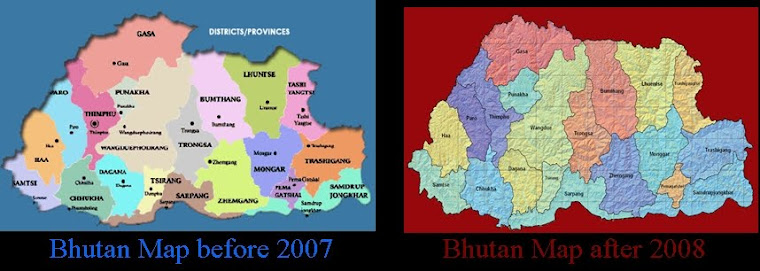
Click over the map to know the differences
Showing posts with label culture. Show all posts

Friday, February 15, 2019

BLACKLISTED IN BHUTAN- Book Review

BLACKLISTED IN BHUTAN: Love Lost and Love Transformed in the Land of Gross National Happiness by Rieki Crins.


Rieki Crins reached Tsachaphu, then a rural village of hot spring in the Pochhu valley in Bhutan, for anthropology research for her Masters and later continued it for her Ph.D. She lands up in the village with a European mindset keeping and frequently comparing Bhutan to Medieval Europe. She has an abundant appreciation for the country and the villagers. Very soon her elite European mindset and behavior crush with the culture shock.
She reaches to a morning meal without washing her hands or face- the basic habit all Asian learn from the cradle.
She digs out the unique but prevalent features of rural health, hygiene, agriculture, culture, and hardship.
She has picked up the local language and excavated the culture to its depth and made the culture the subject of the book.
Throughout her writing, she appears an innocent and energetic researcher. Even after her Ph.D., she visits Bhutan twice a year as a tourist guide. She struggles to anchor in Bhutan with a hotel cum school. Her effort benefits many unemployed youths.
The twist comes when, without a yellow signal, her visa to Bhutan is denied without an explanation. Someone explained to her that the denial was because she was ‘Blacklisted.’ Thereafter, her writing flashback to the incidences of restriction and dictatorial rule in the silent country. She begins to see hypocrisy in the King's newfound ideology of Gross National Happiness.
She recalls some possible causes and speculates the reason to be one of her Facebook comments that possibly upset a member of the powerful royal family.
There is a big population, in and outside Bhutan, which is critical of the autocratic government. The title of the book ‘BLACKLISTED IN BHUTAN’ gets the early attention of such a group of people. 
She reached Bhutan in February 1990 when the government was iron-fisted handling a serious dissident movement. The book is free from the description of such political background.    
What she has explained but not concluded is her description of Wangmo’s and her partner- a Cello virtuoso- Maria’s anomalous behaviors in Bhutan. Her description matches TN Rizal’s description of Mind control in words and essence. Was she mind-controlled? Was her mind/intention read before taking an action on her? Reiki only can recall, re-evaluate and share it in detail in the future.   
She has also mentioned her engagement with Karen refugee/community in Burma and Thailand.
There are plenty of clues for the readers to speculate the reason for the denial of her visa to Bhutan.
On top of all the Book is a masterpiece on the culture of a Drukpa village. However, the bold title ‘BLACKLISTED’ shadows her content.

A one sitting book is full of carrying, entertaining and educating contents and is one of the must-read books for the students of culture and anthropology. 

Wednesday, January 31, 2018

किरात कल्चरल सोसाइटी अफ टेनिशीको संयोजकत्वमा तीनदिने विशाल तेस्रो वार्षिक सेवा सम्पन्न


Friday, 27 May 2016 12:26

किरात कल्चरल सोसाइटी अफ टेनिशीको संयोजकत्वमा तीनदिने विशाल तेस्रो वार्षिक सेवा सम्पन्न । Featured

Written by सुकमान सुहाङ्ग
किरात कल्चरल सोसाइटी अफ टेनिशीको संयोजकत्वमा तीनदिने विशाल तेस्रो वार्षिक सेवा सम्पन्न ।
किरात कल्चरल सोसाइटी अफ टेनिशीको संयोजकत्वमा सम्पूर्ण अमेरिकावासी किरातीहरूको आयोजनामा, तीनदिने विशाल तेस्रो वार्षिक किरात अन्तर राज्य खिबेक्वा याक्वा लाधुङशेमी सेवा May, 27-29, 2016 नेशविल टेनिशीमा सफल्तापुर्बक सम्पन्न भएको छ ।
उक्त सेवामा भएको विशाल राज्य प्रतिनिधि, अगुवा बुद्धिजिबी र किरातीहरूको भेला/अधिवेशनले अमेरिकावासी किरात धर्मावलम्बीहरूको छाता संगठनको बिधान पारित गरि नाम घोषणा गरेर १५ जना केन्द्रिय समिति चयन गरेको छ। सेवामा सेवा पुजा, माङसेवासावाहरूको भेला / अधिवेशन, राज्य प्रतिनिधि अगुवा बुद्धिजिबीहरूको भेला / अधिवेशन, बिभिन्न छेत्रमा योगदान पुर्याउनुहुने समाजका ब्याक्तित्वहरूलाई सम्मान तथा बिबिद संस्कृतिक कार्यक्रमहरू सम्पन्न भएको छ। Kirat Community Organization of America को बिधानमा लेखिएको नियमहरू सबै बिधान मस्यौदा समिति प्रमुख श्री डि.जे खालिङ र बिधान मस्यौदा समिति सदस्य डा. नरेश लावती ज्यूहरूले ब्याख्या विश्लेशन गर्नु भएको थियो । कार्यक्रममा डा. नरेश लावती श्री डि.जे खालिङ श्री प्रताप सुब्बा श्री रने राई र श्री देव सुहाङ ज्यूहरू सम्मानित हुनुभएको थियो ।
अमेरिकावासी किरात धर्मावलम्बीहरूको केन्द्रिय संस्थाको बिधान मस्यौदा लेखनमा श्री डि.जे खालिङ (संयोजक) डा. नरेश लावती र श्री दिलिप दुमी ज्यूहरू रहनु भएको थियो । केन्द्रिय छाता संगठनको निर्वाचन समिति सदस्यमा श्री बि. एम खालिङ (संयोजक) र श्री बाहादुर सुब्बा (पन्धाक) ज्यूहरू रहनु भएको थियो ।
अमेरिकावासी माङसेवासावाहरूको विशाल अधिवेशन सफल पार्न साङदाङगेन वारूमसावा श्री के.के सोङमेन (संयोजक) साङदाङगेन वारूमसावा श्री कृष्ण केरूङ (उप संयोजक) र साङदाङगेन वारूमसावा श्री फुरूम्बो नाम (उप संयोजक) खटिनु भएको थियो।
विशेष अथितीहरूमा श्री दिलिप दाहाल ( Vice President, Organization of Bhutanese Communities in America "OBCA") श्री शन्त लामा (President, Bhutanese America Sports Council "BASC") श्री डेन्जोम साम्पाङ (President, Global Bhutanese Literary Organization "GBLO") श्री शुरज सुब्बा नाल्बो, (Nepali Movie Director/Producer) श्री डम्बर घले ( नेता, OBCA) श्री मंगल तामाङ (Chairman, Association of Bhutanese Communities in Tennessee "ABCT") श्री जितु बस्नेत, (First Bhutanese U.S. Certify Soccer Referee ) आदि उपस्थित हुनुहुन्थ्यो ।
अमेरिकावासी किरात धर्मावलम्बीहरूको संयोजक र उप संयोजकमा क्रमश सुकमान सुहाङ र धनमान लिङदेन रहेका थियौं ।
सेवा तथा सिंगो कार्यक्रमलाई सफल पार्न आर्थिक सहयोग गर्नु हुने सबै राज्यका किरात समाजहरू, ब्याक्ति ज्यूहरू तथा प्रायोजक ज्यूहरूलाई हृदय देखिनै धन्यबाद दिन चाहान्छु। विशेष गरि यति खेर श्री गोपाल बस्नेत श्री एल. बी नेम्बाङ (सुब्बा) श्री दिलिप दाहाल डा. नरेश लावती (लावती पसल) श्री हेम राज राई श्री जिवन मादेन श्री हेमलाल सङमी श्री दिपेश सुबेदी ( सुबेदी पसल) श्री शन्त लामा, BASC र सबै सबैमा हार्दिक धन्यबाद दिन चाहान्छु।
अमेरिकावासी किरात धर्मावलम्बीहरूको केन्द्रिय संस्था र १५ जना केन्द्रिय समिति ज्यूहरूको नामवली यस प्रकार छ:-
KIRAT COMMUNITY ORGANIZATION OF AMERICA, Inc.
BOARD OF DIRECTORS:
1. Surja Rai, Kentucky
2. Raju Subba, Nebraska
3. Aita Khaling, North Carolina
4. Harka Rai, Oregon
5. Shanti Khaling, Georgia
6. C. R. Lepcha, Massachusetts
7. Sukman Suhang, Tennessee
8. Bishnu Chokhang, Texas
9. Hari Subba Youngwago, Utah
10. Meera Rai, Pennsylvania
11. Uttam Rai, Ohio
12. K.K Songmen, Georgia
13. Phurumbo Nam, Ohio
14. Sha Bahadur Dungmali, Tennessee
15. Dhan man Lingden, Ohio
Executive Officers of KCOA:
1. Mr. Suk Man Suhang - Chairman
2. Mr. Surja Rai - Vice Chairman
3. Mr. Dhan Man Lingden- Secretary
4. Mrs. Shanti Khaling- Treasurer
तपाईहरू सबैले मलाई विश्वास गरेर केन्द्रिय अध्क्ष्य जस्तो विशिष्ट पदमा निर्वाचित गर्नु भएकोमा सबै सबैलाई हार्दिक धन्यवाद दिन चाहान्छु। हाम्रो टिमले तपाईहरू सबै संगै हातेमालो गरेर अघि बड्ने छ। नोगेन ।

Source

Saturday, July 14, 2012

State of the state

The prognosis is good
 
In all basic developmental indicators, the country has scored highly, as reflected in its 8.1 percent growth rate
«Lyonchhoen presents the 4th State of the Nation report at the Parliament yesterday
State Of The Nation Report: Going by the figures, and what the prime minister presented to the Parliament, brimming with senior civil servants and media personnel apart from the members themselves yesterday, the nation’s state, in general, was good.
After speaking for almost three hours, Lyonchhoen Jigmi Y Thinley, while presenting the fourth annual state of the nation report, said the country’s achievement over last one year was something to applaud.
He started off with a rerun of the good moments last year, a significant one being the royal wedding, an occasion that was “celebrated not only by the jubilant Bhutanese people, but by an enchanted world”.
But, on the flip side, the house was reminded of the tragedy country witnessed last year, the September 18 earthquake, Rupee debt, and the recent fire incident that reduced the age-old Wangduephodrang dzong to rubble.
Moving on to the country’s economy, Lyonchhoen said Bhutan’s 8.1 percent growth rate was ranked second in South Asia, and 11th in the world by real GDP growth rate for last year, in the list prepared by the US central intelligence agency.
It was mainly driven by industry, with hydropower constructions contributing 44.1 percent, followed by service sector at 37.4 percent, and primary sector at 15.1 percent.
In terms of the minimum program for accelerating poverty eradication, about 22 of the 49 gewogs in the country targeted to be connected by motorable road in the 10th plan have been completed.
About 80 percent of the Bhutanese families have received electricity, as of March 2012.
Claiming that all the funds are in place, the remaining 16,462 households will be electrified during the 2012-13 financial year.
Lyonchhoen admitted that their commitment of delivering a minimum of three doctors for every dzongkhag hospital was a challenge.
“While it’s difficult to get doctors from abroad, even if we did, we’re also unable to afford the amount they demand,” he said, adding a number of existing doctors were also undergoing specialisation programs abroad.
As such, although 11 dzongkhags have at least three doctors each, five dzongkhags have two doctors each, while the remaining four have a single doctor at the moment.
In figures
Access to Save drinking water
94% (From 69% in 2008) of the population
Mobile connectivity
68.4% (484,189) as of Dec. 2011 (From 56.4% in 2010)
Number of cooperatives
16 registered cooperatives
64 Farmers Groups (FGs)
Industrial license
2,447 industrial licenses issued in the last year (Total 15,190 licenses operational)
Tourists arrivals
100,833 tourists in 2011
(46% growth from 2010)
Roads
38.80km of national highway constructed in FY 2011-12
146 km of feeder/dzongkhag roads built
108 km roads connecting hydropower projects constructed
104 km of road resurfaced in FY 2011-12
30 Motorable bridges built in FY 2011-12
But Lyonchhoen said they hoped to fulfill this goal by 2013.
There were also places where safe drinking water through “conventional methods” has not reached. Alternative technologies in the form of rainwater harvesting system and pumping water supply were implemented.
All 205 gewog centres now have access to mobile services. Through government subsidy, services were made available in remote and difficult places.
In the agriculture sector, Lyonchhoen said a budget of Nu 32M was allocated for fiscal year 2012-13 to accelerate vegetable production and marketing, one of the moves taken to address ongoing rupee shortage.
He also claimed a substantial improvement in livestock productions, generated through gains in milk production, about Nu 1,280M, followed by egg, about Nu 195M.
Cattle population was also increased by four percent, pig by eight percent and poultry by 69.
Education wise, the number of schools increased to 553 and extended classrooms to 108 to meet government’s objective of providing all children with access to education within an hour’s walking distance.
In the tertiary education sector, five programs – media studies, BA in Bhutan and Himalayan studies, bachelor of sustainable rural development, BS (nursing), and diploma in computer hardware and networking were introduced in the past year under the Royal University of Bhutan.
Claiming that it to be one of the lowest in the world, the unemployment rate is declared at 2.1 percent, with youth unemployment rate falling from 9.2 percent last year to 7.3 percent.
In the health sector, to address the long-standing human resource shortage, the first university of medical sciences of Bhutan will be launched this month.
Introduction of health help centre, Lyonchhoen said, enabled people to access services of health professions within an hour at any time from anywhere through a telephone or mobile network.
In the field of communication, construction of about 100 community centres has been completed. About 22 G2C services were also provided through the centre.
Although temporarily stalled, the launch of domestic air services in Yonphula, Bumthang and soon in Gelephu would supposedly enhance transport connectivity, reduce travel time and also promote regional development.
The highest revenue contributor, trade sector, contributed about Nu 4.8B in the last fiscal year, an increase by about eight percent.
All hydropower projects were “well on track”, with Punatsangchu I and II and Mangdechu projects already employing about 2,853 Bhutanese.
Introduction of 20 percent green tax on vehicles and the pedestrian day were some recent moves to ensure environmental conservation.
In conserving culture and architectural skills, Lyonchhoen highlighted the conservation projects of Paro, Lhuentse and Dagana dzongs, scheduled to be completed by June next year.
Lyonchhoen also applauded Royal Audit and Anti Corruption, who played key roles in ensuring transparency and accountability, for their devotion and professionalism in carrying out the mandates.
Stressing a need for strong media in a democratic setup, he commended the existing media.
He, however, said the number of newspapers appeared more than enough for a small country like Bhutan.
Bhutan has also established diplomatic relations with 14 additional countries between end of 2011 and March 2012.
Introduced for the first time, a three-day visit designed to know Bhutan was extended to ambassadors, based in Dhaka and New Delhi, representing 44 countries.
“In reflecting on the reasons and causes for such accomplishments, I am reminded, once again, that the credit belongs largely to our highly dedicated and competent civil servant,” he said.
“Likewise, the local governments, the corporations and the business sector are deserving of high praise.”
By Kesang Dema
source: Kuensel

Sunday, December 13, 2009

Bhutanese start new life in Sacramento

By Stephen Magagnini, smagagnini@sacbee.com

Published: Saturday, Dec. 12, 2009 - 12:00 am

A crowded apartment in east Sacramento became a colorful dream factory recently when Bhanu Adhikari married his childhood sweetheart, Kamala Chauhan.


[ Relatives bless wedding couple Bhanu Adhikari, 29, left, and Kamala Chauhan, 27, by putting "tika" – rice mixed with yogurt, sugar and red dye – on their foreheads during a Hindu wedding ceremony in east Sacramento. The newlyweds met in eighth grade, but years in Nepalese refugee camps kept them from sealing their union. ]


The couple – who sealed their long-anticipated union in an elaborate Hindu ceremony – fell in love 12 years ago behind barbed wire in a Nepalese refugee camp.
Clad in red, gold and green wedding clothing, they celebrated not just the culmination of their love and bonding of their families, but their new life of religious and political freedom in the United States.

"Good climate, good soil, good people," declared a bubbly Adhikari, one of the first 400 Bhutanese refugees who have been resettled in Sacramento this year.

His bride's family resettled in Phoenix in March. The Hindu wedding ceremony at Adhikari's apartment welcomed Chauhan, 27, into his family and covered all her new responsibilities as a daughter-in-law.

Adhikari, 29, became a teacher in the refugee camp. Here he works as a cook. "It took me four months to find this job – it's easier to find a diamond," he said. "I want to be a pharmacist."

The Bhutanese represent the latest chapter in Sacramento's rich immigrant history, which embraces more than 100,000 refugees from across the globe.

Bhutan is a poor nation of 700,000 people perched in the Himalayas between India and Tibet. Most of the Bhutanese seeking refuge in the United States are Hindus who say they were persecuted by the government. As many as 600 more will be resettled in the Sacramento region.

Half the Bhutanese already in Sacramento who speak some English are working, said Rachel Lau, whose agency, International Rescue Committee, is helping resettle them.

"Bhutanese are very different in comparison with a lot of our other clients," Lau said. Most couldn't work in the camps in Nepal.


"So they basically were idle for two decades. They've used that experience as motivation," Lau said. "They pretty much get off the plane ready to work and they will do whatever."

Many, including several of the groom's relatives, work as $8 an hour hotel maids.

Others have gotten jobs at Fry's Electronics, grocery stores, gas stations, fast food franchises and a uniform cleaning company, Lau said. "The larger Indian Hindu community has taken them under their wing with some furniture donations and jobs."

Chauhan, the new bride, was a social worker in the camps. She plans to become a cashier, the job she had in Phoenix, and eventually hopes to become a nurse.

Outcasts in the camps

The couple said their families fled to Nepal to escape Bhutan's oppressive government, along with about 100,000 other Bhutanese Hindus of Nepali origin who settled in seven camps in Nepal.

The Bhutanese Hindus – called Lhotsampas, or people of southern Bhutan – claim they were driven off their lands and jailed for holding nonviolent protests.

About 20,000 have been resettled in the United States since March 2008, according to the U.S. State Department.
Bhutan denies human rights violations against the Lhotsampas and considers them illegal immigrants who threaten Bhutan's "distinct political and cultural" identity, according to Tshewang C. Dorji of the Permanent Mission of the Kingdom of Bhutan to the United Nations.

"The citizenship laws of Bhutan are not discriminatory. It will only be found discriminatory by illegal residents," Dorji wrote in an e-mail exchange with The Bee.

"Granting citizenship to such people would create a dangerous precedent for a small country like Bhutan."

The United Nations High Commissioner for Refugees said most of the refugees are descendants of Nepalese who migrated to southern Bhutan in the late 19th century to farm and settled in malaria-infested lowlands.

The Lhotsampas who left the lowlands for the camps in Nepal spent nearly 20 years there before the United States and other countries agreed to resettle them.

"Many of them were stripped of citizenship rights and were effectively expelled from the country," said UNHCR spokesman Tim Irwin. "They … feel they had no option but to leave."

About 80 percent of the Bhutanese newcomers were farmers famous for their orange orchards, ginger and nuts.

The groom's grandfather, 83-year-old Badri Pokharel, misses his 17 acres, his home and his temple. In a corner of his Sacramento apartment, Pokharel recites mantras from the holy Gita and kneels in prayer before Laxmi, the goddess of wealth, depicted on an electric prayer wheel that spins and hums.

"There are 18 chapters, and every day he recites one chapter," explained his son Rup Pokharel, the groom's uncle. As Hindus, the Lhotsampas were the religious minority in a primarily Buddhist country.

Badri Pokharel said his Buddhist friends who did not support the government's mistreatment of the Lhotsampas were not "allowed to raise their voice."

He said he and other Lhotsampas staged a peaceful protest in 1990 demanding freedom of speech and religion.
[
Bride and groom Bhanu Adhikari, right, and Kamala Chauhan, center, arrive with suitcase from the bride's family home in Phoenix for the welcoming ceremony Dec. 2 in east Sacramento. Seven lamps welcome Hindu goddess Laxmi in a prayer for wealth and harmony with the entrance of the new bride.
]


"They were tortured in the jail, hundreds of women were raped in public, houses were burned and people were forced to leave the country at gunpoint," said Rup Pokharel, 35, a journalist and teacher in the camps.

Inside the camps, he said, people died from starvation, lack of medical care and poor sanitation.

Launching a new life

Between his shifts at a uniform store, Rup Pokharel takes fellow Bhutanese immigrants to see doctors.

"We've noticed an incredible amount of health issues in the community," said Lau, the refugee coordinator. "There are a lot of urgent hospital visits, trying to find specialists."

Some are malnourished, others suffer from epilepsy and bacterial infections but never had medication until they got to Sacramento, Lau said.

But on this joyous Wednesday night in December, several dozen Bhutanese made happy memories. The groom, Bhanu Adhikari, hugged his new bride and recalled how she won his heart in eighth grade.

"She was pretty, of good moral character, a good student from a good family," he said, making her smile.

"He was very talented, friendly, had a good personality and was very helpful in school," she said.

[ Sabitra Pokharel, left, grandmother of the groom, smiles as relatives watch the wedding video. The couple delayedmarriage while they were in the refugee camp. "We were always beggars," Adhikari said. "For 19 years it was a kind of hell, but it teaches a lot of lessons on how to progress in life, and go further." ]


They didn't get married in the camp because he couldn't provide for her, Adhikari said. "We were always beggars. For 19 years it was a kind of hell, but it teaches a lot of lessons on how to progress in life, and go further.

"I don't want to be a burden," he said, "but the U.S. has helped us to save our lives."


Call The Bee's Stephen Magagnini, (916) 321-1072. Bee researcher Pete Basofin contributed to this report.