The Sorry Saga of Bhutan's North

The Sorry Saga of Bhutan's North
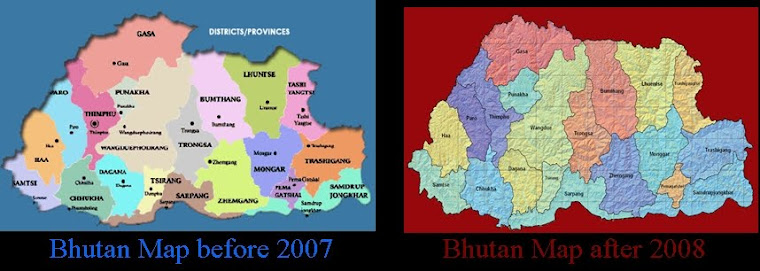
Click over the map to know the differences
Showing posts with label Media. Show all posts

Friday, September 10, 2010

From a Paro resort to the national stage


19 August, 2010 - She is slim, tall, beautiful and an upcoming star in today’s Bhutanese cinema. At just 22, Tandin Bidha, the young actress has already acted in seven movies, has another three in store, acted with veteran stars and has been nominated for best supporting actress for the national film awards.

The cheerful actress from Paro has always been into acting. “I was always passionate about joining the film industry although I didn’t have any professional training,” she said.

Her interest and acting skills were showcased in the many plays and skits she participated in as a student in school. “I’ve played a number of roles and in different capacities,” she said.

In 2005, she was discovered by director Tshering Wangyel, who offered her a supporting role in his film ‘Home Sweet Home’. “That’s how I got the opportunity to become who I am now,” she said, with a smile on her face. “I always want to thank my aunt Passang Om through whom I met director Tshering Wangyel.”

Later, she was introduced to the Bhutanese audience as a lead actor by Talop Wangchuk in his movie ‘Ya Ma So’. She said. “I can never forget this in my entire life.”

“I know I belong in the film industry,” she said. “The best part of being an actress is you become responsible for a character you play in a movie.”

Vivid, young and energetic, the actress reveals she wants to be known as a versatile actress by the people, when she her days as an actress is over. “I’d love to be the sweet girl next door and also a hard core fighter but always with decent role,” she laughs. “But that doesn’t mean I am choosy. As long as the script is good, I don’t mind playing anyone dramatic in the movie.”

While she says she is not choosy, she prefers roles where she does not have to cry a lot.

She considers herself a responsible daughter and an actress. She’d like to be able to inspire people through her roles. “I can now advise people and family and they actually listen to me,” she laughs.

At home, Tandin is helping her father with his business. “I’m looking after my families’ resort in Paro whenever I don’t have a tight schedule,” she said.

Tandin said her life has changed ever since she joined the cinema world. Being once known only as Tandin Bidha in her corner of Paro, she has a nationwide fan following now that appreciates her. “I’m proud of myself because now they like me and I have thousands of fans,” she said. She derives her inspiration from all deserving actors and actresses in Bhutan.

The young merry actress thanks all her friends, who always encouraged her to become an actress; and who believed she was born talented. Before signing out, she stops to say that the film industry needs more intellectual and highly professional talents, so everyone must take a chance. “Passionate, interest and high determination is all you should have to become an actress,” she stops.

Yangchen C Dorji

First private Dzongkha weekly launched


A brand new newspaper with a reader-friendly language

Druk Neytshuel: The seventh newspaper hit the stand yesterday

30 August, 2010 - At a time when the quality of Dzongkha is being questioned and discussed in every possible medium comes an opportune attempt to apprise Bhutanese of their national language.

Beginners can take a plunge into the language, starting with the alphabets illustrated in elementary pictures and interpretations.

Students can refer their Dzongkha textbook contents in a simplest elucidation. Those who need help with essays and application writing can allude to tutorials. Office-goers can stay abreast about events unfolding around them in most comprehensible Dzongkha.

In short, it is Dzongkha in its highest reader-friendly form, or so the first private Dzongkha newspaper, Druk Neytshuel, promises its readers.

As for the first issue launched and distributed free yesterday, the 24-page paper lived up to their words. With an apt main story questioning the varied spelling use on signboards, the paper carried stories on diverse subjects in an easy-to-read and easy-to-understand Dzongkha.

“This is Zhungkha in its simplest form, with slight inclination towards Wangkha, spoken popularly by people of Thimphu and Punakha,” the paper’s chief editor Chungdru Tshering said. “Everyone can speak the language, but a very few can read and write it. We’re trying to be as colloquial as possible.”

Apart from news updates, a well-organised section on driglam namzha, religion, economy, sports, community news and environment maintained a neat presentation on fresh topics.

The highlight was the section titled “Gup Of The Week”, an attempt to bring communities in the limelight by profiling the leaders and exposing problems prevailing in each gewog.

The free issue, which has taken on well with the readers, will come for Nu 10 starting next week.

“Compared with the Dzongkha issues of other private papers, this paper is on a different level all together,” Sangay Tenzin, a monk with the Thimphu rabdey, said. “It appears more serious than the previous ones, who, at times, give us an impression that they’re functioning just so to adhere to government policy, and not out of a genuine interest.”

One of the Dzongkha newspaper editors said the standard of the language and the news quality was impressive for a starter. “They should maintain it,” he said.

A few, however, felt the need to standardise the spellings of names and places and objects, as it read different in different newspapers.

The weekly paper, comprising a team of five reporters and two editors – graduates from the institute of language and cultural studies and former monks – feeds on 4 pages of advertisements in Dzongkha, and also caters to English ads in its inserts.

“We started off two months ago, with an intention to emulate government’s policy of promoting and preserving the national language,” Chungdu Tshering said.

By Kesang Dema

First private Dzongkha weekly launched


A brand new newspaper with a reader-friendly language

Druk Neytshuel: The seventh newspaper hit the stand yesterday

30 August, 2010 - At a time when the quality of Dzongkha is being questioned and discussed in every possible medium comes an opportune attempt to apprise Bhutanese of their national language.

Beginners can take a plunge into the language, starting with the alphabets illustrated in elementary pictures and interpretations.

Students can refer their Dzongkha textbook contents in a simplest elucidation. Those who need help with essays and application writing can allude to tutorials. Office-goers can stay abreast about events unfolding around them in most comprehensible Dzongkha.

In short, it is Dzongkha in its highest reader-friendly form, or so the first private Dzongkha newspaper, Druk Neytshuel, promises its readers.

As for the first issue launched and distributed free yesterday, the 24-page paper lived up to their words. With an apt main story questioning the varied spelling use on signboards, the paper carried stories on diverse subjects in an easy-to-read and easy-to-understand Dzongkha.

“This is Zhungkha in its simplest form, with slight inclination towards Wangkha, spoken popularly by people of Thimphu and Punakha,” the paper’s chief editor Chungdru Tshering said. “Everyone can speak the language, but a very few can read and write it. We’re trying to be as colloquial as possible.”

Apart from news updates, a well-organised section on driglam namzha, religion, economy, sports, community news and environment maintained a neat presentation on fresh topics.

The highlight was the section titled “Gup Of The Week”, an attempt to bring communities in the limelight by profiling the leaders and exposing problems prevailing in each gewog.

The free issue, which has taken on well with the readers, will come for Nu 10 starting next week.

“Compared with the Dzongkha issues of other private papers, this paper is on a different level all together,” Sangay Tenzin, a monk with the Thimphu rabdey, said. “It appears more serious than the previous ones, who, at times, give us an impression that they’re functioning just so to adhere to government policy, and not out of a genuine interest.”

One of the Dzongkha newspaper editors said the standard of the language and the news quality was impressive for a starter. “They should maintain it,” he said.

A few, however, felt the need to standardise the spellings of names and places and objects, as it read different in different newspapers.

The weekly paper, comprising a team of five reporters and two editors – graduates from the institute of language and cultural studies and former monks – feeds on 4 pages of advertisements in Dzongkha, and also caters to English ads in its inserts.

“We started off two months ago, with an intention to emulate government’s policy of promoting and preserving the national language,” Chungdu Tshering said.

By Kesang Dema
Kuensel

Friday, July 23, 2010

MEDIA FOUNDATION ESTABLISHED IS PROFESSIONALISM NEXT

February 23, 2010 · Filed Under Topstories, archive · Comment
The Bhutanese media has received the much needed impetus to forge ahead with gusto. On Sunday His Majesty the King signed a charter heralding the establishment of Bhutan Media Foundation (BMF) which will surmount much of the difficulties dogging the fledging industry.
To get the foundation going, His Majesty granted a seed fund of Nu 15.00 million which is expected to grow up to Nu 100.00 million by the end of the year through fund-raising efforts spearheaded by His Majesty Himself. According to its charter, the foundation’s resources will be used to promote the constitutionally enshrined rights of the citizens to information, freedom of expression and media, and develop a vibrant knowledge-based society by harnessing the powers of the media to inform and educate people. A strong media will also help strengthen democracy in Bhutan through civic participation and informed decision-making platforms while, at the same time, safeguarding editorial independence, protecting the rights of the journalists, media houses and their sources. To engender professionalism, an enabling environment will be created for the media to grow into professional and responsible entities by providing training opportunities to journalists overseas besides supporting in-country journalism and mass communication programs in schools and colleges. Media professionalism will be furthered through the formation of journalistassociations and press/media clubs that allow journalists to “interact, address common issues, advance professional skills, and assist in the professional growth of the Bhutanese media”. Equally important, the foundation will help create a strong media freedom environment which upholds the highest code of ethics to evolve into a vibrant and responsible media. Doing this will help enable the media to play a constructive role in the social, economic, and political life of the nation. The foundation would provide stimulus packages to ailing media houses to help sustain up-coming media houses which are financially weak. This effort will also lead to the creation of a level playing field in the market. Rescue packages, however, will not be made available if the reasons for floundering are due to the inefficiency of the media house to compete in the market or for its poor editorial content. Promoting the national language, Dzongkha, and its readership forms an important mandate of the foundation. The media houses will be subsidized for the losses incurred through the publication of Dzongkha editions. On media literacy activities, the foundation will promote free, responsive interaction between the media and the public to create awareness and educate on media and its impact. The foundation also aims to have media literacy programs in schools and colleges. The charter however is just the beginning. Media houses will now have to get-together and draw up mechanisms to administer the foundation. And this is expected to be very tricky given that the media houses are very different from each other in terms of size, reach, ownership, operation cost, and frequency of publications or airing, among others.

By Khampa
in THIMPHU

Monday, February 22, 2010

Bhutan media foundation established through royal kasho


His Majesty with representatives of the print and broadcast media at Lingkana palace
21 February 2010 - Coinciding with His Majesty’s 30th birthday anniversary, His Majesty the King issued a royal kasho (charter) formally establishing the Bhutan media foundation.

The media foundation is being established to support the development of mass media, so that it can carry out its roles and responsibilities in the interest of democracy.

According to a press release, the foundation is expected to support the media in enhancing skills through scholarships, internships and training, strengthening media executive management and leadership skills.

The foundation will support the sustainability and growth of newspapers and broadcast stations, journalists associations and press clubs. It will also invest in the future readership of the print media by striving to provide subscription grants of all newspapers to the lower, middle and higher secondary schools and colleges in the country. Additionally, it will also support the promotion of national language in the media and civic education programmes in the media.

His Majesty, in the royal charter to the representatives from both the print and electronic media present at Lingkana palace, assured his support for the development of the media industry in the country.

The foundation is endowed with a seed grant of Nu 15 mn from His Majesty the King.

Representatives of all media organizations agreed that the first meeting of all registered media agencies should take place promptly. This will be done to finalise the organisational structure, regulations, and codes of conduct of the foundation.

Rinzin Wangchuk


The kasho