The Sorry Saga of Bhutan's North

The Sorry Saga of Bhutan's North
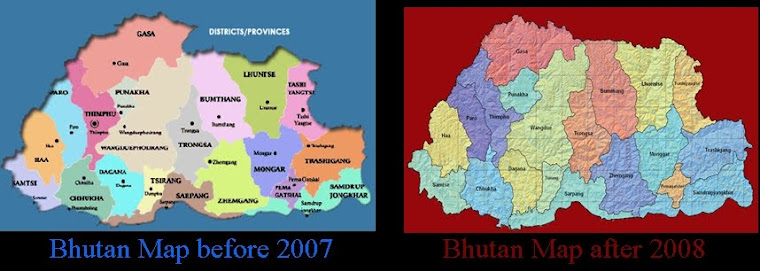
Click over the map to know the differences
Showing posts with label Farming. Show all posts

Friday, September 17, 2010

Let there be food


17 September 2010
Food and nutrition security policy in the pipeline

Although Bhutan’s national average energy consumption exceeds 2,500 kcal a day, in the worst-off areas, this figure does not even reach 1,900 kcal. Average consumption of protein, vitamins, and miner­als is even further below what is required for good health, according to the draft Food and Nutrition Security Policy (FNSP), 2010.

The policy lays down differ­ent aspects of availability of and access to food, utilization of food and stability of these dimensions of food and nutri­tion security.

According to the concept of food and nutrition security, a country is food and nutrition secure if it has enough good food readily accessible to its people who can make good use of it, and if all these condi­tions prevail for all people.

Recently drafted by the ag­riculture and forests ministry, the policy says that hunger and malnutrition reduces Gross National Happiness and undermines Bhutan’s ability to achieve the millennium development goal of halv­ing hunger, malnutrition and poverty by 2015.

Once approved, the policy will legally bind the govern­ment to ensure that every Bhutanese has physical, social and economic access to suffi­cient, safe and nutritious food.

The Vulnerability Analysis and Mapping (VAM), 2005, pointed out that food inse­curity was one of the causes of poverty in Bhutan. VAM is World Food Programme’s comprehensive study on pov­erty reduction and geographi­cal distribution of food and nutrition.

Stressing the urgency to address food security issues, Tenzin Chophel, the chief policy and planning officer of the agriculture ministry, said that maintaining food and nu­trition security corresponded to national security for a small landlocked country vulnerable to geo-economic relations.

He said, “The past and pres­ent policies related to food are mostly geared towards promoting agriculture growth and do not provide adequate enabling environment to address food and nutrition security in a comprehensive manner.”

FNSP will help establish a legal basis for Bhu­tan National Food Security Strategic Paper (BNFSSP). “Once FNSP is approved, we would like to revisit the BNF­SSP,” said Tenzin Chophel.

However, food and nutri­tion security faces many challenges.

The main Bhutanese cereal, rice, comprises about 60 per­cent of the total food demand in the country and its impor­tance in the Bhutanese diet has increased from 40 percent in 1999 to 60 percent in 2008. The domestic production can meet only 48 percent of the rice demand.

A study conducted by the agriculture research centre in Wengkhar in Mongar Dzong­khag showed that around 51 percent of the total rice consumption in 50 of the 69 gewogs in the six eastern dzongkhags was imported.

Out of 8,883 acres of wet­land in the six dzongkhags, around 1,192 acres have been laid fallow in the past 10 years, according to the study. It pointed out that, if this trend continued, Bhutan would have no wetland in seven decades.

The draft policy points out that growing population, increasing urbanization, competing land use objec­tives, loss of agriculture land to development and chang­ing economic structure and consumption patterns call for continued emphasis on food security.

According to the 2009 UN Human Development Report, Bhutan’s internal migration rate, at six percent, is the high­est in South Asia and the ur­ban growth rate, on average, is more than seven percent.

This has led to the decrease of work force in the agricul­ture sector and under-utiliza­tion of established infrastruc­ture in rural areas.

Malnutrition, low food availability and poverty are predominantly a rural phe­nomenon with higher con­centrations in the eastern and southern parts of the country, according to the draft policy.

A team of officials from the GNH Commission, who had visited some of the most vul­nerable villages in the country under the Rural Economy Advance Programme (REAP), had reported that some vil­lages had to face food short­age for five months in a year. Accessibility and irrigation were pointed out as the main challenges for those villages.

The policy has been presented to various stake­holders. Once the agriculture ministry receives comments from the stakeholders, it will be assessed and presented to the GNHC. The policy will then be presented to the cabinet.

By Pushkar Chettri

Bhutan Observer

Friday, July 23, 2010

1,000 apply for 152 power tillers

Priority will be given to farmers, who form groups to share the machine

Power To The People: In the last 26 years, Bhutan has received about Nu 1.5B grant assistance from Japan

Japanese KR II grant 9 July, 2010 - The agriculture ministry has received more than 1,000 applications from farmers across the country for the 152 power tillers the Japanese government recently gave under its KR II grant.

Unable to decide, the executive agricultural engineer, Karma Thinley, said the criteria for providing the machines would be done by the dzongkhag, after analysing which farmers in what part of the country were in most need of the power tillers.

He said they would consider farmers’ cultivable land, poverty index, demand from the respective dzongkhag, and farm road availability. The ministry would send the information to the agriculture machinery centre in Paro, which would then distribute the power tillers.

Agriculture ministry’s policy states priority would be given to farmers, who form groups to work together and share the machine.

The power tillers come with accessories and spare parts worth 180M yen.

Along with the power tillers, KR-II grant’s Japanese non project grant aid (JNPGA 2008) has provided other agricultural machinery, which include 35 tractors, 77 paddy transplanters, 25 water pumps, 165 sets of plastic for greenhouses and 85,000 seedlings for underprivileged farmers worth 200M yen.

The first secretary, Japanese embassy in New Delhi, Manabu Suzuki, formally handed over the machines to the ministry last evening in Thimphu.

Lyonpo (Dr) Pema Gyamtsho said the KR-II grant was an unusual assistance to Bhutan, supporting the country’s development by strengthening the grassroots.

He said the country’s progress was in being able to mechanise, not just its farming activities, but all other development activities requiring labour.

The KR II came into being, following the Kennedy round table conference in 1967, which required commitment from developed countries to provide food assistance to those struck with epidemic and famine.

Japan was one of the main donor countries to countries with food shortages, which were many.

Japan formulated a new grant scheme in 1977, which, instead of just supplying food, provided assistance to help developing countries increase their food produce. The scheme came to be known as the KR-II grant.

Bhutan qualified the category and reaped its benefits since 1984. Under the grant, only agricultural machines, fertilisers, and chemicals were considered essential to increase food production, but for Bhutan, agricultural machines were more important.

In the last 26 years, Bhutan has received grant assistance from Japan amounting to about Nu 1.5B. It accounted for more than 2,000 power tillers, 300 tractors, rice mills, threshers, harvesters and irrigation pumps.

The relationship between Bhutan and Japan has continued to grow ever since Dasho Keiji Nishioka came to Bhutan in 1964.

By Kuenga Tendar

Organic farming

Organic farming: Let’s cash in on the demand
25 March 2010
The world is going gaga over organic farming. Growing organic, consuming organic and selling organic.

The value of organic vegetables has increased in the past few years. People have increasingly come to understand the ill effects of vegetables grown using chemical pesticides, fertilizers and other allied chemicals.

Because organic vegetables are grown using local organic farm yard manure and traditional farming practices they are sustainable, farmer friendly and helpful to the poor. Organic vegetables have zero residues of pesticides or other chemicals in them and therefore safe for all ages to consume.

Besides the high health value associated with organic vegetables, they are soil friendly. Farm yard manure used to grow organic vegetables help organisms in the soil enhance and rejuvenate its fertility.

However, for vegetables to be organic in its true sense needs to fulfill a set of conditions. Were the seeds used to grow the vegetables organic, was the farm yard manure prepared using excreta from animals fed strictly organic feed, was the land used for cultivation free from fertilizers, was the water used free from chemicals like chlorine and other disinfectants, and was the packing materials used free from chemical contaminants are some of the conditions to be taken into account. If these conditions are fulfilled the vegetables can then be called organic.

In Bhutan, from time immemorial, our farmers have practised traditional farming using farm yard manure for fertilizing soil prior to cultivation of crops and vegetables.

Farmers have always preferred organic farming because of the unavailability of chemical fertilizers, cost factors and transportation problems. But today, these reasons have come as a ‘blessing in disguise’ for Bhutanese farmers.

Having realized the benefits accruing from consumption of organic vegetables and the huge market demand, farmers have taken to growing organic vegetables en masse. The trend of organic farming has indeed picked up momentum in the country.

But there are bottlenecks associated with it. There is no access to ready market for farmers in remote pockets of the country. We have not been able to export our organic vegetables beyond India or Bangladesh. We still have not been able to get our vegetables certified as truly organic.

The government, however, realizing the huge demand for organic vegetables in the neighbouring countries and overseas has plans to cash in on the demand. National Organic Programme under the aegis of MoA has been established to promote, encourage and support organic farming in Bhutan.

The huge demand for organic vegetables, fruits, and cereal crops overseas has partly been fuelled by high scientific literacy. Organic farming can be economical for Bhutanese farmers with small land holdings.

It makes lot of sense for our farmers to grow organic vegetables that will fetch them higher price in the market. Further, the hilly terrain does not permit mechanized farming.

Organic farming is sustainable in the sense that it uses local green wastes which would otherwise be useless, creates no residual harmful effects in the soil, and products. It gives a better value for the products to the farmers who in turn will be motivated to go for it in the long run.

Rural-urban migration can be controlled. The paradox of having fallow land on one hand at the same time the need to rely on imported food stuffs will die down. Regional airports in the future can help mitigate transportation problems for farmers involved in commercial organic farming.

Then will not everyone get a pie from this organic revolution?

By Netra Binod Sharma

From: Bhutan Observer