The Sorry Saga of Bhutan's North

The Sorry Saga of Bhutan's North
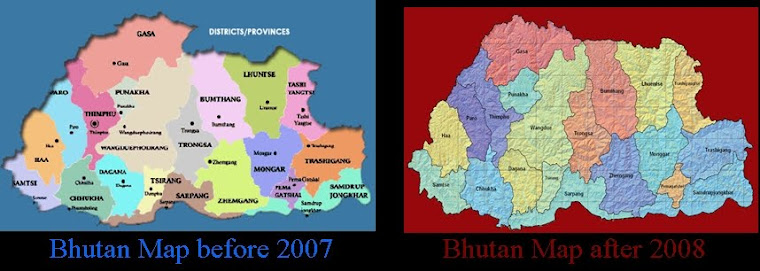
Click over the map to know the differences
Showing posts with label UNHCR. Show all posts

Saturday, September 28, 2013

Refugees get 30 days to decide on resettlement

HIMALAYAN NEWS SERVICE


DAMAK: Office of the United Nations High Commissioner for Refugee has granted a month’s deadline to Bhutanese refugees who had earlier filled forms for third country settlement, to reconfirm their choice.

Since the process of third country resettlement of refugees began in 2008, at least 83,000 Bhutanese refugees have been settled in eight countries, including US, New Zealand, Netherlands, Canada, Denmark, Britain and Norway. Now, the UN Refugee Agency has granted a month-long deadline to those who had filled the interest forms for third country resettlement, but could not be contacted later.

The commission has notified all the three refugee camps at Beldangi, Damak and Shanischare, Morang. “We’ve granted extra time for those who had earlier filled the forms but failed to appear in the interview for the same. We have sent them forms to notify us their final wish,” said UNHCR Nepal office External Relationship Officer Nini Gurung, adding her office is now collecting the latest data of those who are willing to settle in a third country.

“I’ve got a form and I’ve written that I don’t have any interest in settling down in a third country,” said Beldangi-2 camp secretary Sanchahang Subba, adding that those refugees who want to return to their homeland were worried after hearing about the latest move of the commission. Harkajung Subba, one of the refugees who wants to return to his homeland, accused the UNHCR of trying to pile pressure on refugees to opt for third country resettlement.

Saturday, July 14, 2012

State of the state

The prognosis is good
 
In all basic developmental indicators, the country has scored highly, as reflected in its 8.1 percent growth rate
«Lyonchhoen presents the 4th State of the Nation report at the Parliament yesterday
State Of The Nation Report: Going by the figures, and what the prime minister presented to the Parliament, brimming with senior civil servants and media personnel apart from the members themselves yesterday, the nation’s state, in general, was good.
After speaking for almost three hours, Lyonchhoen Jigmi Y Thinley, while presenting the fourth annual state of the nation report, said the country’s achievement over last one year was something to applaud.
He started off with a rerun of the good moments last year, a significant one being the royal wedding, an occasion that was “celebrated not only by the jubilant Bhutanese people, but by an enchanted world”.
But, on the flip side, the house was reminded of the tragedy country witnessed last year, the September 18 earthquake, Rupee debt, and the recent fire incident that reduced the age-old Wangduephodrang dzong to rubble.
Moving on to the country’s economy, Lyonchhoen said Bhutan’s 8.1 percent growth rate was ranked second in South Asia, and 11th in the world by real GDP growth rate for last year, in the list prepared by the US central intelligence agency.
It was mainly driven by industry, with hydropower constructions contributing 44.1 percent, followed by service sector at 37.4 percent, and primary sector at 15.1 percent.
In terms of the minimum program for accelerating poverty eradication, about 22 of the 49 gewogs in the country targeted to be connected by motorable road in the 10th plan have been completed.
About 80 percent of the Bhutanese families have received electricity, as of March 2012.
Claiming that all the funds are in place, the remaining 16,462 households will be electrified during the 2012-13 financial year.
Lyonchhoen admitted that their commitment of delivering a minimum of three doctors for every dzongkhag hospital was a challenge.
“While it’s difficult to get doctors from abroad, even if we did, we’re also unable to afford the amount they demand,” he said, adding a number of existing doctors were also undergoing specialisation programs abroad.
As such, although 11 dzongkhags have at least three doctors each, five dzongkhags have two doctors each, while the remaining four have a single doctor at the moment.
In figures
Access to Save drinking water
94% (From 69% in 2008) of the population
Mobile connectivity
68.4% (484,189) as of Dec. 2011 (From 56.4% in 2010)
Number of cooperatives
16 registered cooperatives
64 Farmers Groups (FGs)
Industrial license
2,447 industrial licenses issued in the last year (Total 15,190 licenses operational)
Tourists arrivals
100,833 tourists in 2011
(46% growth from 2010)
Roads
38.80km of national highway constructed in FY 2011-12
146 km of feeder/dzongkhag roads built
108 km roads connecting hydropower projects constructed
104 km of road resurfaced in FY 2011-12
30 Motorable bridges built in FY 2011-12
But Lyonchhoen said they hoped to fulfill this goal by 2013.
There were also places where safe drinking water through “conventional methods” has not reached. Alternative technologies in the form of rainwater harvesting system and pumping water supply were implemented.
All 205 gewog centres now have access to mobile services. Through government subsidy, services were made available in remote and difficult places.
In the agriculture sector, Lyonchhoen said a budget of Nu 32M was allocated for fiscal year 2012-13 to accelerate vegetable production and marketing, one of the moves taken to address ongoing rupee shortage.
He also claimed a substantial improvement in livestock productions, generated through gains in milk production, about Nu 1,280M, followed by egg, about Nu 195M.
Cattle population was also increased by four percent, pig by eight percent and poultry by 69.
Education wise, the number of schools increased to 553 and extended classrooms to 108 to meet government’s objective of providing all children with access to education within an hour’s walking distance.
In the tertiary education sector, five programs – media studies, BA in Bhutan and Himalayan studies, bachelor of sustainable rural development, BS (nursing), and diploma in computer hardware and networking were introduced in the past year under the Royal University of Bhutan.
Claiming that it to be one of the lowest in the world, the unemployment rate is declared at 2.1 percent, with youth unemployment rate falling from 9.2 percent last year to 7.3 percent.
In the health sector, to address the long-standing human resource shortage, the first university of medical sciences of Bhutan will be launched this month.
Introduction of health help centre, Lyonchhoen said, enabled people to access services of health professions within an hour at any time from anywhere through a telephone or mobile network.
In the field of communication, construction of about 100 community centres has been completed. About 22 G2C services were also provided through the centre.
Although temporarily stalled, the launch of domestic air services in Yonphula, Bumthang and soon in Gelephu would supposedly enhance transport connectivity, reduce travel time and also promote regional development.
The highest revenue contributor, trade sector, contributed about Nu 4.8B in the last fiscal year, an increase by about eight percent.
All hydropower projects were “well on track”, with Punatsangchu I and II and Mangdechu projects already employing about 2,853 Bhutanese.
Introduction of 20 percent green tax on vehicles and the pedestrian day were some recent moves to ensure environmental conservation.
In conserving culture and architectural skills, Lyonchhoen highlighted the conservation projects of Paro, Lhuentse and Dagana dzongs, scheduled to be completed by June next year.
Lyonchhoen also applauded Royal Audit and Anti Corruption, who played key roles in ensuring transparency and accountability, for their devotion and professionalism in carrying out the mandates.
Stressing a need for strong media in a democratic setup, he commended the existing media.
He, however, said the number of newspapers appeared more than enough for a small country like Bhutan.
Bhutan has also established diplomatic relations with 14 additional countries between end of 2011 and March 2012.
Introduced for the first time, a three-day visit designed to know Bhutan was extended to ambassadors, based in Dhaka and New Delhi, representing 44 countries.
“In reflecting on the reasons and causes for such accomplishments, I am reminded, once again, that the credit belongs largely to our highly dedicated and competent civil servant,” he said.
“Likewise, the local governments, the corporations and the business sector are deserving of high praise.”
By Kesang Dema
source: Kuensel
Sunday, October 31, 2010

U.S. Delegation Statement to UNHCR's Executive Committee

Thank you, Mr. Chairman. Sixty years ago an atmosphere of cooperation and resolve to protect those uprooted by war and persecution prevailed as States negotiated the creation of the Office of the United Nations High Commissioner for Refugees (UNHCR).

Back then, few UN Member States imagined that large-scale situations of statelessness and forced displacement would occur beyond the horrendous experiences of Europe during World War II. Yet conflict, persecution and crises have continued around the world and taken new forms. The need for international protection remains enormous and UNHCR's role remains indispensable.

The number of refugees and internally displaced and stateless persons remains alarmingly high. For the United States, their protection and assistance is an enduring commitment. Still, we find that despite the best efforts of the international community and UNHCR's robust mandate, basic principles of protection are under threat around the world.

As we begin a year of reflection on the state of international protection 60 years after the drafting of the 1951 Convention relating to the Status of Refugees and 50 years after the 1961 Convention on the Reduction of Statelessness, we must acknowledge that in too many places incidents of refugee refoulement occur, displaced people are intimidated and attacked, refugee children are unable to attend school, and stateless persons lack documentation. We must acknowledge that solutions have not been achieved for millions of refugees, IDPs, and stateless persons in protracted situations. Protection of refugees in urban settings is inadequate.

The threat of violence against women and children displaced by conflict is dire, and the security of humanitarian workers is far from assured. As members of UNHCR's Executive Committee, we face many challenges and our responsibilities to protect refugees, asylum seekers, IDPs, and stateless persons remain significant.

This is not to discount the considerable protection work that UNHCR and Member States have undertaken over the years, particularly those governments that have generously hosted refugees, or accepted them for permanent local integration or resettlement.

We have agreed to numerous conclusions on international protection, including this year's text on disabilities; we have developed extensive training and guidelines for UN, NGO and government officials; we have embarked on the cluster approach to better address the needs of those who are internally displaced; and we are integrating protection principles across our assistance programs. What more should we do? Abroad and at home, are we doing everything possible to defend and to promote the human rights, the well-being, and the empowerment of the world's most vulnerable uprooted people?

We know that the most credible and persuasive protection advocacy comes from those who have experienced the suffering and indignities of displacement. This is why we have pressed UNHCR to increase its permanent protection and community services staff and deploy them to the deep field. This is why the United States has regional officers based in embassies around the world who are dedicated to humanitarian diplomacy and field monitoring. Effective protection requires strong advocacy informed by field presence. Protection principles need champions.

For the United States, protection of refugees, IDPs, stateless persons, and other populations of concern is always part of our diplomatic and humanitarian agenda, even with nations with whom we may have disagreements on other issues. There are many areas where field presence and strong advocacy are essential to achieving our protection objectives. Today I want to highlight three. First is the protection of internally displaced persons. UNHCR's role within the UN cluster system has given UNHCR greater responsibilities for protection of conflict-affected IDPs.

Protection of IDPs depends on cooperation with governments and adequate field presence. The U.S. government will continue to encourage governments with internally displaced populations to utilize the UN Guiding Principles, and to support UNHCR in its efforts to protect IDPs. We applaud the adoption of the Convention on Protection and Assistance of Internally Displaced Persons in Africa and encourage its entry into force. We note that UNHCR served as a protection cluster leader in 19 countries last year.

With the cluster system now in its fifth year of implementation, we urge UNHCR, its partners, and other Member States to analyze closely the performance of protection clusters around the world to determine how they can be more effective and to strengthen the UN's overall response in humanitarian crises through improved coordination with other clusters.

Second, I want to highlight the issue of gender-based violence as one that requires strong advocacy and field presence - including the protection of refugees who flee persecution or encounter human rights violations in asylum countries because of their sexual orientation or gender identity.

President Obama has made clear that the United States condemns persecution and other violations of human rights against individuals because of their sexual orientation or gender identity. We applaud the High Commissioner's Roundtable on Sexual Orientation and Gender Identity held last week and believe that UNHCR's 2008 Guidance Note on Refugee Claims Relating to Sexual Orientation and Gender Identity, and other forthcoming guidelines on this issue, can form a foundation for enhanced protection. The U.S. government will continue to look for strong UNHCR leadership on this issue.

Gender-based violence - including sexual exploitation and abuse - is a major protection concern throughout the world, particularly in conflict-affected countries such as the Democratic Republic of Congo. Effective implementation of Age, Gender and Diversity Mainstreaming (AGDM) is key to improving protection. Collectively, we must find comprehensive solutions that include greater awareness and education, stricter law enforcement, promotion of gender equality and women's rights, and enhanced protection presence by the international community. We expect continued commitment by UNHCR on this issue in the coming years, including the release of the AGDM Action Plan as soon as possible and to hold UNHCR accountable for full implementation of AGDM at every level.

Third is resettlement. The United States has long championed refugee resettlement as an important protection tool and durable solution, and field presence and strong advocacy remain critical to our program's success. Throughout his tenure, Assistant Secretary for Population, Refugees, and Migration Eric Schwartz has visited newly arriving refugees - Bhutanese, Burundians, Iraqis and so many others - in cities across the United States.

While it is heartening for him to witness the deep and abiding commitment to refugees among reception agency staff and the welcoming spirit of local officials and volunteers, it was sobering to meet with refugees threatened with eviction or who had to choose between buying food or diapers for their children during these difficult economic times.

In this regard, we greatly appreciate the government of Nepal's support for the resettlement process of refugees from Bhutan. The United States will consider for resettlement as many Bhutanese refugees as express interest. We applaud UNHCR's efforts to develop programs for the long-term needs of these refugees and their host communities. The right of refugees to return to Bhutan is an important consideration for the United States, and we strongly urge the government of Bhutan to accept for repatriation refugee cases of special humanitarian concern.

Mr. Chairman, in light of our critical responsibilities to resettled refugees, the United States government was able to double the funding provided to support newly resettled refugees. This support ensures that refugees have a solid roof over their heads, a clean bed in which to sleep and basic assistance as they begin new lives in the United States.

Overseas, we have strongly supported UNHCR's own capacity building to identify vulnerable communities in need of resettlement and to develop innovative interim protection measures, such as emergency transit centers in Slovakia, Romania and the Philippines. These actions have improved protection for refugees arriving in the United States and promoted refugee protection and burden sharing in first asylum countries by encouraging host government policies of tolerance as well as encouraging other governments to do more on refugee resettlement issues.

In conclusion, as we look ahead, the United States will continue to champion the protection of refugees, IDPs, stateless persons and others of concern to UNHCR. Reminded of the era of UNHCR's creation, we resolve that we will serve - and we urge UNHCR to serve - as relentless protection advocates informed by field experience. We are putting protection of the most vulnerable at the center of policy-making, and we call on other Member States to join us in doing the same.

Source: U.S. Department of State

Thursday, February 4, 2010

Jaquemet new UNHCR representative in Nepal

REPUBLICA

KATHMANDU, Jan 13: The newly appointed UNHCR representative in Nepal Stéphane Jaquemet on Wednesday presented the letter of credentials to Deputy Prime Minister Sujata Koirala.

According to a statement issued by the UNHCR, Jaquemet earlier served as the UNHCR Representative in Lebanon. “I am happy to be in Nepal, such a beautiful and cultured country, and work for one of UNHCR´s largest resettlement operations in the world,” the statement quoted Jaquemet as saying.

Since late 2007, UNHCR has helped more than 25,600 refugees from Bhutan to start new lives in the United States, Canada, Australia, the Netherlands, Norway, Denmark and New Zealand. Some 85,863 Bhutanese refugees have been living in seven camps in eastern Nepal.

“We will continue working with the international community and the Governments of Nepal and Bhutan to find solutions for these refugees, including repatriation to Bhutan and resettlement to third countries,” said Jaquemet in the statement.


Published on 2010-01-13 21:55:38

Saturday, November 28, 2009

UNHCR,Caritas to organize concert

Posted on 27 November 2009 by Editor
By Arjun Pradhan

1974AD scheduled to perform for Music for Relief. Photo By Wave
Nov 27: The United Nations High Commissioner for Refugees (UNHCR) and Caritas Nepal are organizing a concert ‘Music for Relief’ in Damak on November 28, with the famous Nepali rock band 1974 AD joining in to promote awareness of issues surrounding HIV/AIDS.
“The main objective of this concert is to bring together the refugees from Bhutan in the camps in eastern Nepal and the local community to fight against HIV/AIDS,” said Rianawati, Head of UNHCR Sub-Office in Damak.
Amalraj , the Field Director of CARITAS Nepal said “Everyone committed to protect human life from the impending disaster of HIV/AIDS will attend and ever remember this music concert. We welcome everyone for this mega show and enjoy it.”
The joint statement also mentioned that the event is funded by Més que un Club, a campaign lunched by Spanish football giants FC Barcelona and the UN refugee agency aimed at bringing sports, education and life skills to refugee youngsters around the world. FC Barcelona is one of the world’s best known sports clubs.
This concert is part of the activities planned by the UNHCR with its implementing partners to commemorate the 16 Days of Activism against Gender Violence Campaign which begins from 25 November, said the statement.
More than 2000 people are expected to attend this unforgettable concert at the premises of the Saraswati Higher Secondary School, Itabhatta, Damak. It will start at around 12:00 hrs. It is a free show and no passes are required.