The Sorry Saga of Bhutan's North

The Sorry Saga of Bhutan's North
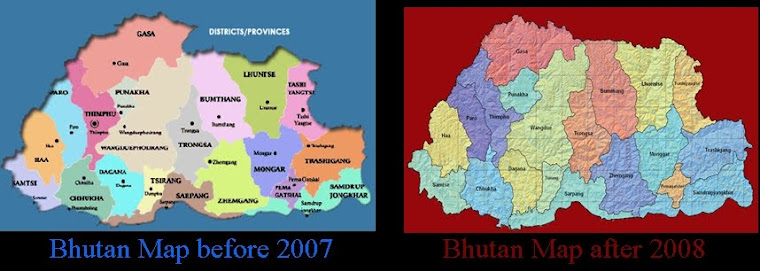
Click over the map to know the differences
Showing posts with label Nepal. Show all posts

Friday, July 18, 2014

Bhutan receives corneas from Nepal


Nepal medical institute to supply two corneas a month


Eye: More than 200 visually impaired patients could regain their eyesight, with a medical institute in Nepal committing to provide two corneas every month to Thimphu hospital from August.

Ophthalmologist at the Jigme Dorji Wangchuck national referral hospital, Dr Nor Tshering, said Nepal’s Tilganga institute of ophthalmology’s would supply the corneas.

Although Nepal has been supplying corneas to Bhutan until now, it was not on regular basis. “They provided, as and when they could arrange, and accordingly we called patients for transplant here,” Dr Nor Tshering said.

The commitment to supply regularly comes after cornea harvesting in the Tilganga institute’s eye bank improved, he said. Although the corneas come for free, the government will bear the processing fee and transportation cost. “I’m writing to the health ministry and as soon as the payment is made, we’ll get the supply,” Dr Nor Tshering said.

An eye bank will also be launched in JDWNRH some time next month. Dr Nor Tshering said, although Bhutanese are reluctant to donate eyes, few have come forward, pledging verbally to donate. Once the eye bank is operational, JDWNRH will start cornea-pledging system. “Similar to that of Nepal, it will take a while before our people start to feel the need of eye donation,” he said.

But before one donates his/her eyes, doctors will conduct a test to know the medical history of the donor and the quality of cornea.

Since 2008, the hospital has conducted 30 cornea transplants to date. More than 200 visually impaired patients are awaiting eye surgery, with most of them above 50 years.

By Nirmala Pokhrel

Sunday, July 29, 2012

Remembering the Colombo Plan

Remembering the Colombo Plan
«Bhutan’s all women delegation in Melbourne. Photo: HMRGM
Fifty years have passed since Bhutan debuted on the international stage. In 1962, Colombo Plan made an exception and admitted Bhutan as its member. In doing so, Bhutan joined its first world body.
Australia’s Prime Minister, Sir Robert Gordon Menzies (1894-1978), invited Bhutan to attend the 14th consultative committee as an observer. This meeting was held in Melbourne and chaired by the Australian senator, JG Gorton.
The head of the Bhutanese delegation, Ashi Tashi Dorji, played an instrumental role in securing this membership.
“Your Excellency, please admit Bhutan as a member of the Colombo Plan this year,” Ashi made this request to the chairman at a luncheon hosted by the Japanese ambassador.
The Australian senator, who later became the prime minister (1966-69), put down his cutlery, walked around the room and, with great enthusiasm, discussed the matter informally with the other delegates.
In the following meeting, the proposal was discussed formally and, except for Nepal, all the members agreed to accept Bhutan as a member.
At the end of the meeting, Mr Gorton pinned an opal on Ashi’s chest, and congratulated and welcomed Bhutan as its member.
The representative of Republic of South Korea saw this turn of events as an opportunity, and also applied for membership in the same meeting, and was also admitted. The New York Times reported on November 18, 1962, that South Korea and Bhutan joined the Colombo Plan.
Ashi fondly recollected her trip Down Under, but said that it had some nervous moments, particularly with the two speeches she had to deliver. The first speech was an opening address, and the second an acceptance speech. While the former was prepared in advance, the latter was an impromptu one.
“Our Bhutanese are hard working people and our young generation offer much fine materials for the future of the country.” This is how Ashi expressed the hopes of the government and aspiration of the Bhutanese.
Both speeches were short but well received, and managed to spark great interest in Bhutan. Member delegates wanted to know more and, at the end of each discussion, the standard question was, “What will our honourable members from Bhutan say about this issue?”
In 1960, Bhutan had just ended the self-imposed isolation policy, and embarked on the path of socio-economic development. Since there was no economic data, the team had no reply, and thus the standard response was, “We’ll give our opinion after the meeting,” which never happened, because the team had no clue what the meeting was all about.
The only printed information on Bhutan was the one circulated by the Bhutanese. It was a small brochure (probably the first) that was prepared with whatever little information that was available and published in Hongkong en-route.

Opal
On the final day of the meeting of the Colombo Plan, the head of the Bhutanese delegation delivered her second speech. It received a standing ovation.
In addition to being oblivious of the economic jargon, the Bhutanese team had no clue of protocols. Relating an anecdote, the head of the delegation said that, one day, a young Chinese man from the Colombo Plan Secretariat came up to her and whispered, “Since you’re the head of the delegation, you must walk in front of the other two.”
In Australia, the Bhutanese delegation stood out on three grounds. Firstly, for having the smallest delegation; secondly, the only country with an all women delegation; and lastly, Bhutan was unknown.
So, the Australians were intrigued and went out of their way to offer warm hospitality. The delegation saw the Melbourne Cup, attended a ball, and a banquet was hosted in their honor.
The governor general, Lord Richard Casey, hosted a banquet in the National Library in Canberra. The peer was one of the few Australians, who knew about Bhutan. He was governor of Bengal, during which time he made friends with Ashi’s father, Raja Sonam Tobgye Dorji. So Lord Casey was especially kind and affectionate to the Bhutanese delegation.
Before the Bhutanese team left Melbourne, the Australian Prime Minster presented Ashi with a most beautiful Australian opal brooch, which he pinned himself on her dress. The Bhutanese delegation was greatly moved by the care given by the government and the kindness of the Australians.
As a member of the Colombo Plan, Bhutan was now eligible to receive technical assistance, and have access to vast financial resources for the socio-economic development of the kingdom.

Importance of the Colombo Plan
The Colombo Plan is Bhutan’s first international membership that it sought and obtained, and was set against two important historical events.
The first was Bhutan’s conscious decision to modernise its state. The Sino-India conflict was the second historical event. Through this world forum, Bhutan announced that it existed as a sovereign nation.
Bhutan’s goal in the 1962 Colombo Plan was to secure support for the development of modern education and healthcare. Bhutanese today enjoy modern health services and have access to modern education.
As a member, Bhutan became eligible for scholarships offered by the Australian government and, as of today, almost a thousand Bhutanese have pursued higher and specialised education in Australia.
Contributed by Tshering Tashi

Saturday, July 14, 2012

Bhutanese exiles from Nepal seek India’s help


NEW DELHI: Representatives of Bhutanese refugees from Nepal and human rights group Human Rights Defence International (HRDI) on Saturday urged India to help 1.3 lakh people allegedly forced to leave Bhutan.

Speaking at a symposium organised by the HRDI at Indian Law Institute here, Bhutanese Refugee Representative Repatriation Committee chairman Bhampa Rai said that India has a moral responsibility to help secure justice for the refugees who were forced to shift to Nepal from Bhutan in the 1990s. According to Rai, the refugees, mostly ethnic Hindus called Lhotshampa in Bhutan, originally came from Nepal and settled in the southern parts of Bhutan in the early 20th century but the government termed the Lhotshampa as illegal immigrants and anti-nationals.

“The inhabitants of eastern Bhutan, the followers of Nyingmapa sect of Buddhism, have also been suppressed and deprived of their social, economic, cultural and traditional rights,” he said. daily times monitor

Tuesday, December 15, 2009

Nepal finally waves away refugees

By Alexander Casella

After dragging on for close to 18 years - often in almost farcical fashion - at an estimated cost of some US$350 million, resolution of the Bhutan refugee crisis is at hand. This month, the first batch of 25,000 refugees left camps in seven United Nations-supervised camps in eastern Nepal, and the vast majority of the 86,000 remaining have signed up for resettlement in the West; most of them are heading for the United States.

The origin of the crisis, which has exposed bureaucratic bungling and nationalist fervor at their worst, lies not so much in Bhutan as in Sikkim, which provided a foreshadow of what could have been the fate of Bhutan.

With porous borders and a weak state apparatus, the diminutive kingdom of Sikkim had become a destination of choice for a creeping ongoing uncontrolled immigration from nearby Nepal. As


the Nepalese slowly increased in number they also brought with them the political factionalism and dissent that plagued their country of origin. By 1975, the local Sikimese Bhutia had become a minority in their own country and the level of political unrest had become such that New Delhi had to step in and annex Sikkim.

The lesson was not lost on the Bhutanese, who were also exposed to similar immigration pressure from Nepal and where government circles had come to the conclusion - a view shared by many Western specialist of the region - that Bhutan was destined for extinction if decisive measures were not taken to bring to a stop what had become a process of creeping demographic encroachment.

Thus, by the early 1980s, the government of Bhutan started to tighten rules regarding immigration. Likewise, residency requirements regarding the acquisition of citizenship, though still relatively liberal in comparison to those of many Western countries, were made more stringent. Admittance to government service was also restricted to nationals and the use of the national language, Dzongkha, was made mandatory for official business.

These measures were increasingly badly received by the immigrant community and with unrest spreading in southern Bhutan, where most of the newcomers had congregated, the authorities decided to resort to a more radical solution - the wholesale expulsion of immigrants. Thus, between the end of 1990 and 1992, some 100,000 illegal immigrants were expelled from Bhutan.

While there was considerable debate as regards the precise composition of the group, the fact that some 70,000 moved to Nepal, which had no common border with Bhutan as it is separated by a strip of land that is part of India, made a compelling case for them being of Nepali origin. As for the remaining 30,000, they moved to India, where they joined the some four million strong Nepalese community.

While the expulsions were at times brutal, for the half million indigenous inhabitants of Bhutan what was at stake was the cultural survival of the last Tantric Buddhist kingdom in the Himalayas.

Had events been permitted to run their course, the 70,000 who arrived in Nepal would have faded away and the impact of their arrival in a country of some 28.5 million inhabitants which, for all practical purposes was their own, would have passed unnoticed. That events took another turn was due to an odd set of circumstances, namely the failure of the United Nations High Commissioner for Refugees (UNHCR), the UN refugee agency, to properly address the Kurdish crisis in northern Iraq in 1991.

In the wake of the first Gulf War in 1991, the US government encouraged the Kurds in northern Iraq to revolt against Saddam Hussein. When, however, Saddam turned against the Kurds, Washington did not come to their help and the result was a massive population displacement which saw hundreds of thousands of Kurds seek refuge in areas in northern Iraq not under Saddam's control, while others sought refuge in Iran and Turkey.

The exodus caught the then-high commissioner for refugees, Madame Sadako Ogata, completely unprepared and exposed her to a wave of criticism both from Western governments and the non-governmental organization community.

To mitigate censure for her failure, Ogata created, within the UNHCR bureaucracy, a so-called Emergency Response Unit allegedly responsible for ensuring that the refugee agency be capable of responding at short notice to a sudden refugee crisis anywhere in the world.

However, with no further crises in sight but an unemployed emergency unit at hand, the UNHCR bureaucracy became a solution in search of a problem. That problem suddenly emerged in 1992, when the government of Nepal asked the UNHCR to take charge of the group expelled from Bhutan on the grounds that these were "refugees", that is, foreign nationals who had fled persecution in their country of origin.

Normally, the UNHCR, before intervening, would have undertaken a survey of the caseload to determine exactly their nationality and reasons for departure. Had this been undertaken, the inescapable conclusion would have been that the overwhelming majority were actually Nepalese and hence, by the fact that they were in their own country, did not qualifying for refugee status.

But Ogata did not run a tight shop and spurred by the urge to be perceived as active, the UNHCR opened seven camps without undertaking even a semblance of a survey of the arrivals. Over subsequent years, as the UNHCR kept on pouring money into the camps, Bhutan and Nepal embarked on a series of protracted and fruitless discussions as to how to deal with the group.

While Bhutan acknowledged that among the camp population there might be a few bona-fide Bhutanese citizens whom they could accept back, they where wary of exposing themselves to a massive return. Conversely, the Nepali authorities, already embroiled in a major internal crisis, were insisting on the wholesale return of the group. By then, the camps had become hotbeds of opposition to the Bhutanese government and were in part controlled by various Marxist groups, including some of Maoist extraction.

In 1996, a senior UNHCR official on a visit to Bhutan acknowledged that the UNHCR should never have opened the camps in the first place, with the extenuating explanation that the decision to do so derived from plain stupidity rather than evil intent. But Japanese Ogata was not one to acknowledge her mistakes, and though she visited Bhutan in November 2000, she remained impervious to any recommendations to close the camps.

By the time Ogata left the UNHCR in December 2000, the situation in the camps had undergone a thorough Palestinization and with Nepal dead-set against local integration schemes, no solution appeared in sight other than the prospect of an unending financing for the camps.

Within the UNHCR, it was not a situation with which the hardcore bureaucracy found fault. With the agency's existence justified by the existence of refugees, the incentive was in opening camps rather than closing them and the more refugees to care for so much the better. And when the beneficiaries were not exactly "refugees", the temptation to stretch the rules and thus increase the number of the organization's constituents proved irresistible.

It was only in 2004, with the nomination of a new director for Asia, that the UNHCR started to reconsider the issue. With neither repatriation nor local settlement in the cards, resettlement appeared as the only viable option. Thus, by 2006, following a Canadian initiative, the so-called "Core Group" of countries which had monitored the problem and that included Australia, Canada, Denmark, the Netherlands, New Zealand, Norway and the US, decided that they would all offer resettlement slots to the camp population. With the US ready to accept up to 70 000 and a resettlement rhythm of some 20,000 a year, it was estimated that in four to five years the problem could be solved and the camps closed.

The announcement of the resettlement scheme provoked a major outcry throughout the camps. Fearful of losing their captive constituencies, the various political factions active in the camps, such as the Bhutan Communist Party, the Bhutan Peoples' Party and the Democratic Socialists, supported by exiled movements, launched a massive campaign against resettlement. Riots erupted and in May 2007 three camp inhabitants who had volunteered for resettlement were killed. As for the Nepal government, for whom the camps represented a source of income, it was only after severe pressure from the "Core Group" that it agreed to deliver exit permits to those who had been accepted for resettlement.

While the resettlement selection process proved laborious for most of the camp inhabitants, the opportunity to move to a developed country finally proved irresistible. Thus, this December, the UNHCR announced that 25,000 refugees had signed up for resettlement in the West. The Nepal office of the UNHCR said the US had so far accepted the largest number, 22,060, followed by Australia (1,006), Canada (892), Norway (316), Denmark (305), New Zealand (299) and the Netherlands (122).

With the trend towards resettlement now irreversible, it is only a matter of time before the Bhutan "refugee" issue is brought to its final conclusion.


Source: Asia Times


From blog Himalyan Watch
Wednesday, November 18, 2009

Bhutan: Shangri-La or Ethnic Cleanser?

Bhutan: Shangri-La or Ethnic Cleanser?

Tuesday, November 17th, 2009 @ 22:28 UTC
by Sonam Ongmo


A few years ago when the Fourth King of Bhutan voluntarily stepped down to make way for democracy, there was a spate of articles in the media about Bhutan. Almost all these articles – with a few exceptions – could be grouped into two camps: one glorified Bhutan as the last Shangri-la, the others claimed that it practiced ethnic cleansing.

The National Geographic aired a documentary which named Bhutan, the tiny Buddhist kingdom as the world's last Shangri-La. It celebrated its mountains, glacial walls, alpine highlands and misty forests and mentioned “Bhutan is a Living Eden where respect for life, in all its many incarnations, endures like the land itself”.


Landscape of Bhutan. Image by Flickr user Jmhullot, used under a creative commons license
Swaminathan S. Anklesaria Aiyar at Real clear World said:

Bhutan has done many things to deserve its Shangri-La reputation. Its forest cover is a very high 72%, and it has pledged to keep this above 60 % for eternity.

Meanwhile, Nanda Gautam at Ex Ponto countered:

A new trend in the sphere of human rights violations is flourishing! In contrast to Bhutan’s development philosophy called ‘Gross National Happiness,’ which many delegations visiting Bhutan are proclaiming a ‘good lesson’, Bhutan also offers a bad lesson: strategic violence in the form of ethnic cleansing, a lesson the world powers will find difficult to deal with. The ordeal of Tel Nath Rizal reflects how the state’s violation of one person’s rights spilled over to affect an entire minority. The minority population has already been reduced dramatically.

Most of these writers, if not all, were not Bhutanese. So how is it that they came to view this small country – the size of Switzerland and a population of 600,000 – in such extremes?

The first group, the admirers, usually came from the west where capitalism has led to a way of life that may have equipped them with material contents, but left many with a gaping spiritual void. They are people seeking for things they do not find in their own cultures; yet find it elsewhere. Often in places like Bhutan – largely mysterious, exotic and peaceful. So when they find it, they tend to see only the things they want to see and find only the things they want to find.

But this also applies to the second camp, the ones who hate Bhutan. They have little or no understanding of the country’s geo-political situation. They don’t understand the history or the complex nature of the refugee problem; and they are either sympathizing with the cause, or they just need a cause.

For the first camp, the search for Shangri-la didn’t just happen; it has been ongoing since 1933 when James Hilton depicted a Shangri-la in his novel, Lost Horizon based on an article by Joseph Rock about his travels to the Tibetan borderlands. But more often than not, it is Hilton’s version that they are after thus refusing to see Bhutan as a country like any other – inhabited by human beings, with its share of problems.

Bhutan is far from being the Utopia despite its largely tranquil history. As a poor country Bhutan has its share of social problems and challenges and the biggest blight to its good reputation so far has been the issue of the refugees.

A nation-wide census in the 80’s found thousands of illegal settlers along the country’s southern borders. Most of these people were Nepalese people from Nepal and India who came to Bhutan seeking economic opportunities and utilize the large tracts of free agricultural land along porous borders. Free health and educational facilities were also an added attraction. At around this time, some Lhotsampas (Ethnic Nepali-speaking Bhutanese) who were educated by the Bhutanese government in overseas universities like Harvard and Cambridge returned to Bhutan nursing their own political ambitions.


Bhutanese refugees in Nepal. Image by Sudeshna Sarkar, ISN Security Watch
The problem came to a head when the Bhutanese government demanded all illegal settlers, leave the country. This decision was opposed by the ambitious Lhotsampa leaders who sympathized with the settlers and so mobilized protests against the Bhutanese government demanding democracy and overthrow of the monarch. The environment to nurse their political ambitions was extremely favorable. They galvanized the southern people’s discontent with violent protests in which they decapitated heads of two Bhutanese and planted them at a government office. The Bhutanese government who had never experienced anything like this cracked down and arrested many of the leaders while some escaped to Nepal.

What resulted was a situation where both sides accused the other of what unfolded. Lhotsampas claim that anybody who was Nepali-speaking was forced out of the country. As the Bhutanese Community of South Australia blog mentions:

From 1988, the human rights situation aggravated, when Royal Government enacted discriminatory policies to depopulate the Lhotshampas - Southern Bhutanese of Nepalese origin, predominantly Hindus.

The Royal government treats Lhotsampas as second class citizens. They are persecuted, discriminated and denied the most basics like access to education and health facilities. They are deprived of their cultural rights and are forced to adopt the cultural tradition, costume and language of the ruling elite. In the late eighties, the Royal Government adopted retroactive citizenship legislation and started to disenfranchise and depopulate the Lhotshampas. Tens and thousands of them were forcibly evicted, who ended up in the United Nations established refugees camps in Nepal. [..]

Having failed to see the possibility of repatriation, a vast number of Bhutanese refugees have accepted the offer given by Australia, Canada, Denmark, Netherland, New Zealand, Norway and United States for third country resettlement.

The Bhutanese government claimed that while some were asked to leave, many citizens left voluntarily under threats from their own leaders. Bhutan’s first democratically elected Prime Minister Jigme Y. Thinley wrote at Bhutannica:

The situation in the south is not a simple problem. Its causes are complex and perplexing as the resultant human drama that is unfolding before us. Just who is the victim or villain is a valid question. The answer must be sought with a deeper understanding of the problem. [..]

Among the villagers in' the south, every day is a nightmare. But their voice is not heard by the media, and their human rights appear not to be of any importance. Explanations by the Government are dismissed as propaganda and plain untruths. Even concrete evidence is seen as fabrications.

The Bhutanese feel that they have been betrayed by a people they had welcomed, in whom they had placed their trust and with whom they were willing to share a common destiny. But the general attitude of the Bhutanese toward their southern compatriots do not indicate any rancour.

The adoption of human rights is a convenient banner that the dissidents and the Nepalese supporters have raised before the international community. But their greater aim is to generate international sympathy for the dissident cause, which is to grab political power.

The story got complicated as the refugees arrived in Nepal. UNHCR set up camps for the Bhutanse refugees in which free food and stipend was given and in a few years the numbers rose from 5000 (1991) to 100,000. The handouts attracted many people other than Bhutanese to those camps as more than half of Nepal's population live on less than a dollar a day.

Ethnic cleansing is a very serious charge. People who make that accusation about Bhutan should visit the country and see that thousands of Nepali-speaking people still live and work there; that even before the crisis the Fourth King encouraged integration of the ethnic groups through inter marriage with special cash incentives. Many even hold very senior positions in the government.

So what is Bhutan? A ‘Shangri-La' or ‘ethnic cleanser'? Neither, is the answer. And it would be nice if people really stopped imposing their dreams of an Eden, or their disillusionment of failed political causes and ambitions, on this little Country.


http://elitestv.com/pub/2009/11/bhutan-shangri-la-or-ethnic-cleanser