The Sorry Saga of Bhutan's North

The Sorry Saga of Bhutan's North
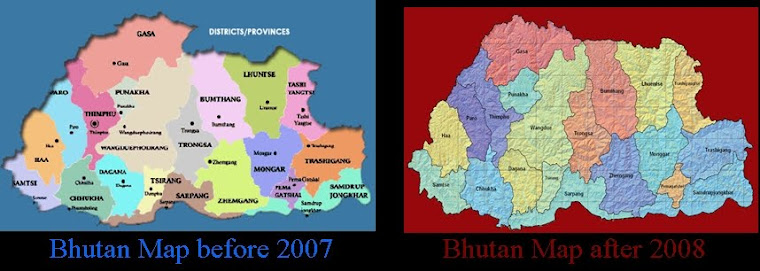
Click over the map to know the differences
Showing posts with label GNH. Show all posts

Friday, February 15, 2019

BLACKLISTED IN BHUTAN- Book Review

BLACKLISTED IN BHUTAN: Love Lost and Love Transformed in the Land of Gross National Happiness by Rieki Crins.


Rieki Crins reached Tsachaphu, then a rural village of hot spring in the Pochhu valley in Bhutan, for anthropology research for her Masters and later continued it for her Ph.D. She lands up in the village with a European mindset keeping and frequently comparing Bhutan to Medieval Europe. She has an abundant appreciation for the country and the villagers. Very soon her elite European mindset and behavior crush with the culture shock.
She reaches to a morning meal without washing her hands or face- the basic habit all Asian learn from the cradle.
She digs out the unique but prevalent features of rural health, hygiene, agriculture, culture, and hardship.
She has picked up the local language and excavated the culture to its depth and made the culture the subject of the book.
Throughout her writing, she appears an innocent and energetic researcher. Even after her Ph.D., she visits Bhutan twice a year as a tourist guide. She struggles to anchor in Bhutan with a hotel cum school. Her effort benefits many unemployed youths.
The twist comes when, without a yellow signal, her visa to Bhutan is denied without an explanation. Someone explained to her that the denial was because she was ‘Blacklisted.’ Thereafter, her writing flashback to the incidences of restriction and dictatorial rule in the silent country. She begins to see hypocrisy in the King's newfound ideology of Gross National Happiness.
She recalls some possible causes and speculates the reason to be one of her Facebook comments that possibly upset a member of the powerful royal family.
There is a big population, in and outside Bhutan, which is critical of the autocratic government. The title of the book ‘BLACKLISTED IN BHUTAN’ gets the early attention of such a group of people. 
She reached Bhutan in February 1990 when the government was iron-fisted handling a serious dissident movement. The book is free from the description of such political background.    
What she has explained but not concluded is her description of Wangmo’s and her partner- a Cello virtuoso- Maria’s anomalous behaviors in Bhutan. Her description matches TN Rizal’s description of Mind control in words and essence. Was she mind-controlled? Was her mind/intention read before taking an action on her? Reiki only can recall, re-evaluate and share it in detail in the future.   
She has also mentioned her engagement with Karen refugee/community in Burma and Thailand.
There are plenty of clues for the readers to speculate the reason for the denial of her visa to Bhutan.
On top of all the Book is a masterpiece on the culture of a Drukpa village. However, the bold title ‘BLACKLISTED’ shadows her content.

A one sitting book is full of carrying, entertaining and educating contents and is one of the must-read books for the students of culture and anthropology. 

Saturday, February 19, 2011

Beating Wives in Bhutan

Buddhist Bhutan Wrestles With 'Shocking' Abuse Study
By Vishal Arora

Religion News Service
NEW DELHI (RNS) The government commissioner charged with promoting "Gross National Happiness" in the tiny Buddhist nation of Bhutan said he was deeply dismayed by a recent study that found a majority of Bhutanese women think their husbands have the right to beat them.
Karma Tshiteem, head of Bhutan's Commission for Gross National Happiness, called the findings "surprising" and "shocking," and said such attitudes are "totally inconsistent" with Buddhist teachings.
The survey by Bhutan's National Statistics Bureau found that roughly 70 percent of women say they deserved beating if they neglect children, argue with their partners, refuse sex or burn dinner, reported the Business Bhutan newspaper.

The acceptance of domestic violence is highest (90 percent) among the women in Paro, a picturesque valley that's home to Bhutan's most revered monastery, Takshang. The capital city of Thimphu scores the lowest acceptance rate, about 50 percent, for wife beating.

"Any form of violence is totally contradictory to the teachings of the Buddha," Tshiteem said, noting that Ahimsa (non-violence) "is a central tenet in Buddhist philosophy."

Mahayana Buddhism is the state religion of Bhutan, where a vast majority of the 700,000 citizens are Buddhist.

Gross National Happiness, which seeks to create an "enlightened" society in which government fosters the well-being of people as well as other "sentient beings," was first envisioned by Bhutan's former King Jigme Singye Wangchuck in 1972.

The landlocked Himalayan nation -- about half the size of Indiana -- peacefully transitioned to democracy after the king abdicated power in 2006, but Buddhist principles continue to shape the country's government.

Bhutan's Gross National Happiness index -- as opposed to more traditional measures like a nation's economic activity -- is based on nine components of happiness: psychological well-being, ecology, health, education, culture, living standards, time use, community vitality and

good governance.


Because healthy family relationships are key to harmonious communities, "attitudes accepting such behavior, in these relationships or even outside, would be totally inconsistent" with Gross National Happiness, Tshiteem said.


Covering 15,000 households, the Bhutan Multiple Indicator Survey also found that more than one in four women believe HIV/AIDS is transmitted supernaturally; one in four children do not attend school and one in five children are involved in child labor.

Source: Huffington Post

Domestic violence in Bhutan: Bhutanese women are becoming conscious
Mehdi Hassan

Situated in the Himalayan region between India and China, Bhutan is a poorly developed country. Surprisingly, the country was ranked the 8th happiest country on the list of happy countries in the world compiled by University of Leicester. Low literacy rate, low rate of industrialization and zero exposure to foreign culture have enabled the country to keep its domestic culture and natural beauty intact.The irony is that the women of this happy country are not so happy because domestic violence is very common in Bhutan.
The worst thing is that the women who are victims of domestic violence do not go to the police. They are afraid of losing respect in the society. In many cases, women are illiterate and entirely dependent upon their husband for financial support. In addition, many women can not leave the family for their children. Silently they tolerate the brutal torture of their husbands. Kuensel Online reports:
“Most Bhutanese women just won’t shout for help, no matter how severe it gets,” said an observer. Bhutanese women, as in other countries, says Thimphu referral hospital’s Dr. Pakila Drukpa, do not want to come out in the open for various reasons. Factors like children’s welfare, fear of breakdown of marriage, and an innate embarrassment that relatives and others will come to know, influence their decisions, said Dr. Pakila.
The worst affected are those who were economically dependent on their husbands, said a spokesperson of RENEW, a non-government organisation, which provides support and services for victims of domestic violence.


The good thing is that the situation is changing. With the gradual spread of education and various NGO’s, women especially those who are living in urban areas have become conscious. Now, they seek legal counsel against domestic violence. The queen of Bhutan, her majesty Ashi Sangay Choden Wangchuck, established an organization named RENEW which deals with domestic violence.

Domestic violence can be more or less found in almost all the countries of the world but it is more common in under-developed countries. Last year, Razib Ahmed published another post about the crown prince of Nepal abusing his wife.
One of the major reasons the abusive husbands go unpunished in countries like Bhutan is that the social system and customs support men. Creating law against home violence is not enough. It has to be made sure that the law is strictly observed and at the same time awareness against violence has to be raised among women.


Source: South Asia Bussiness

Friday, July 23, 2010

Off-hour clinic: A blow to GNH

Off-hour clinic: A blow to GNH
26 June 2010
Individual happiness that totals up to gross cumu­lative happiness of the nation rests upon how healthy every single citizen is. In other words, health is the nucleus of GNH. The dynamic con­cept of GNH would not have evolved so far if its essence did emphasize money as the prime source of happiness and ignored other pertinent fac­tors like health, education, cul­ture, environment and many more. The concept appealed to the global community as it quintessentially addresses the theory of national happiness based on many other indica­tors besides financial wellbe­ing.

However, paradoxically, when the residents of Thim­phu will soon have to buy their own health if the off-hour clinic trial turns out success­ful, it clearly defeats the very purpose of GNH. Therefore, firstly as humble subjects of Their Majesties the Kings, who bestowed upon us GNH as the core tool of national develop­ment, and secondly, reinvigo­rated by our constitutional rights as legitimate voters, we must honestly defy the gov­ernment’s health reform.

When Dorji’s wife got admitted to Thimphu national referral hospital after eleven months of pregnancy, he had no hope than to witness his wife’s death. Doctors detected that their unborn baby had died a month ago. To his astonishment, however, a doctor with her surgical team performed miracle on his wife, and she survived. Since then, the couple worship all doctors as enlightened beings.

Likewise, many hundreds and thousands of others look up to our doctors with utmost trust and respect. I also agree with them and revere doc­tors as the missionaries of God. With my reverence so high, I strongly agree that our doctors ought to be rewarded with attractive salaries, perks and other incentives, much higher than any other profes­sionals. In tune with this, we are also well aware of the government’s huge budget for healthcare.

Investing in public health doesn’t go in vain as it has positive impact on socio-economic stimulation of a nation as largely proven by many advanced research­ers. For instance, a healthy person can work more hours efficiently than a sick person thus contributing better to the country’s economy.

Conversely, I don’t see Nu 300 off-hour clinic as the right way to compensate doctors or improve the healthcare system in Bhutan. In-service employ­ees – be they civil servants, corporate workers or private individuals – would not mind raising monthly healthcare contribution considerably if need be. After all, everyone knows ‘health is the ultimate wealth’.

When doctors can heal us from ailments, we must pay them off with unprecedented rewards both morally and financially. Being Buddhists, I suppose we all commit to this ethic voluntarily. But come to think of this off-hour clinic initiative. It may start as ‘off-hour’ first and once it becomes ‘on-hour,’ I visualize absolute healthcare disruption in years to come.

As time passes by, doctors in other areas such as Paro, Wangdue, Phuntsholing, and Gelephu would demand the same off-hour job. Eventu­ally, our doctors’ conduct and professionalism are at a stake. And the healthcare that sup­ports the most fundamental clause of Human Rights, ‘the right of living’, will no doubt end up completely biased and unjust.

A glimpse of American healthcare system: The US is the world’s richest economy but its happiness index falls disproportionately below the poor country like ours. How is this possible? One crucial reason is simply because we have fair and proportionate healthcare distribution. Rich or poor shall be couponed to line up to receive their medical treatments. In reverse, in the US, if someone is not insured with an insurance company, he or she is doomed to suffer.

US President Barrack Obama is admired because he promised a proper healthcare reform for the ordinary Amer­icans. Currently, his reform has created hope for millions who have been deprived of affordable healthcare facilities for the past several decades. Michael Moore, a famous Hollywood docu-film maker, pre-conceptualized Obama’s healthcare mantra and filmed a documentary titled Sicko. This factual reality film scruti­nizes how badly the American healthcare system has gone amid unprecedented econom­ic growth over the years.

Considered a failed state, neighbour Mexico performs many times better than the US in terms of public healthcare. Drug priced at least $100 in the US is provided virtually free of cost in Mexico. When researchers studied the his­torical past of the American healthcare system, they dug out the fact that the American healthcare deteriorated re­sulting from minute changes to full blown capitalization over the years. Thereby, one of the most cited authors of the world, Noam Chomsky, also foresaw tangible outcome from Obama’s reform and advocated the change.

Similarly, if Bhutan govern­ment allows Nu 300 off-hour clinic now, soon it will grow inconsistently higher than one’s own speculation. From this reform, who benefits the most? I guess some hand­ful of Bhutanese elites and those who may run insurance companies. Who knows, in the near future, some liberal governments may replace DPT and completely commer­cialize the healthcare system, thus entirely uprooting the core values of GNH, once and for all.

Respected senior citizens, intellectuals, men and women must, therefore, consider my argument and pre-empt this change before it is late. Let us together safeguard the dynamic countenance of GNH against the blows of fabricated ideas and transformation

By Kinley Wangchuk

Thailand, kin_kuzu@yahoo.co.uk
Bhutan Observer

GNH and Democracy in Bhutan

GNH and Democracy in Bhutan
25 March 2010
Bhutan will set new standards if it ensures that delivery processes in critical areas succeed in generating collective happiness, writes Malvika Singh

It is heartening to watch, witness and listen to leaders obsessed and committed to developing mechanisms and processes by which they can administer their country and bring ‘collective happiness’ to their people within the framework of an operating democracy. This is a task that needs equal participation from the civil society and the government. Both institutions need to take on the responsibility of creating a model of governance that sets a fresh, humane agenda for development within carefully spelt-out parameters. At a time of strife and violence across the planet, ‘Gross National Happiness’ could be the development philosophy and index for the future.

A landlocked kingdom that was once a fine-tuned monarchy, Bhutan had been consciously led by an enlightened king and turned into a ‘democracy’ that is structured on a carefully drafted constitution to guide its entry into the realm of the world of nations. Bhutan — with its royal family and parliamentarians — is attempting, creatively, to deal with the socio-economic and political challenges in its neighbourhood as well as on the international stage. It is also working to ensure that its administrative delivery systems carry GNH to the citizens and protect them from the onslaught of the failed systems and processes that the ‘outside’ world has had to endure.

Bhutan is remote, pristine and different. Buddhism and a sense of tranquillity dominate the country. The population is small but scattered across a rough-and-tough terrain that is difficult to traverse. It is a treasure trove of bio-diversity, which is zealously protected and revered. Its ruling elite is well-educated, informed and confident that it will have to address the many challenges and dramatic changes with alacrity as well as with considered caution. The rulers are aware of the pitfalls and problems, and are open to debates, discussions and to sharing ideas and experiences to cross the hurdles with ease.

The first crop of people who stood for elections did not come from civil society but, instead, from the elite bureaucracy that had administered the kingdom for the monarch. This simple truth brings in its wake a strange realization that the person who was trained and experienced to operate the delivery process has become the democratically elected ‘leader’. Therefore, it is imperative to nurture a new, young leadership from the community that will make demands to meet the needs of the people. The foundations of change have to be put in place in preparation for the next election.

There is need for a dialogue between the young and the old, as well as among carefully selected groups of Indians and Bhutanese regarding a number of pertinent issues — democracy and its operational mechanisms; non-government activism that supplements the work done by the State; processes that protect the environment from the ravages of commercialism; the conservation of the ethos and cultural strains that make a country and its people resilient and confident; strategies regarding effective delivery of a rooted ‘education’ to the young who will have to deal with an alien world; measures to ensure the health and well-being of all citizens, approximately 650,000 of them; and on transparent, inclusive governance with the fundamentals of GNH as the anchor.

This exercise was conducted under the banner of the Centre for Bhutan Studies and the Seminar Education Foundation, and had its first meeting in March in Thimphu. Sharing and learning are two essential ingredients of bilateral exchanges that have, unfortunately, been diluted during most ‘talks’ and ‘seminars’. This has led to polarized pontifications with the larger entity being the know-all, and therefore unable to command respect or engage in a substantive dialogue that generates smaller, more intense, workshops and discussions that lead to action on the ground.

India has much to learn from Bhutan on a number of issues, such as protection and conservation, learning, listening and good manners in the public domain as well as the profound commitment of rulers towards inclusive, effective governance. The first flush of the exciting challenges of making a fledgling democracy work and work well with transparent operating systems is palpable here. The mistakes made by democracies such as ours need to be shared, defined and scrupulously avoided.

If the delivery processes in areas such as education, health, civil society and governance can be instilled with the tenets that can ensure collective acceptance and ‘happiness’, Bhutan will be at the forefront of setting new standards for a world that is talking seriously about sustainable development. To live with your environment, by your environment and for your environment is how democracy should work. That, of course, includes all aspects of living. The carefully calibrated balance will generate pride, which is the cornerstone of self-respect and confidence.

Bhutan could lose this in-built strength quite easily, and quickly, unless it continues to pursue new strategies of good governance without making the process sterile or insular. Members of civil society, women and schools must be drawn into dialogues that discuss threadbare the many issues that the new government is grappling with. The operating structures that belong to other nations, even those in the immediate neighbourhood, are alien and will need to be adjusted to adhere to local socio-cultural, economic and philosophical needs. The purpose of these kinds of dialogues is to share ideas and translate them into better delivery systems.

If India, too, could evolve a set of dos and don’ts to monitor the operation of thepanchayat and other grassroots systems of governance and were able to judge whether they will work or not, it would be a step forward. Indians can learn a lot about the protection of heritage, enhancing the skills of the people and the conservation of the natural environment from the Bhutan experiment. Small examples, remodelled to suit different areas and regions, could become links in the larger chain of transparent, inclusive administration. Public-private partnerships need to be initiated in which the stakeholders — men, women, and children in a panchayat — participate to change their lives in accordance with the parameters that have been carefully enunciated.

The outcome of these experiments will lead to many more detailed dialogues, and, hopefully, people-to- people engagements will continue unabated. Ideally, CBS and SEF will remain a catalyst for the mushrooming of separate, independent and situation-centric partnerships. South Asia is in turmoil. International players are conducting political and military games here to achieve their limited goals at the cost of the concerned nations. Political consensus is an imperative, but that is for the heads of the Saarc states to chalk out and execute in a determined spirit of trust and comradeship.

Source: www.telegraphindia.com

Thursday, February 4, 2010

Bhutanese mists: 'Within the Realm of Happiness' by Kinley Dorji and 'Becoming a Journalist in Exile' by T.P. Mishra January 2010

By: Carey L Biron


Within the Realm of Happiness
by Kinley Dorji
Kuensel Corporation, 2008


Becoming a journalist in exile
by T P Mishra
TWMN-Bhutan, 2009
Two books present the dichotomy of Bhutan's image - from one perspective, the progressive-though-traditional idyll, to another, the authoritarian-to-dictatorial regime.

On 4 December, the royal government of Bhutan undertook perhaps its most high-profile discussion ever of the country’s human-rights record, in Geneva at the UN Human Rights Council (HRC). Simultaneously, a group of resettled Bhutanese refugees in Europe were likewise undertaking perhaps the most high-profile public demonstrations ever to highlight that same rights record. The occasion was Thimphu’s official handover of a report on its human rights to the HRC’s new Universal Periodic Review (UPR), a mechanism created in 2006 that will look at the rights records of all UN member states on a four-yearly basis. Despite decades of positioning itself as a leader of a new form of citizen-first policymaking – dubbed Gross National Happiness by the former king – the exercise in Geneva constituted the first time that Thimphu had ever engaged in an international exploration of its record on human rights, triggered both by this fresh imperative and pride in the country’s status as the world’s newest democracy.

As officials were drawing up this first-ever report, however, many observers have been angry that Thimphu was still not treating the exercise with due diligence. Although the criticism has not been from Europe alone, in Geneva the refugees gathered to allege that, despite extending to more than 11,000 words and covering a broad synopsis of recent Bhutanese history, the report included little information about the many serious accusations that have been levelled against the royal government over the past two decades. These have ranged from charges of ‘ethnic cleansing’ against the Nepali-speaking Lhotshampa community of southern Bhutan during the late 1980s and early 1990s (more than 100,000 of whom subsequently lived for years in camps in southeastern Nepal); to more recent allegations of restricting the voting rights of the some 80,000 Lhotshampa that still live in Bhutan during the country’s first-ever elections, held in early 2008.

In fact, contrary to the initial suggestions (including some subsequent reporting), the Bhutanese document does indeed include analysis of the Lhotshampa situation, albeit from a perspective that does little to address the underlying concerns. Under the heading of “Illegal immigration”, the report contextualises those tens of thousands who were kicked out of the country as having illegally emigrated to Bhutan during the 1950s; blames the “political turmoil” of the late 1980s on vested political interests; and explains the subsequent situation surrounding the refugee camps in Nepal as due to a lack of “any screening procedures”. (The “Illegal migration” section is followed by an ominous “Terrorism” section.) As correctly noted by the Geneva protestors, however, the report has nothing to say about more recent allegations, particularly those of day-to-day repression of Lhotshampa (and other minorities) of Bhutan, as well as those of many being denied the right to vote in the historic 2008 polls.

The media response to the Geneva events was telling. In Nepal, the day before the protest in Geneva was scheduled, the country’s largest-circulation English-language daily, the Kathmandu Post, published a front-page story on the rationale for the demonstration. In Bhutan, on the other hand, none of the major English papers included any mention of what was taking place in Europe – on neither the report nor the protests. Two weeks earlier, the former state-run Kuensel newspaper had published a piece on the upcoming report for the UPR under the tantalising headline, “Bhutan in the hot seat”. But the article’s first line instead included pat references to how “When Bhutan presents its national report for the universal periodic review ... the country’s delegation will be commended on the successes and also have to provide clarity on, among others, some largely inaccurate claims and allegations.” And so the grounds were set for what could have been a new page in dialogue over a notoriously contentious, if little discussed, issue: the dichotomy between Bhutan’s positioning of itself as a progressive-though-traditional idyll, and the serious criticisms of the country’s authoritarian-to-dictatorial political set-up.

Beautiful blinders
This disparity has been highlighted at the Himal office in recent months as well, as two essentially self-published Bhutan-related books have been sitting – together yet uneasily – on the editorial desk. The first of these is an achingly lyrical series of day-to-day semi-fictional vignettes written by an acclaimed former editor of Kuensel and current Information Ministry secretary; the second is a do-it-yourself handbook in the activist vein, written by a young Bhutanese journalist living in exile in Nepal. As can be adduced by their equally leading titles, as ‘companion’ pieces these two works stare in diametrically opposite directions, each in its own way digging a surreptitious elbow into the other’s soft midriff.

Becoming a Journalist in Exile is a worthy work for a very tiny readership, aimed at motivating and offering some ethical (and sometimes shrill) media guidelines for young Bhutanese both in and out of Bhutan. In addition to a few chapters of textbook-like content, this work by exile journalist T P Mishra (described as a ‘permanent resident’ of Dagana District, in southern Bhutan) also includes some smattering of pieces by journalists and media activists from other parts of the region and world. By and large, however, the book does not seem to have been written with an eye to broadening its appeal. For instance, it gives only a cursory history of the nascent Bhutanese media in exile in Nepal (though the few pages that are included are easily the most energising section of the book, giving an overview of the dozens of publications that have come and gone within the camps-based diaspora and beyond); nor is it structured so as to function as a media handbook for other exile communities.

And that is okay. While Mishra’s work descends in places into pamphleteering, the fact of the matter is the Bhutanese journalism in exile (almost exclusively in Nepal) remains active, functional and, perhaps most importantly, relevant and relatively effective – this despite significant hurdles, economic, legal and otherwise, that come with working under refugee conditions. Its pretensions to objectivity notwithstanding, after all, this is activist journalism at its most imperative. It is worth noting that exile journalists have also been functioning freely for a decade longer than have their counterparts in Bhutan, where private media was proscribed until 2006.

Can Kinley Dorji’s Within the Realm of Happiness also be termed a work of proselytising? On the surface, it would certainly not seem to be. Everything about this work is beautiful – quaint, minimalist and introspective – from the textured cover to the content, from the odd haiku-like double-spacing throughout to the author’s personal inscription in this particular copy: “Here’s hoping that Bhutan is able to preserve the last of its past,” Dorji wistfully wrote on the frontispiece. Indeed, the following 13 pieces contain all of the backward-looking nostalgia and forward-looking anticipation that one would expect from a seemingly progressive Bhutanese intellectual – Dorji seems like a great teacher and friend, and this reviewer was more than happy to follow him down the mist-enshrouded stone steps of his semi-fictional childhood. (Although the work follows the stories of different ‘characters’, all seem to be thinly veiled versions of the man himself.) But why is there a constant sense of propaganda lingering at the margins?

The answer probably begins with the title. Inevitably, and unfortunately, perfectly upstanding ideas are regularly taken over and occupied by interest groups; recall only former US President George W Bush’s repeated usage of the word freedom. Likewise, the idea of Gross National Happiness seems to hold some excellent lessons for state structures around the world; but repeating that concept ad nauseum will not only tend to grate, but will also make onlookers apprehensive about what this constant rhetoric could be covering up. If nothing else, the author’s use of ‘happiness’ as a regular motif violates an old writing-school rule: Show, don’t tell. Instead, his title page leads into his preface (“it struck me that His Majesty the King had taught us a supreme lesson in impermanence,” he writes about the 2006 announcement of the country’s transition to democracy), which finally leads to his last chapter, where the pretension finally seems to drop entirely: “[Gross Domestic Product] was a broken promise ... Representing a holistic approach to the transformation of society, [Gross National Happiness] was soon to inspire other countries as a higher goal for human development.” How true both of those statements, and how unfortunately lacking in credibility in this context.

Of course, there is far more to Druk Yul than the issue of what took place to those tens of thousands of citizens who were kicked out of the country two decades ago – far more, even, than the ethnic discrimination that continues to take place within the country today. Dorji and other writers are correct in seeking to highlight these many other uniquely Bhutanese aspects, of history and culture tradition, of beauty and pain and growth. But to carry water for a nationalistic cause under the banner of ‘the realm of happiness’, even while refusing to grapple with issues that do not fit that matrix, unfortunately tarnishes both the nationalist project and the issue it is without doubt trying to sell – in this case, the truly powerful idea of Gross National Happiness.

Through the course of Dorji’s stories, there is no mention made of any of the issues that were brought up surrounding the Universal Periodic Review reporting in Geneva. That a journalist of Dorji’s stature and insight would have nothing to say about such monumental issues in the course of his country’s modern-day evolution denotes, at best, a specific decision in favour of elision. Others, however, are keenly interested. In Geneva, the Bhutanese delegation tabled its report before 43 delegates from other member countries, and a significant percentage of them proceed to ask pointed and probing questions on issues of refugees, citizenship and repatriation. Yet according to reports, the Bhutanese delegation members’ only responses revolved around two issues: the king’s structured transition of the country to democracy, and Gross National Happiness. In such a dynamic, with Bhutan on one side of the table and the questioning delegates on the other, it is clear where T P Mishra and Kinley Dorji would have been sitting.

Carey L Biron is the desk editor for Himal Southasian.
Thursday, December 10, 2009

Bhutan is falling behind in GNH


PM and delegation return with deepened commitment to the pursuit of GNH

Lyonchhoen Jigmi Y Thinley returns from the 5th GNH conference in Brazil

5th International GNH Conference30 November, 2009 - The concept of gross national happiness (GNH) may have originated in Bhutan but, when it came to its implementation, Bhutan was falling behind other countries.

This is what the Bhutanese delegation, led by the prime minister Lyonchhoen Jigmi Y Thinley, realised after attending the 5th international GNH conference in Iguassu, Brazil.

Prime Minister Lyonchhoen Jigmi Y Thinley, who arrived home yesterday, said that he has come back with a determination to mainstream gross national happiness (GNH) in a way that every Bhutanese begins to play a more involved role. “The conference was highly educational and we learnt a lot. GNH is being implemented by NGOs, businesses and local government in certain parts of Brazil, which is far beyond what Bhutan is actually doing or has achieved,” said Lyonchhoen. “We’ve returned with the kind of concern that the people and the country, where GNH has originated, are actually falling behind.”

The conference was held from November 20 to 24 and attended by more than 800 professionals, including doctors, lawyers, educationists, as well as policy makers, civil society leaders, intellectuals and academics, students, and corporate leaders. The conference was organized by the Future Vision Ecological Institute and the Itaipu Bi-national Hydroelectric Facility.

Leading a 24-member delegation from different sections of Bhutanese society, Lyonchhoen said that the four pillars of GNH, which are divided into nine domains and further divided into 72 variables, are fully understood and appreciated by two Brazilian city governments – with a population of 130,000 and almost 300,000 people respectively. The cities are adapting GNH principles as public policy, along with 14 other municipalities, which are also reported to be taking up GNH surveys.

A nationally known cosmetics company, Natura, has also adopted its own GNH approach to enhance the well being of its employees, according to the prime minister. “This company has started implementing GNH not only in the way they manage the organisation, organisational and personnel management structures, but in terms of production as well as marketing,” he said.

Lyonchhoen said that a university in Brazil, Campinas, has also started a course on GNH and is conducting research on GNH. “In Bhutan, none of our institutes has done that,” he said.

GNH is also being practised at the community level in Brazil, according to Lyonchhoen. “In a particular village, called eco-village, the nine dimensions of GNH are being practised on a day-to-day level,” he said.

>From the first international conference to the fifth, Lyonchhoen Jigmi Y Thinley said that GNH has grown. “The focus and discussions during the 5th conference were mostly on the practice and implementation of GNH,” he said. He also said the GNH idea is spreading and that, although Bhutan is the origin of this concept, it needs to learn and understand more. “GNH remains as an idea that needs constant development and refinement. The concept has not been infused and imbedded in our policies. At the school level, university, civil servants and at the level of business people, the concept is not well understood,” he said.

Brazil is the longest journey that GNH has made, in terms of geographical distance, language and culture, according to information and communication secretary, Dasho Kinley Dorji, a member of the delegation. He said that, for Brazilians, who are taking up GNH activities, the fifth conference was an introduction to people and ideas from Bhutan, the source and the home of GNH. “Bhutanese participants actually saw people doing GNH in Brazil,” he said.

A senior government official said that they were now aware that Bhutan was not really implementing GNH.

The Bhutanese delegation has decided to form a core-group of people, who will now begin discussing how to start implementing GNH at the individual, family, community and various institutional levels, according to the Lyonchhoen. “Media will also have to play an important role,” he said.

Lyonchhoen said that Bhutan has now reached a stage where GNH can confidently be infused in very practical ways within the society, beginning from the education system. “The international conference has deepened and furthered our understanding of how GNH can be implemented, measured and monitored,” he said. “It has also deepened and furthered our commitment to its pursuit,” he said.

By Phuntsho Choden


From : Kuensel