The Sorry Saga of Bhutan's North

The Sorry Saga of Bhutan's North
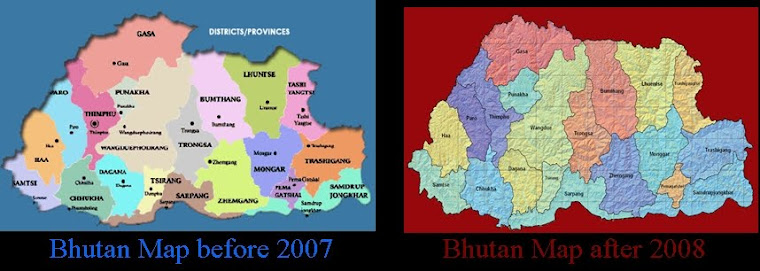
Click over the map to know the differences
Showing posts with label Jobs. Show all posts

Monday, October 12, 2009

UNEMPLOYMENT


About 9,000 seekers for 287 jobs


“By the end of January 2010, about 20,217 youth will be seeking jobs”
7th National Job Fair 12 October, 2009 - Of the 91 graduates, who applied for the posts of assistant manager in the food corporation of Bhutan (FCB), two were selected on the spot in the seventh national job fair held yesterday in Thimphu. There were about 9,000 youth looking for jobs.

There were about 9,000 youth looking for jobs.

On offer were 287 job opportunities, in which 21 private companies, six government agencies and 14 corporations participated.

“For the first time, government agencies like the royal university of Bhutan (RUB), royal civil service commission and department of human resources participated in the fair,” said the chief program officer of department of employment (DoE), Tandin Dorji. The agencies are mostly there to provide information and counsel job seekers.

For the employers, the one-day job fair was a great chance. “This is an opportunity for us to select the best,” said FCB’s administrative officer, Pema Wangchuk.

Labour minister, Lyonpo Dorji Wangdi, who inaugurated the fair, said Bhutan’s unemployment rate of 4 percent was a major concern for the government. “By the end of January 2010, about 20,217 youth will be seeking jobs,” he said.

There are 12,900 unemployed youth today and about 70 percent of them are between 15 to 24 years, of which twice as many are female.

“The government is committed in creating sufficient job opportunities for all,” the labour minister said, adding, “We don’t believe in providing jobs for the sake of employment but to provide productive and gainful employment.”

The government plans to create at least 75,000 jobs in the next several years. They will be created in tourism, information and technology, hydropower, construction, financial services, horticulture and manufacturing.

Lyonpo Dorji Wangdi also encouraged job seekers to take temporary employment to gain experiences and make a better-informed choice for long-term employment.

By Tashi Dema
Kuensel

Monday, September 21, 2009

Chicago: Gateway to the ends of the earth

Posted on Sep 8, 2009 | by Mark Kelly
GLEN ELLYN, Ill. (BP)--Cody Lorance doesn't knock. He just pushes the door open and ambles into the apartment. A little girl runs to hug him and the rest of her family filters into the room to greet their guest.

They give each other a traditional South Asian greeting -- the palms of their hands pressed together in front of them -- but what they say in Nepali is anything but traditional: "Jay Masih," which means "Victory to the Messiah."

Lorance is a church planter in Chicago. Since 2005, he and a five-member team have been working among immigrants in the city. Since they started meeting as a house church four years ago, they have seen the Lord pull together congregations among Nepali, Ethiopian and Karen people who live in rundown little apartment buildings scattered around Chicago's western suburbs.

Lorance makes himself at home, dropping casually onto the couch and peppering family members with questions in their heart language. He asks how jobs are going, talks about plans for a block party, and learns a family member has bought a car that may not have had all the appropriate paperwork to go with it. A young woman brings him a steaming glass of tea that gives off an aroma of cardamom, and Lorance sips it appreciatively. He will sit and chat with the family for hours.

He may be a pastor making a ministry visit, but he's also part of the family.

Back on the street outside, Lorance gestures at the nearby businesses and homes.

"This is a white, upper-middle-class neighborhood, but these little apartment buildings are chock-full of refugees," he points out. "So many church people pass by every day and have no idea what's going on here."

The refugees come from all over the world, and some churches are reaching out to them in ministry. Most of the visitors, however, don't spend the time necessary to develop a real relationship with the refugees.

"This is not a superficial, drive-by ministry. You've got to be willing to move beyond the American 30-minute visit," Lorance said. "You've got to get past the first cup of tea and eat a couple of meals with them. It takes three-hour, six-hour visits. You have to get to the point where you run out of the Nepali phrases you know and they run out of English -- and you still stay with them. You become more a part of their lives -- a fixture, a part of the family."

'GATEWAY TO THE ENDS OF THE EARTH'

"Chicagoland" is a gateway to the ends of the earth, Lorance said. Its 9.6 million residents speak a couple of hundred languages -- 147 officially documented by the public schools -- and many of those are the heart languages of overseas people groups that have never heard the Good News of salvation in Jesus Christ.

The work Lorance and his team are doing is helping forge a new path for North American missions -- a path that leads directly into unreached people groups overseas, said Keith Draper, executive director of the Chicago Metropolitan Baptist Association.

"When the International Mission Board tells us the first church among an unreached people of the world could begin in Chicago, we are overjoyed and looking for partners," Draper said. "Cody is doing that kind of groundbreaking work."

What began as a house church in 2005 was followed by an Ethiopian congregation in 2006 and an English As A Second Language ministry and Karen congregation in 2007. The Ethiopian group spun off a daughter church back in Ethiopia and the Karen from a daughter church in Rockford, Ill.

The Nepali congregation began meeting earlier in 2009. They have baptized 18 so far this year, including 12 reflecting rare instances of high-caste Hindus publicly declaring their faith in Jesus alone as Savior.

UNEXPECTED OPEN DOORS

Lorance sees the Lord opening doors with refugees in the most unexpected ways.

He was working in partnership with Exodus World Service, a refugee ministry based in Bloomingdale, Ill., to help refugees from Burma's Karen people group. The first family he met had been commissioned by their refugee-camp church to start a church in the United States when they arrived.

"We have prayed a lot and ... started a home Bible study two years ago and have gone from house to house as others arrived," Lorance recounted. "We had the first worship service here in December 2007 and a few months later helped start a church among Karen refugees in Rockford that had 300 in attendance for their first anniversary service."

One Wednesday evening, Lorance walked into a Karen home to lead a Bible study and found four people waiting who were definitely not Karen. Two Karen teenage girls had met some new neighbors and invited them to the Bible study. The neighbors, who were Nepalis from Bhutan, came even though they wouldn't understand what was being said.

Lorance, however, had focused on Hinduism during his graduate studies and was working at the time with the South Asia Friendship Center in Chicago's Little India. He was able to greet the visitors in Hindi.

"I had been preaching to the Karen church about missions. They have neighbors from all over the world and I had been locating people for them on a map," Lorance said. "The two girls invited their new neighbors and from that simple act of reaching out we now have a congregation of 70 Nepalis, many of them new believers. It started with a simple invitation."

That Nepali congregation is the only organization in the city for Bhutanese Nepalis, Lorance added. When a new family arrives at the airport, the Nepali congregation picks them up and takes them to a home where they enjoy a Nepali meal. They help them get moved into an apartment, work with them on getting the necessities of life in America, and the next Sunday members of that new family usually are in the congregation's service.

"It's amazing," Lorance said. "Eighty percent of the Bhutanese Nepalis in our county are in church with us on Sunday, even if they are Hindu."

In a city the size of Chicago, with its millions of lost souls, the opportunities are boundless to see God replicate the kind of Kingdom advance Lorance and his team are experiencing, said Charles Campbell, who directs church planting initiatives for the Illinois Baptist State Association.

"We need more Codys to come to Chicago," Campbell said. "My prayer is that as people see what he is doing, they will catch a vision for coming to Chicago and joining Illinois Baptists in the work there."
--30--
Mark Kelly is an assistant editor with Baptist Press. You can learn more about the mission of the Chicago Metropolitan Baptist Association at their website, www.chicagobaptist.com.

Bhutanese refugees get fresh start in Ohio

By ROBERT L. SMITH, The Associated Press 1:06 PM Monday, September 21, 2009


CLEVELAND — The families from the edge of the Himalayan Mountains arrived in Cleveland last winter as other refugees have — poor, cold and bewildered.
They had once been farmers in the tropical lowlands of Bhutan in southern Asia. Suddenly, they faced an economy based on medicine and advanced manufacturing. A brutal recession ensured there were few jobs to train for.
Their Old World skills could not help them anymore. Or could they?
On a recent morning, Nandu Poudel, 18, and O.K. Basnet, 25, stood behind a table laden with fresh vegetables in the thick of a farmers market on the campus of the Cleveland Clinic.
Men and women in hospital scrubs and lab coats streamed by. Some stopped to buy the sweet tomatoes and the seedless, Asian cucumbers offered by the two young men in fez-like Nepalese caps.
Handing over vegetables for cash, Basnet beamed like an artist selling his work.
"Farming, it's what I do," he explained in labored English, pressing a palm to his chest. "And what my father did. And his father."
The harvest of 2009 is doing more than stocking urban farmers markets in a city with a growing appetite for local agriculture. It's introducing a new class of farmers.
Seven thousand miles from their ancestral home, Bhutanese refugees are tilling the good earth outside of Cleveland and making it bloom. To the astonishment of many, they are using the old ways to gain a fresh start in their new home.
Some see a model that could employ future waves of refugees — or at least other Bhutanese. By getting back to the land, a challenged immigrant group may be getting ahead.
"We needed to put these guys to work," said Hira Fotedar, a retired Eaton Corp. executive and a friend to the local Bhutanese community. "They don't know English. They don't read. Boy, they know farming."
The farming venture sprang from a partnership between the Bhutanese families, who are mostly Hindu, and the established Hindu community of Greater Cleveland, much of it from India.
A religious minority in the Buddhist kingdom of Bhutan, the Hindu Bhutanese were driven from their villages in pogroms in the late 1980s. More than 100,000 ended up in refugee camps in nearby Nepal.
America has pledged to accept about 60,000 of the refugees by 2012. Some 400 have arrived in Akron, Cleveland and Lakewood as part of the initial wave.
Soon after the first Bhutanese families arrived in Greater Cleveland in November 2008, Parma's Shiva Vishnu Temple befriended them. Temple members bought shoes for children, who were seen walking barefoot in snow, and began job training for their parents.
Sewa International, a Hindu charity with a local chapter, joined the effort.
Volunteers for Sewa, which means "service" in Sanskrit, helped train some of the men as landscapers and some of the women as seamstresses. But a bigger job source was needed.
"They kept saying, 'You know, we're farmers. We'd like to farm,'" said Sree Sreenath, a professor of mechanical engineering at Case Western Reserve University and the president of Sewa International USA.
Sreenath knew a horticulturist at the University of Akron, who steered him to Mark Mackovjak, a Lake County farmer with land to lease.
It's at the Mackovjak farm, in Madison Township, that a new trade is taking root.
On a recent morning, a warm fall sun beamed down upon three men from Bhutan as they stooped among long rows of rutabaga, onions and turnips. With gestures, Mackovjak showed them how to thin the leafy crops, and the Bhutanese fell quietly to work.
Indra Pyakurel, a father of six, once owned his own farm in Bhutan. He grew rice and pumpkins and oranges. Now he's tending tomatoes and other exotic vegetables. He's not getting paid yet. But at night, he leaves with bags of fresh produce for his family.
Pyakurel and his co-workers — Lal Bhujel, 57, and Rohit Basnet, 30 — represent three of nine Bhutanese families learning to plant, tend, harvest and sell Midwest crops. They take turns vanpooling in from Lakewood, 50 miles away, work the fields and sleep overnight in a trailer.
There's a learning curve. Back in Bhutan, the men plowed with an ox.
But the education goes both ways, Mackovjak said. When they first arrived at his farm in April, the Bhutanese asked if they could pick wild greens he considered weeds. A Google search on "lambsquarter" revealed a nutritious salad green consumed in much of the world.
Unfamiliar with pesticides, the Bhutanese farm without them. What they can't eat or sell, they pickle or jar.
Mackovjak, the grandson of immigrants from Slovakia, said he sees his grandparents in the Bhutanese — hardworking people seeking a better life. He also sees a needed expertise.
"There's a need for farmers," he said. "Most Americans don't want to do agricultural work. That's the truth. These guys, they love the work."
The region's Hindu community envisions a business strategy: an organic farm supported by its customers. They are pulling the refugees into the Community Supported Agriculture movement, where people buy shares of a farm in exchange for a slice of the harvest.
Already, about 70 local Hindu families have purchased shares of the Bhutanese farm, Sreenath said. The investment will buy seeds and supplies for next year, when the Bhutanese intend to extend their handshake deal with Mackovjak, and maybe pay themselves for their labors.
The long-term goal is to own and farm their own land, as they did in Bhutan.
Tom Mrosko, the refugee coordinator for Cleveland Catholic Charities, which initially resettled the Bhutanese in northeast Ohio, said the strategy shows promise.
For lifelong farmers likePyakurel, 58, it offers a priceless measure of peace.
Knee-deep in ripening cucumbers, a cool wind in his face, Pyakurel smiled as if he wanted to be nowhere else.
"Life good," he said, as he plunged his hands into the earth.
___
September 21, 2009 05:04 PM EDT
Copyright 2009, The Associated Press. All rights reserved. This material may not be published, broadcast, rewritten or redistributed.