The Sorry Saga of Bhutan's North

The Sorry Saga of Bhutan's North
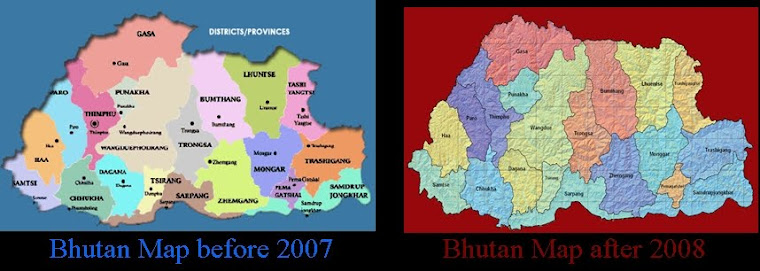
Click over the map to know the differences

Thursday, October 24, 2013

Is democracy discriminatory?

Buddhist scholar says yes, with respect to religious personalities and (non-graduate) villagers

Politics: Depriving religious personalities from the electoral process is a “total slap” in the face of Bhutanese tradition, Constitution and the dignity of a human being.

Challenging what is perhaps the most controversial clause in the country’s electoral law, an eminent scholar of Buddhism and Bhutan, Dr Karma Phuentsho said such exclusion of religious persons was “atrocious”.

“One can at least understand disallowing religious personalities to be non-partisan, just as civil servants, but depriving them of fundamental right to vote is ridiculous,” he said.

Speaking to students at the Royal Thimphu College yesterday on Buddhism and Democracy, Dr Karma Phuntsho, who is also the founder of Shejuen and Loden foundations, said article 7, clause 6 of the Constitution stated “a Bhutanese citizen shall have the right to vote”.

“Why have we not practised it?” he said, and proceeded to present the argument from different angles.

From the historical perspective, he said, Bhutan was founded by Zhabdrung, a religious person, and ruled by monks and religions personalities for 60 percent of the country’s history.

He said, to a great extent, Bhutanese always attributed religious persons for doing the rituals to ward off invaders, and believed in the power of deities on the side of Bhutan.

“Even now, whenever we talk about kings, we refer to them as choegyap or religious kings,” he said.

“It’s ridiculous that religious persons should be excluded from such important role of nation building, of protecting sovereignty of country and of electing leaders that will run the country for at least five years,” he said.

Culturally, he said, people consulted religious figures to start anything new, like starting business or constructing house.

“But on one very important matter, we keep religious persons out and decide to make decisions without them, let alone seek advice,” Dr Karma Phuntsho said.

From the social lens, citing examples of villages like Gangtoe and Ura, he said half the households comprise gomchens, which means half the decision-making villagers aregomchens.

“You exclude them from making a decision that is vital for the welfare of village, what do you expect?” he said. “Of course, a very partial decision, a decision that isn’t informed by the needs and realities of the community.”

The particular clause, he said, was totally counter-productive from the political perspective.

He said exclusion of religious persons meant narrowing down the choice of leaders.

The other electoral clause that invited criticism, requiring of university degree to seek candidature in politics, he said, also did the same.

“Regulations such as these only add to the problem of voter apathy and, as such, instead of building a vibrant, participatory democracy, we stifle it right from the start,” Dr Karma Phuntsho said.

Countering the arguments stated in the past for having the law, which was to keep religion above politics and that “democracy was about discrimination” and monks should not get into it, he said that was a very “artificial segregation of human life”.

He said an individual played religious, political and social roles and duties, basically a cluster of so many identities and to draw a artificial line on how religion was above politics was “nonsensical”.

“We don’t normally put religion up somewhere, removed from our lives,” he said. “The whole purpose of religion is lost then. It’s something we need to live by every moment of life. Religious principles ought to inspire us.”

He said, in segregating religious life from a person’s political life, in case of a Parliament member, for instance, would mean ruthless, immoral politicians, “because to a large extent, people are made good through spiritual and religious interventions.”

He said there was a fundamental misconception about discrimination and democracy.

But democracy was about going beyond electoral process and having it in all aspects of life, but in thinking so, he said it was not just about one’s right but responsibility as well.

In that, being able to discriminate good from bad, right from wrong, was good.

“It’s fundamental for proper, smooth running of society,” he said. “It is basically our faculty, capability to discern good from bad. Democracy is about such discrimination.”

On the university degree requirement, he said, it was sad the whole educational system was biased against the traditional form of education, gone in favour of modern, secular and scientific system.

He argued on how a university graduate, trained through mass education, was preferred to one tutored with great deal of attention from a master, how it was considered a token to stand for election, while a villager, who spent all his life, knowing the ground reality and problems, does not.

By Kesang Dema

More than 15 percent of Kangyur translated into English


Dzongsar Khyentse rinpoche with editors of the translation team at Shechen monastery, Bodhgaya

The monumental task is turning out to be even more complex than at first supposed

84000: It is said the Buddha taught more than 84,000 methods to attain true peace and freedom from suffering. But these teachings are as good as unavailable for most mortals, since only five percent of these have been translated into languages in use today.

Four years ago, a non-profit organisation called the 84000, chaired by Dzongsar Khyentse rinpoche, took on the enormous and “infinite” task to translate into English from Tibetan, the 70,000 pages of Kangyur text in 25 years and 161,800 pages of Tengyur in 100 years.

According to the 84000 website, Kangyur means the “translated words (of the Buddha),” and is the entire collection of texts regarded as buddhavacana or “Buddha-word” translated into Tibetan.

Tengyur means the “translated treatises” and comprises the Tibetan translations of works written by Indian Buddhist masters, explaining and elaborating the words of the Buddha.

Currently, 144 translators in different countries have translated 10,026 pages (more than 15 percent) of the Kangyur into English. Fourteen completed translations, representing more than 650 pages of Tibetan text are now published online.

But in the process, some pertinent questions recurred and to seek clarification on issues, a few members of the editorial team of the translation group met with Tibetan scholars and rinpoches in a three-day seminar that began on October 22 at Shechen monastery in Bodhgaya, India.

One concern was that scholars with knowledge of classical languages such as the Sanskrit are in decline, the danger of losing this legacy was increasing.

The editor in chief of the translation team, Tom Tillemans, said, “translation isn’t a project of mapping one word to another,” adding that translators need to be “accountable” for their work.

Tom Tillemans said the situation has got more complex than what was imagined initially. The problems encountered by the translation team, who are highly qualified in their own field, were related to the terminologies, grammatical considerations and style.

“We can’t, in many cases, simply translate the Tibetan text in abstraction from Sanskrit,” he said. “Kangyur is very different from Tengyur, in respect of the literary problems.”

Another editor of the translation team, John Canti, said that 2,800 pages of Kangyur needed to be translated every year to complete the project on time. But he said that, on an average, only five pages could be translated daily and that too depends on the complexity of text.

While it was the Tibetan scholars, who were the first to translate the words of Buddha from Sanskrit, John Canti said that only 10-15 percent of the Sanskrit version exists in a reliable edition. For works of which no Sanskrit version survived, the Tibetan version in Dege is taken as the “starting point.”

If the Sanskrit version is close to the one underlying the Tibetan translation, the English translation will either be from Sanskrit or from Tibetan, while taking account of the Sanskrit as close as possible.

If significant difference is noted in the two versions, John said the English translation would be either one of the two or both, depending on the cases.

The chairperson of 84000, Dzongsar Khyentse rinpoche, while making his opening remarks at the seminar, acknowledged Chokyi Nyima rinpoche, who initiated the idea. He said, as a facilitator of the dharma, it is the basic responsibility to make the words of Buddha available to everyone who wishes to access it.

“As a follower of Buddha and also a human being, I think our endeavour is really significant and important,” Dzongsar Khyentse rinpoche said.

However, he said, that this kind of activity should have been done 20 years before. “I personally consider this event as most important, and hope it will continue as time goes”.

Chokyi Nyima rinpoche also highlighted that dharma has been spreading across the globe, and that the words of Buddha should not only be confined to Tibet. But making this possible was a risky business and tremendously challenging.

The project aims to publish all its work online, so that it can be accessed all across the globe. Moreover, the online version has different features to explain the meaning of every word in English from both Sanskrit and Tibetan.

John Canti said publishing in form of books would be costly, while international distribution would be too difficult. Limited number of copies would be printed for the libraries. Every volume of the source text would make about 20 modern books in English.

The project is funded by 108 founding sponsors and thousands of individual donors. The Khyentse foundation also made a major contribution during the initial phase.

According to the 84000 website of the 70,000 pages of Kangyur, 5,525 have been sponsored for translation.

The venerable professor Samdhong rinpoche, Khenchen Pema Sherab rinpoche, Professor Sampa Dorji and Ratna Vajra rinpoche attended the conference as senior scholars. Chokyi Nyima rinpoche and Dzongsar Khyentse rinpoche also attended the seminar as the advisors, as did several other translators and editors.

By Tshering Dorji, Bodhgaya

KUENSEL

Saturday, October 12, 2013

From Bhutan to Minnesota, their journey is not over

Larger view


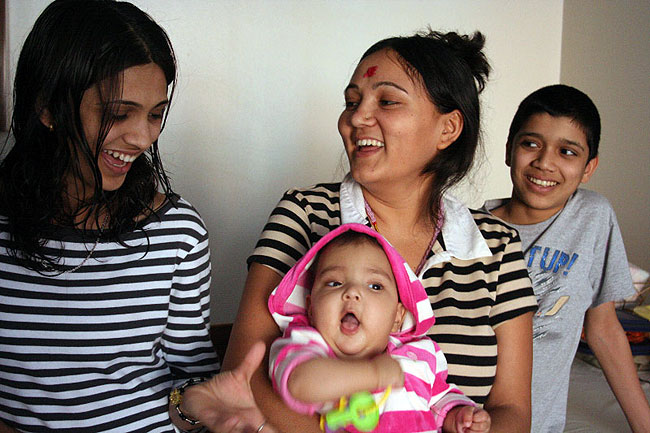
Bandana Pyakurel, 17, and her cousin Phul Maya Khatiwada, play with Khatiwada's 6-month-old daughter, Ruby. Bandana's brother, Prakash, looks on. They are part of a small Bhutanese community that has resettled in an apartment complex on St. Paul's North End. (MPR Photo/Laura Yuen).

A new group of refugees is arriving in Minnesota. They're coming from Bhutan, a tiny Asian country wedged between China and India. Tens of thousands are expected to resettle in the United States over the next several years.

About 150 of those exiles have been quietly starting their new lives in the Twin Cities. But their journey is far from over.

St. Paul, Minn. — A bundled-up Mangala Sharma is shivering on a doorstep in St. Paul. About a dozen Bhutanese families have settled into a cluster of brick apartment buildings on the city's North End, and Sharma is paying them a visit.


"Today is such a cold day," she said, waiting to be buzzed in. "It's hard on refugees, too."


Right now, the group of Bhutanese in Minnesota is so small that you might as well think of it as one big extended family, even if they're not all related.


Since last spring, Sharma has helped bring many of her relatives and in-laws to the Twin Cities from refugee camps in South Asia. Bhutan threw out ethnic Nepalese in the early 1990s, claiming they were there illegally.


These new Minnesotans represent just a sliver of one of the largest resettlement programs now under way. The United States has offered to take 60,000 Bhutanese refugees, who have lived in camps for nearly two decades. Experts say the relocation slots could be filled within five years.


Like family

Inside an apartment, husband and wife Parashar and Phul Maya Khatiwada say only one thing is missing from their lives.


"We feel everything is good, but we not get any jobs," said Parashar. "We searched everywhere, with many companies, but we (did) not get any jobs."


It's a plight that many resettlement agencies acknowledge: The Bhutanese are coming here with dreams of becoming self-sufficient, and with relatively strong English skills to boot. But the disastrous state of the U.S. economy has kept many of them at home, hungering for work.


The Khatiwadas are afraid what will happen next month, when some of the cash assistance they receive is likely to run out.
"They don't have income, so everything they have received is from the people of Minnesota."
- Bhutanese community leader Mangala Sharma


But Phul Maya Khatiwada says they have a lot to be thankful for. "They are wonderful," she said. "They help me so much."


"They" are the generous strangers who have all but adopted her as a sister.


In fact, one of those early helpers, Maureen Shealer, arrives at the apartment, along with her mom, two sisters and a niece. They're here to celebrate Phul Maya's 24th birthday -- over momo dumplings and pizza.


Shealer, a kindergarten teacher, befriended the Khatiwadas while working at the World Relief resettlement agency last summer. One of her tasks was taking a very pregnant Phul Maya to prenatal check-ups shortly after she arrived in Minnesota.


"We had a connection right away," Shealer said. "She calls me if she needs me, and I call her if I need her. We're just like normal friends."


In fact, Shealer was the one who held Phul Maya as the expecting mother wept after learning that her baby would be born with spinal bifida.

Today, that baby is now a bubbly six-month-old named Ruby. Phul Maya Khatiwada said if her daughter were born in the camp, both infant and mother probably wouldn't have survived.

Volunteers with resettlement agencies in Minnesota have been crucial to refugees like Khatiwada, Sharma said.

"They took her to the hospital, they brought food, diapers, toothpaste, and all this furniture you see here," Sharma said. "They don't have income, so everything they have received is from the people of Minnesota."

Sharma, who spent several years living in Atlanta before moving to the Twin Cities suburb of Lauderdale, has emerged as a community leader here. But even she has lived in Minnesota for less than two years.
"I can't think of another country where people know less about the situation that the refugees left."
- UNHCR settlement officer Larry Yungk


Sharma is helping plan the first-ever "Bhutan Day" next month to call attention to some common challenges. The event, scheduled for Feb. 28, will also celebrate their culture and offer everything from yoga lessons to advice on how to survive Minnesota winters.


About 7,000 to 8,000 Bhutanese refugees are scattered across the United States, from Georgia to Idaho. So far, not one city has emerged as a magnet for the community, but that could change with secondary migrations.


Larry Yungk, a senior resettlement officer with the United Nations High Commissioner for Refugees, said he sympathizes with the Bhutanese refugees because their community is so small, and their story hasn't been widely told.


"I can't think of another country where people know less about the situation that the refugees left," Yungk said. "What people know about Bhutan is a utopia, Shangri-la, kind of thing. But I don't think people look at it as a country where one-sixth of the population was ethnically cleansed."


While the Bhutanese government has in recent years begun to allow outside influences such as TV and the Internet, the nation remains largely insular. The Buddhist kingdom even has an official quotient measuring quality of life, called the "Gross National Happiness." The country's unfettered Himalayan views have attracted vacationing celebrities and other well-heeled tourists.


The contrast in climate here in Minnesota has presented problems for some Bhutanese refugees. Elderly individuals who speak no English say they feel isolated in their apartments.


Even 37-year-old Parmananda Khatiwoda, who also works at World Relief in Richfield, says the weather has been his biggest hurdle.


"I started coming to work on Jan. 2, and I changed three buses, so that's challenging," he said with a laugh. "I've never, ever come across this cold in my life."


Coming to the U.S., he said, has been a long odyssey. Khatiwoda still recalls the humility he felt at the camp in Nepal, as he stood in line for rations of rice and lentils.


"You felt like such a beggar," he said. "People who have a lot of ego or self-respect, it's really difficult. That went on for 17 years."


Worse yet, he said, was the realization that his own government denied him.


"You don't have a country. You want to work. You don't have citizenship," he said.


But he says one day, that will change -- here in his new country.

MPRNEWS

BMF to support media studies program


BMF1


Bhutan Media Foundation and Sherubtse College signed a formal agreement on September 28 to support the Media Studies undergraduate degree programme that the college launched last August.


BMF’s executive director Dawa Penjor and officiating director of Sherubtse College Dr Sonam Wangmo

The foundation’s executive director Dawa Penjor and one of the board members Needrup Zangpo was at Sherubtse College from 27-29 September 2013 to discuss BMF’s possible interventions to support the Media Studies programme.

“BMF’s support to the program will consist of guest lectures, specialised training programs, workshops and seminars on various subjects of journalism and media,” Dawa Penjor said.

As a part of the collaboration, BMF will facilitate students and faculties to intern and work with the Bhutanese, Indian and international media agencies as well as exchange programs and support the strengthening of the student newsletter and campus Radio.

From the next academic year, Sherubtse College will also offer one to two seats for in-service Bhutanese media persons to pursue undergraduate degree in media studies. BMF will identify the candidates who fulfill the college’s admission criteria, and also search and establish scholarships.

Kuensel

Vanishing tongues


Languages of some remote communities are in immediate danger of extinction


COVER STORY Lama Shacha Tenzin, Angay Choden and Dadum have one thing in common besides being elderly members of their communities. They share a concern for the tongues they speak.

Lama Shacha Tenzin, 80, is from a remote village call Daksa in Gongdue, Mongar. Choden, 78, is from another remote village of Rukha from Wangduephodrang, and Dadum, 80 from the Doya community in Dorokha, Samtse.

While still being remote, their communities have felt and experienced the impacts of modernisation and development.

Lama Shacha Tenzin’s Gonduepkha, Choden’s Olekha and Dadum’s Lhotam have been recognised as dialects, among several others, under threat of disappearing, by linguists, who are currently in the process of documenting and preserving these tongues.

In Gongdue, only a handful can communicate in Gongduepkha, while the majority has moved on to other languages like Dzongkha, Sharchopkha and English.

“The youth don’t show much interest to learn their native tongue,” he said. “There’s modern education and new modes of communication.”

Gongdue has five chiwogs with 330 houses. It is one of the most remote gewogs in the country and, officially, it is five-day walk from Mongar town.

The gewog centre is at Daksa, which has highest number of people with 33 households. It has a school, a renewable natural resources centre (RNRC) and a basic health unit (BHU).

Currently, a farm road from Silambi gewog to Gongdue is under construction. These two gewogs are also the poorest in the dzongkhag.

Before many lived in the huts with banana leaves for roofing. With help from Tarayana foundation, many have built traditional one-story houses with CGI roofs.

Along with such developmental activities and exposure, the dominance of other languages has come.

Even in his family, Lama Shacha Tenzin said, children, who were currently living in other districts, preferred to speak other languages. “When I answer calls, they speak to me in Sharchopkha or Dzongkha.”

Gongduepkha, he said, was spoken by ancestors since time immemorial, but it was now waning.


Kuenga, 51, is the youngest among those who can speak Olekha in Rukha, Wangdue


Angay Choden worries that her native tongue, Olekha, dies with her generation


In Rukha, bonism rituals involve use of Olekha


Dadum, 80


“We’ve managed to hold on to our traditional way of life and have many customs intact,” another elderly community member, Abi Yeshi, 70, said. “But our tongue may only be a name in future.”

Roads, education, radio, inter-cultural marriage, people from outside settling in the community, she said, has also impacted on the use of Gongduepkha.

“It saddens us to see it happen,” she said. “But there is comfort only in the fact that younger generation who were getting well versed in Dzongkha and English, have better opportunities for employment.”

“As communities open up different cultures are accepted and it breaks down social and cultural barriers,” Gongdue gup, Kencho Tshering said. “Over time local languages lose charm and utility.

In Rukha, Wangduephodrang the local tongue Olekha is under similar threat. Village elders say Olekha was the tongue once spoken by Rukha community. Now only a handful of locals are comfortable speaking it for everyday communication.

Most of the words are similar with that of Reti, the language spoken by the Monpa community in Trongsa.

“In fact, Oleps are also believed to have originated from Reti and settled down in Rukha valley while practising shifting cultivation,” Angay Choden, 78, who is originally from Reti said.

Apart from Angay Choden, four other elderly members of the community speak Olekha. Kuenga, 51, is the youngest to have thorough knowledge about the tongue.

“When we’re gone, our native tongue will end with us,” Angay Choden said.

Today there are around 17 households in the village, but all originated from two machims(ancestral houses) belonging to two early settlers, who were siblings.

There were only two concrete houses belonging to two siblings until 2000, when the other 15 were also built in a uniform style with support from Tarayana foundation.

Tekpa, 80, a village pawo, said Oleps were thekhelps (taxers) of Zhabdrung Ngawang Namgyal. Since they were living in thetsamdro (pasture) of the Punakha dratshang, they were asked to leave.

“Some left for Nabji Khorphu, some to Pasakha and some even to Tibet,” Tekpa said. “Only two siblings chose to remain back and that’s how Oleps exist.”

Rukha village is surrounded by a chain of hills and it takes seven hours by foot from Taksha bridge on the Wangdue highway.

Maize and rice are the staple crops. Farmers have piggeries, and recently two fishery ponds were started. Bonism, which practises sacrifice, is still prevalent. Ritual performed by the pawo requires a pig or ox as sacrifice to local deities to release the patient’s soul.

It is in this ritual that the Olekha is used, apart from the few elderly who speak it.

Otherwise, Dzongkha, which was once a second language, has now taken over as the main language in the community. Most members of the community can also speak Lhotshamkha fluently.

Cross-cultural marriage, education, and developmental activities, elders said, was the reason why Dzongkha took over.

“Though my father was an Olep, I can’t speak a word of it; my father would communicate in Dzongkha and I was never taught Olepaikha,” she said.

Tekpa’s wife, Kilem, 74, said the youth were also disinterested. “We try and teach them the basics, but they don’t come forward and are reluctant,” she said. “There’s no passion and sometimes it’s also seen as inferior to speak our tongue.”

Though the Oleps have a good number of songs, not one has been recorded and none in the community can count till ten in Olekha.

Far south, in Lhoto-Kuchu originally known as ‘Doya’ under Dorokha dungkhag in Samtse, the elders believe they are slightly in a better position when it comes to preserving their tongue. The dominant tongue in use is the local dialect, Lhota officially known as Lhop.

The community, which is a five-hour drive from Samtse, has three parts, Lhoto-Kuchu Jigme, Lhoto-kuchu Singye and Lhoto-kuchu Wangchuck.

No one in the community knows how the Lhota dialect came about. Elderly Doyabs said they believe in maintaining what their ancestral have left for them.

While it would have been a surprise to hear a Doyab speak Dzongkha about a few decades back, it is now ordinary. Elders in the community say, over the years, with development, people from other communities started coming in and, with them, came different languages, like Dzongkha and Lhotshamkha.

While multilingualism was encouraged and appreciated, the elders said they did not discourage them to learn their own too. Few said, if the trend continued, Lhotam might be heading down the same road as other threatened languages.

Dadum, 80, said the elders made sure to speak in Lhotam among themselves, and it was compulsory for children to speak in their own dialect. “We don’t want them to forget their language,” he said. “But we don’t discourage them from learning Dzongkha too.”

The community, however, has young Doyabs, who can only speak basic Lhotam and are more fluent in Dzongkha. “Parents are advised to be responsible.”

As a teenage, Dadum said he never heard of Dzongkha or anyone speak it. “I only remember meeting people, who spoke Lhotshamkha, since they were living in neighbouring villages,” he said.

Because of the proximity, Dadum picked up Lhotshamkha but never learnt Dzongkha.

“Our children started going to school and picked up different languages,” he said, adding these new languages were of use when they visited Samtse.

Dzongkha, he said, also came in with government officials working in their communities, and through the non-formal education (NFE) program started in the 1990s.

Penden Lham, 20, said she picked up Dzongkha after joining the NFE. “The first word I learnt was lopen (teacher),” she said. “It was difficult at first but we picked up, and I think it’s good for us to know another language apart from our own.”

Like Dadum and Penden Lham, Doyap’s speak Lhotam among themselves. “But we do fear that it might disappear, so we ask children to communicate with us in Lhotam only,” Dadum said.

Almost all, which is 985 men, women and children living in the three communities speak Lhotam.

Omchu, 56 said it was comfortable speaking in their own tongue. “But we worry sometime that our language might come to an end like our attire,” she said. “The young hardly ever wears our attire.”

Another villager Nima said sometime he is overcome with feelings that development, while bringing in a lot of possibilities, also kills the uniqueness and identity of a community.

For the youth, Lhotam doesn’t serve a purpose beyond their villages and learning Dzongkha is not a fad but a necessity. “We don’t see harm in talking in Dzongkha, after all it is a language too,” a Doyap taxi driver, Cho Thinley, 30, said.

By Dechen Tshering, Mongar
Tshering Namgyal, Wangdue
Yangchen C Rinzin, Samtse


The great family festival of Himali Hindu communities

A ten-day celebration of the victory of good over evil
Dasain is the biggest and most important festival of the Himali Hindu community, especially the followers of Shakti/Devi or Shakta cult, to mark the victory of good over evil.
Dasain begins on the first day of the bright fortnight of Ashwin (the month of Hindu calendar). It falls in September/October every year.
This festival is generally celebrated for 15 days, from Aswin Shukla pratipada to Purnima (full moon). The main celebration is for nine days, which are on the 7th day (Fulpati), 8th day (Mahastami), 9th day (Mahanawami) and 10th day (Dasain, Dashami or Vajayadashami), followed by the five-day Dasain celebration up to Purnima. But the 10th day is the most important.
The first day of the Dasain festival is called “Ghatasthapana” that falls on Aswin of the Hindu calendar, corresponding to the first day of the month of the Bhutanese calendar (tshe-chi).
On Ghatasthapana, the Himali Hindus worship diyo (an oil-fed lamp), kalash (auspicious jar with water and flowers) and Lord Ganesh, in accordance with Vedic rituals, and sow maize, wheat, barley seeds in a pot filled with soil, sand and cow dung for germination of the auspicious jamara (golden shoots). The jamara adds a lot of colour to the celebration of Dasain. The celebration of Dasain without these seedlings and red tika would be like celebrating Christmas without pines and poinsettia.
Prayers are also offered to Durga Bhavani, the goddess of power, and to the goddess Mahakali, Mahalaxmi and Mahasaraswati, marking the beginning of the Navaratri (nine nights).
During the Navaratri, thousands of devotees visit shrines of Goddess Durga Devi/Bhavani in the early morning. People also recite sacred verses and hymns dedicated to Durga Devi/Bahavani at temples and shrines, as well as at their homes.
The Fulpati festival is observed on the seventh day. Fulpati consists of the kalash (traditional jar) filled with holy water, banana stalks, jamara, belpatra, pomegranate, jayanti flower, ginger plant and sugarcane, which are tied with a red cloth, and offered to Durga.
The eighth day is known as Maha Astami, and the ninth day of the festival is called Nawami. The Mahanawami festival on the ninth day of Navaratra signifies the reign of good over evil.
The worship of Durga over nine days culminates formally on the day of VijayaDashami (tshe-chi), after the “abhishekh” or sprinkling of holy water on the head to mark the beginning of Dasain.
The golden maize, wheat and barley shoot (jamara) and the auspicious red tika are offered on the forehead by parents to their children, and by elders to their juniors on Dasain festival, with blessings of peace, progress and prosperity. The red tika also symbolises the blood that ties the family together.
On Dasain, people visit relatives to receive tika and jamara from their elders. The tikareceiving function is celebrated for five to seven days until full moon day (tshe-chenga).
This festival is also known for its emphasis on family gatherings, as well as on a renewal of community ties. People return from all parts of the world, as well as different parts of the country, to celebrate together.
Buying and wearing new clothes is an important part of the festival. For many people in the villages, new clothes come only with Dasain.
Bamboo swings are also constructed as a way of celebration. These swings are called ‘ping’ in Lhotshampa, and present the best of local culture, tradition, community spirit and fun. The swings are normally constructed a week before Ghatasthapana, and dismantled only after the festival of Tihar, which comes after Dasain. Different kinds of fairs and celebratory events are also organised during the festival.
This year Dasain falls on October 14, and the auspicious time to apply tika is around 9am.
According to the Hindu epic, the Ramayana, Lord Ram defeated Ravan on the tenth day and restored peace and harmony. It is said that lord Ram was successful in the battle, only when goddess Durga was evoked. The festival is thus named as the ten-day festival, Dasain, among Himali Hindu community.
Buddhists remember this day, as Emperor Ashoka of the Indian subcontinent abandoned violence on this day, and took the path of Buddhism.
The main deity to be worshipped during the entire period of Navaratri is Durga Devi, the universal mother goddess. In other words, she is the one, who presides over the entire ceremonial rituals of Dasain. According to the very old Hindu text, Devi Puran, Durga is said to have assumed nine different forms each day. The age-old Hindu tradition recommends that the nine different forms of the mother goddess be worshipped during this holy period.
The Himali Hindu tradition of Shakti or mother goddess worship has a very ancient origin. According to some scholars, its antiquity goes way back to the Vedic period. When we take a look at the Vedas that go back as far as 6000 years BC, we encounter several interesting hymns dedicated to Devi, the universal mother goddess. Some of her earlier names mentioned in the Vedas are Usha, Vac, Ratri and Aditi. All these names owe their origin to the Vedic concept of the universal mother goddess.
In the Puranic era, Devi appears to have been duly honoured with many symbolic names, such as Chamunda, Durga, Kali, Laxmi, Saraswati and so on. However, she is basically identified with Parvati, the wife of Lord Shiva. The Devi Mahatmya of Markandeya Purana, said to be one of the most popular works ever known in the history of Hindu religion, tells us how all the gods in the remote past had to rush to Devi Durga for shelter, when they were defeated by demons in the war. Since it was only Devi, who could destroy the demons and rescue her devotees from miseries, she has always been regarded as Maha Shakti and worshipped accordingly by all Hindus. She is said to have emanated from the fully combined energies of all the gods, including the Hindu triad of Brahma, Vishnu and Shiva.
It is for this festival that the Himali Hindus most liberally spend their hard earned money. The amount spent on special food and new clothes for family members is the most significant part of their Dasain expenditure.


Contributed by

Chhatrapati Phuyel, Dorokha, Bhutan
E-mail: cippytari@yahoo.com

His Majesty Inaugurates RIGSS A Premier New Think Tank For Bhutan

His Majesty the King graced the opening ceremony of the Royal Institute for Governance and Strategic Studies (RIGSS) in Phuentsholing on Thursday. The institute was established as a Royal Initiative of His Majesty the King with the mandate or vision to promote excellence in governance, leadership and strategic studies.
His Majesty the King under whose patronage the institute was established is also the Chairman of the Institutes Governing body.
The composition of the members of the governing body gives an idea on the multi faceted and important nature of the institute.
The members of the Governing body are RCSC Chairman Lyonpo Thinley Gyamtsho as Vice Chairman with members like Chief Operations Officer, RBA Major General Batoo Tshering , RUB Vice Chancellor Dasho Pema Thinley, Foreign Secretary Yeshey Dorji, Education Secretary Sangay Zam,  Director, Bureau of Law & Order Karma T. Namgyal, DHI CEO Karma Yonten and Chewang Rinzin, Project Coordinator, RIGSS as member secretary.
The Institute has listed down some important missions on its website.  It aims to provide high-quality leadership training and education that are Bhutan-centric and globally relevant, promote critical analysis of public policies and research works that influence real-life policy decisions and serve as a think-tank for governmental, non-governmental, private and corporate organizations.
It will also provide a platform for leaders from different sectors to interact and brainstorm on critical national issues and network with leading national and international institutions and agencies to collaborate on research studies and training programs, and to allow for sharing of resources for mutual benefit
To achieve its visions and mission RIGSS will use strategies like recruiting top-notch faculty members, attracting the best candidates, providing high quality training and engaging in high-impact research activities.
It will ensure diversity of students, faculty and programs to promote diversity of ideas, develop a global profile and reach through institutional linkages, and  upgrading the quality of its programs and adopting the best practices in the operation of the institute.
The rationale of the institute is stated as, “Creating a premier institute in the country for leadership, governance and strategic studies is the vision of His Majesty Jigme Khesar Namgyel Wangchuck, the Fifth King of Bhutan. This noble vision signifies the paramount importance His Majesty attaches to the development of intellectual capacity of our leaders and the promotion of good governance in the country as a cornerstone of Bhutan’s long term peace, prosperity and unity.”
RIGSS is, therefore, being established to provide a forum to train both incumbent and potential leaders in all major areas of nation building.
The website says that as Bhutan enters a new era in its evolution as a sovereign nation state, RIGSS offers yet another avenue for Bhutan’s leaders to come together and generate the ideas that provide solutions to the challenges Bhutan face’s as a small and vulnerable society.
The institute has an eminent 13 member faculty so far of which the six Bhutanese faculty members are ACC Chairperson Dasho Neten Zangmo, Head of Center of Bhutan Studies Dasho Karma Ura, GNHC Secretary Karma Tshiteem, National Council Thrizin Sonam Kinga and NC Eminent member Tashi Wangyal.
Other foreign faculty members are Adrian Chan from Singapore with expertise in leadership development, Professor Anup K. Sinha at Indian Institute of Management Calcutta, Secretary of the Technology Development Board, GoI Harkesh Mittal, Horacio Falcão who is an affiliate Professor of Decision Sciences with INSEAD where he has been teaching both Negotiation and International Management.
Other faculty members are  Lt General (Retd) Dr. Rajesh Kochar as former Chief of Staff of the Army Training Command, of the Indian Army, and Dean R. Sudarshan who has had distinguished careers in research, development programme design and implementation, and governance working with the  St. John’s College, University of Cambridge and UNDP and the Ford Foundation with several international publications.
Ms. Olivia Baciu is international development consultant, trainer, and evaluator, having worked in 21 countries.
The Institute currently has a 4 week Senior Executive Leadership Programme (SELP). It is specifically designed for senior public service officials and corporate executives who face the challenges of governance and decision-making The first week of the course is called the  ‘Bhutan module’ and focuses mainly on political history, structure, transition to democracy, five years plans and long term developmental goals, economic self reliance, national security and foreign relations.
The second week called governance and leadership focuses on Self-management and Leadership, Ethics, Integrity and Professionalism in Public Service, Effective Negotiation, Managing Organizational Change,Evaluation and Monitoring Tools,Good Governance, and Human Rights.The third week’s module termed ‘The political economy of public policy’ focuses on Bhutan’s Economic Opportunities  and Vulnerabilities, the Process and Politics of Policy Making, Infrastructure, Investment and Development, SMEs, SOEs  and Economic Development,  Public Finance, Riding the Waves of Globalization- Strategies for Bhutan and Democracy: Institutions and Politics of Resource Allocation.
The fourth week is an overseas field visit to a selected foreign country will allow participants to discuss with relevant institutions and officials in that country a real-life policy,management,governance issue. Participants will get to apply leadership skills and knowledge acquired during the preceding weeks of classroom sessions to this practical issue and propose a viable strategic plan. Other features of the program are policy debates on contentious issues and high quality lectures on Fridays and a 90 percent attendance will be required to avail the course certificate.
There are currently 23 mainly senior people from various government agencies taking the course. These are 2 Dzongdas, 2 Drangpons, 1 officers from each ministry, 2 members from Constitutional Bodies, 2 members from Autonomous agencies, 1 each from the RBA, RBG and RBP and two from government owned corporations.
In the future RIGSS will also aim to provide tailor made courses to Parliamentarians, media professionals, local leaders and etc.
The institute was established due to generous support from the Government of India.
The inaugural session was also attended by Her Majesty the Gyaltsuen, Prime Minister Tshering Tobgay, Ministers, Secretaries and Drangpons.

Tenzing Lamsang / Thimphu
Fri, Oct 11th, 2013

Wednesday, October 9, 2013

Bhutanese refugees prove you can farm rice, in Vermont


Credit: Lauren Ober
A Bhutanese woman harvesting rice in a Vermont paddy.

Rita Neopaney would have preferred better weather for today's rice harvest; it’s chilly and overcast. But she's philosophical about it.

“Today, the climate doesn't favor us. No sun. So what to do? Vermont,” she says.

There are many places in the world known for producing rice - China, India and Japan, to name a few. Vermont is not one of them. But a community of refugees from the Himalayan kingdom of Bhutan is beginning to experiment with the grain in this New England state.

Neopaney and dozens of other Bhutanese refugees have come out to the Ethan Allen Homestead to pick rice in the traditional way -- with their hands. No machinery.

Some people cut the rice from the quarter acre paddy, while others bunch the stalks and tie the bundles with twine. Still others beat the bundles against logs to dislodge the rice grains.
“They cannot wait and watch. If somebody cut that, my job is to tie,” says Neopaney. “And my job is to beat."
The Bhutanese rice paddy is a project of the Association of Africans Living in Vermont, though these are refugees from Asia. The group runs a program called New Farms for New Americans, which provides refugees with land so they can grow foods from home. Last year, Bhutanese elders here suggested they might like to farm rice.
“Rice is one of the most culturally significant foods for this community,” says Alisha Laramee, who oversees the rice paddy project.

“It's eaten twice a day in all the homes. Right now in this area, there are over 1,500 Bhutanese, so this is something that's in high demand in people's homes.”

It might seem odd to farm rice in such a cold climate. But the Bhutanese found a Japanese cold weather rice variety and planted it last year as a test. It was so successful, they expanded the paddy this year. Rice needs lots of water to grow, but thanks to the nearby Winooski River the paddy had plenty of it.

If all goes well, next year's paddy will grow to five acres.

“It's an experiment in the making, but it's proved to be really successful for the community,” says Laramee. “I think there's a lot of memory associated with this project in particular.”

The refugees here in Vermont are Bhutanese by nationality, but they're ethnically Nepali. In the 1980s, the government of Bhutan began expelling ethnic Nepalis, who spent decades in refugee camps in Nepal.

Back in Bhutan, everyone knew how to farm rice, says Ashok Dahal, who’s harvesting today.

“It didn't matter how good you were with other jobs or how much you study. You had to know how to plant the rice,” he says.

Most of the people harvesting the rice on this day are elders like Dahal. But the younger Bhutanese were raised in refugee camps, and there were no rice paddies in the camps.

“That younger generation, they don't remember this,” says Laramee. “I do wonder, because this is associated with an older generation, will this be lost for the younger folks.”

Maybe not, though.

After the Bhutanese have made their way through much of the paddy, cutting clumps of rice with hand sickles, Neopaney invites onlookers to help out.

“Excuse me, please. If you want to help us you can come over.”

So I get a sickle and wait for some instruction. Rita Neopaney shows me how to grab the rice stalks and cut them.

I whack the stalks with the sickle. A grass-green bunch with golden pods full of rice falls into my hand.

“Yeah, like that,” says Neopaney.

And just like that, I'm harvesting rice.

Then, as if the universe wanted to prove to me how hard this work is, I slice my finger open with the sickle. A gasp goes up from the women working in the field.

“That's like so….”

“Amateur?” I say.

“Yeah, amateur,” says Neopaney, laughing. “You know, we need skills.”

It's true. Skills are critical for harvesting rice, and the Bhutanese have them. Their haul is much bigger than they expected - about 1,100 pounds.

They won't eat this rice. Instead, they'll dry it and save it to plant next year. If all goes well, a year from now the Bhutanese in Vermont will be making daals and curries with the rice they grew. And that will bring them just a little bit closer to the life they left so many years ago.


The Bhutanese rice paddy is a project of the Association of Africans Living in Vermont, a Burlington-based nonprofit serving refugees from all over the world.A Bhutanese man makes a butterfly out of rice stalks. These butterflies would traditionally hang in Bhutanese homes until the following year's rice harvest.


SOURCE: PRI

Monday, October 7, 2013

Bhutan Prepares for Another Eviction

........Population figure discrepancyThere is a difference of 100,00 between the NSB projection and the census record 

Statistics: Bhutan’s population could be about 100,000 lower than projections of the national statistical bureau (NSB), according to figures maintained by the home ministry’s department of civil registration and census.

Bhutan’s population stood at 633,607 as of September 11 this year, as per the civil registry records. NSB’s projections put the population figure at 733,004 for 2013.

NSB’s projections are based on the population growth rate of 1.9 percent, which is derived from the 2005 population and housing census of Bhutan (PHCB). Accordingly, NSB projected the population for 2012 at 720,679 with 375,554 males and 345,125 females.

Civil registration officials presented the figures last month to district judges, who were in Thimphu attending a training programme.

According to the census figure, 322,020 persons are males and 311,587 are females. By age group, 390,802 fall between age group of 18 to 65 years, which makes up 62 percent of the population. The remaining 206,915 are under 17 years. Six percent or 35,890 persons are above 66 years of age.

According to the Constitution, a person, both of whose parents are citizens of Bhutan, shall be a natural born citizen of Bhutan. A person, domiciled in Bhutan on or before December 31, 1958, and whose name, if registered in the official record of the government of Bhutan, shall be a citizen of Bhutan by registration.

The 2005 population and housing census of Bhutan conducted in May that year, and the principal source of information for the NSB, was enumerated using the de facto and de jure method.

Then the actual resident population enumerated, as of May 30 and 31, 2005, was 634,982 persons, of which 333,595 persons were male and 301,387 were females. The total urban population was 196,111 while 438,871 lived in rural areas.


The population break up as of September 11

Population censuses were undertaken in 1969 and 1980, during which population figures were found to be bloated because of the large influx of migrants from neighbouring countries, particularly labour migrants at the instance of construction coinciding with the large-scale development work on infrastructure expansion.

“In 1996, the total population was found to be around 600,000,” the NSB 2012 statistical yearbook states.

Meanwhile, civil registry records state that, as of September 11 this year, 56,444 non-Bhutanese were in the country with valid permit.

Of this 51,139 were non-Bhutanese construction workers, 56 were student cardholders, 961 were dependent cardholders, 894 with marriage certificate card holders, who married Bhutanese, and 746 were entry permit holders.

There were also 2,648 Tibetans, of which 993 were green card holders, who opted to stay in Bhutan, while 1,655 were stay permit holders, who opted to leave the country as and when they wished.

The number of non-Bhutanese residing in Bhutan is expected to be higher. For instance, immigration officials detected a total of 2,952 illegal immigrants from 2008 to 2012.

The highest numbers were detected in 2010 with 624, followed by 613 in 2009. The total figure detected in 2012 was 496.

The inspection during 2010 included 46 hawkers, 29 sadhus, 106 illegal sweepers and 193 illegal maids.

Immigration officials also collected Nu 36.1M as fines and penalties between 2010 and 2103. The highest collection of Nu 13.73M was recorded in 2012-13, followed by Nu 12.48M in 2011-12.

For the 2013 general elections in July this year, the election commission of Bhutan used the data of the civil registry to finalise the electoral roll. According to the commission, 381,790 were registered to vote in the Assembly elections, which means they feature in the census records and can vote.

Meanwhile, development practitioners point out that certain key economic indicators, such as per capita income could significantly change if the civil registry figures are used in the calculation.

By Rinzin Wangchuk


Saturday, September 28, 2013

Refugees get 30 days to decide on resettlement

HIMALAYAN NEWS SERVICE


DAMAK: Office of the United Nations High Commissioner for Refugee has granted a month’s deadline to Bhutanese refugees who had earlier filled forms for third country settlement, to reconfirm their choice.

Since the process of third country resettlement of refugees began in 2008, at least 83,000 Bhutanese refugees have been settled in eight countries, including US, New Zealand, Netherlands, Canada, Denmark, Britain and Norway. Now, the UN Refugee Agency has granted a month-long deadline to those who had filled the interest forms for third country resettlement, but could not be contacted later.

The commission has notified all the three refugee camps at Beldangi, Damak and Shanischare, Morang. “We’ve granted extra time for those who had earlier filled the forms but failed to appear in the interview for the same. We have sent them forms to notify us their final wish,” said UNHCR Nepal office External Relationship Officer Nini Gurung, adding her office is now collecting the latest data of those who are willing to settle in a third country.

“I’ve got a form and I’ve written that I don’t have any interest in settling down in a third country,” said Beldangi-2 camp secretary Sanchahang Subba, adding that those refugees who want to return to their homeland were worried after hearing about the latest move of the commission. Harkajung Subba, one of the refugees who wants to return to his homeland, accused the UNHCR of trying to pile pressure on refugees to opt for third country resettlement.