The Sorry Saga of Bhutan's North

The Sorry Saga of Bhutan's North
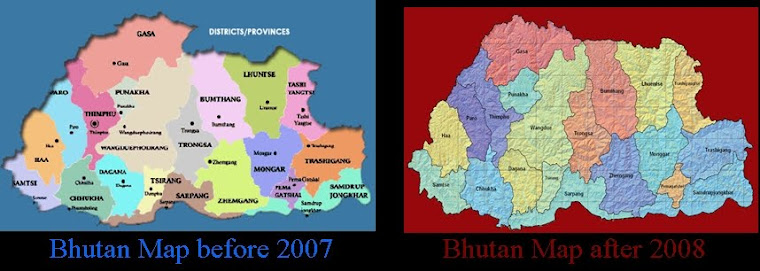
Click over the map to know the differences

Friday, July 6, 2018

The 100,000th refugee

18-24 December 2015 #787


The camps for refugees from Bhutan in eastern Nepal are emptying, but some don’t want to be resettled and want to return home

Gopal Gartaula in JHAPA

0

IN-TRANSIT: Debimaya Thapa feeding her family at Beldangi Refugee Camp this week.
In the last eight years, the camps in eastern Nepal where up to 120,000 refugees from Bhutan were once housed in bamboo sheds for nearly two decades have gradually emptied as they are resettled in western countries.
Soon, the 100,000th refugee will be leaving for the United States. She is Debimaya Thapa, 53, who has been living with her eight-member family in Sector E1 Number 53 of Beldangi Refugee Camp of Jhapa district since 1990. She will be joining two of her grown daughters who have already been resettled in Ohio. 
“I am excited to be leaving, I didn’t know I would be the 100,000th refugee,” Thapa told Nepali Times this week after a ceremony in Kathmandu. “But I am also a bit nervous about going to a new place.”
Beldangi is now only one of three of the seven camps that housed refugees since 1990. But even this camp is looking more and more deserted. Remaining refugees who refuse to leave or are waiting to go back to Bhutan still say third country resettlement is not a solution to what they consider ‘ethnic cleansing’ by the Thimphu government of its Nepali-speaking population.
Debimaya Thapa in Kathmandu recently being greeted by Prime Minister KP Oli for being the 100,000the refugee from Bhutan to be resettled in a third country.
“Those who were resettled now have a domicile, they are getting education or have jobs, but the Bhutan regime has not paid for this gross violation of human rights, resettlement has just postponed and shifted our quest for justice,” says Sanchahang Subba, secretary of the Beldangi Refugee Camp.
Twenty-five years after they had been forcibly evicted by the Bhutan regime, the Nepali-speaking Lhotsampa refugees started being resettled in third countries after Thimphu refused to take them back. More than 80 per cent have since gone to the United States and others to Australia, Canada, Denmark, The Netherlands, Norway and UK. 
The camps have now been consolidated into Beldangi 1, Beldangi 2 and Sanischare in Morang where there are a total 17,900 refugees left — of which 1,700 say they do not want to be resettled. The resettlement program administered by the UNHCR is supposed to wind down by end-2016.
Hara Jang Subba, 68, is leading the struggle on behalf of refugees who want to return to Bhutan. But of the ten members of his own family, six have already gone to America. He says the Nepal government was complicit in abandoning them and washing its hands by agreeing to resettlement. 
He says: “One day we hope Bhutan’s rulers will pay for the injustice they have done to us.”

Still here
Among the 17,900 refugees from Bhutan still in the three camps in Nepal some (most of them elderly) say they do not want to be resettled.
Bagbir Rai
Bagbir Rai, 71, has been living in a bamboo hut in Beldangi 2 for the last 25 years with 15 other relatives. Despite their refugee life, and yearning for their homes back in Bhutan, they celebrated many festivals together. Now, there are only five family members left, all the others have been resettled in the United States. Rai doesn’t want to go to America, he’d rather go back to his farm in Chirang of Bhutan from where he was evicted in 1990. He says: “My umbilical cord was buried in Bhutan, and that is where I want to live the rest of my days.”
Bir Bahadur Khadka, 65, has lived in Beldangi 2, Sector 3, Hut Number 4. His son and daughter are already in America. But Bir Bahadur and his wife don’t want to go anywhere else but back to their farm in Bhutan. He wants the Nepal government to negotiate with Bhutan so he and others like him can go back. “I am not moving anywhere, only to Bhutan,” he says.
Bishnu Lal Neupane, 62, has lived for the last 25 years in Beldangi 2 Sector B 1 and Hut Number 57. He has no intention of being resettled in Europe or America, he wants to go back to his ancestral land in Sarbhang in southern Bhutan. His wife Debi Maya has separated from him because she doesn’t agree with his decision. She and their two sons are waiting for resettlement. Says Neupane: “I have no intention of going to a strange land of unfamiliar language and culture at my age, I will go back to Bhutan even if it is to die.”
Dal Bahadur Karki
Dal Bahadur Karki (pic), 85,remembers his terrace farm in southern Bhutan like the back of his hand. When the army came to force him out in 1990, he was 61, and remembers setting his livestock free and leaving fields full of crops and store full of grain. He says with a faraway look: “I go back every night in my dreams, I can’t think of going anywhere else.”
Chandra Bahadur Chauhan
Chandra Bahadur Chauhan, 55, was 20 when he and his family were forced out of Chirang village in southern Bhutan. He has been living almost half his life in a thatch hut in Beldangi 2 Sector E 1 Hut Number 40. Even though he is not as old as the other refugees, he says he will either stay in the camp or go back to Bhutan, he doesn’t want to be moved again. He says: “I don’t want to go to a strange place where I have to learn a new language and new ways of living.”
Read Also
Gross national shame, Anurag Acharya
Those who want to stay, Gopal Gartaula

California’s Little Bhutan

http://archive.nepalitimes.com/article/Nepali-Times-Buzz/resettled-former-Bhutanese-refugee-hold-on-to-their-roots,3043


20-26 May 2016 #809


Bhutanese refugees in the United States have a new life but hold on to their roots

Ayesha Shakya in OAKLAND

0

Pic: Ayesha Shakya
NEW BEGINNINGS: Dambar Magar a former refugee from Bhutan with his wife and daughters in their apartment in Oakland, California.
For Dambar Magar and his family, a humble two-bedroom apartment in Oakland is a world away from the bamboo hut they called home in Sector H2 of the Beldangi Refugee Camp in Jhapa. Tucked away in a residential neighbourhood largely inhabited by Mexicans, the Magars share the apartment complex with other resettled refugees from Bhutan and some Nepali students.
Originally from Daga Dzong district in south Bhutan, Magar, his mother and two sisters were among the 100,000 people forcibly sent to Nepal in 1992 during the Druk regime’s eviction of Nepali-speaking Lhotsampas.
“Before coming to the United States, I was apprehensive that our new lives would be similar to the refugee way of life we had back in Nepal, but after being here for a few years, it has been all right,” says the 45-year-old who is here with his wife and five daughters. “It is difficult at our age to resettle in a new country. But after my brother’s son arrived in the United States in 2008, I knew I would have family here.”
Magar worked as a carpenter and mason, and after coming here has worked in a bakery, as a delivery guy for Papa John’s Pizza, and even as an Uber driver.
“The first few months were extremely difficult and I would often feel helpless. My biggest fear was paying the rent. We heard rumours of people not being able to afford rent and saw some people become homeless and were afraid the same would happen to us,” recalls Magar.
The International Rescue Committee and the Bhutanese refugee community played a big role in helping Magar’s family get acquainted with the new life in California. Unlike other families who received food stamps for only a few months after arriving in the US, Magar’s family still receives them because of his young children.
Video by Ayesha Shakya
Older former refugees are happy that they are no longer stateless, but they struggle to adjust to a new way of life.
“When I first came to the U.S., I was lost in school. The students and classes were different and I didn’t know English. But I am happy because there are more opportunities here for me to pursue my dreams,” says 16-year-old Sushila Magar.
The older siblings clearly miss Nepal, even life in refugee camps, running through forests, bathing in the river in Ilam and ‘amilo chatpate’.
“I miss my childhood because that is the best memory from Nepal. There was no technology and we just had fun. Even the festivals and singing bhailo was more fun in Nepal,” says Sushila.
Although his older daughters are still connected to Nepali culture, Magar’s younger daughters have little or no memory of Nepal and cannot speak Nepali. Following the footsteps of other Bhutanese refugees, Magar and his family are now planning to move out of California to Iowa, largely because of the high cost of living here.
“Apart from the cost, another reason I want to move my family to Iowa is because there are Nepali classes there. Even if my children do not know Magar bhasa, they should not forget Nepali,” he adds.

Healing in a new land
Pic:Robin Gurung
As a young teenager in Sanischare Camp in Morang, Robin Gurung harboured a lot of anger towards the Bhutan government that evicted his people.
“When you live in a camp, you feel like it’s a cage. When I used to be outside the camp, I would hide the fact that I was a refugee and it is so difficult to hide from your own identity,” says Gurung (second from right in picture with other Bhutanese social workers and American mental health expert, Patricia Ann McIlvride).
Now in the US he is working with fellow-refugees on mental health issues often neglected in resettlement. Refugees from Bhutan have one of the highest suicide rates among emigrants in the US, with 24.4 suicides for every 100,000.
“In the camps, the refugees are somebody but when they come to the US, they are nobody. Younger people adapt more easily to American culture, but older people find it harder,” says Gurung who is currently working with Community Health for Asian Americans (CHAA).
Without a community to depend on, most migrants feel alienated and are already dealing with inter-generational wounds. Gurung has been in touch with the Gross National Happiness Centre in Bhutan, but the Thimphu regime is not ready to accept that they were evicted.
Says Gurung: “Bhutan needs to open doors to reconciliation. For people to move on, old wounds need to be healed.”
Read also:
Happier days, Gopal Gartaula
The 100,000th refugee, Gopal Gartaula
Gross National Shame, Anurag Acharya

Huddled masses yearning to rejoin families


GOPAL GARTAULA in JHAPA


PICS: GOPAL GARTAULA
THE LONG WAIT: Ranmaya Chamling and her husband.
Even in the refugee camps for people from Bhutan here in eastern Nepal,this week's Tij festival was a time of singing, dancing, feasting, and fasting. But 52-year-old Ranmaya Chamling has never felt as lonely as she did during this year's festival.
She and her husband Tek Bahadur are the only ones from their 20-member family still remaining in the Sanischare Camp in Jhapa. The others left for Toronto earlier this year under an international program to resettle refugees in the United States, Canada, UK, Norway, Netherlands, New Zealand, Denmark, and Australia.
However, Canada and the UK recently announced they would not be taking any more refugees, and this has worried families like the Chamlings who fear they will be resettled elsewhere and be separated from their children.
"This Tij was unbearable", Ranamaya said, "first of all because the family is now far away, and also because we are afraid we may not be able to live close to them when we are resettled".

SOURCE: UNHCR
MOVING PEOPLE AROUND When Bhutan evicted 100,000 of its Lhotsampa population in the early 1990s, the refugees were settled in camps in eastern Nepal. After deadlocked negotiations on repatriation, eight countries agreed in 2008 to take in the Bhutan citizens. So far, more than 71,000 refugees have been resettled, and there are another 35,000 to go.
Ranmaya and Tek have filled out forms for resettlement in Canada, but the United Nations High Commissioner for Refugees (UNHCR) and the International Migration Organisation (IMO) that are administering the resettlement say, there is no guarantee that the families will be together. Teams from Canada and the UK are visiting the camps next month to assess the remaining applicants, but UNHCR says it can't be sure whether the humanitarian need to keep families united will be heeded.

Tek Bahadur, fear they will not be resettled close to their children in Canada, as do Phulmaya Magar, her husband Lal Bahadur, and sons Buddha and Subhas .
For Ranmaya this uncertainty is agonising. She says: "It is even worse than when we risked our lives to flee from Bhutan 20 years ago". Bhutan evicted 100,000 of its people, one-sixth of its total population, in 1990-92 as part of a ethno-centric campaign against its Nepali-speaking citizens. That population has now grown to 120,000 with a whole new generation of refugee children born in the camps in Jhapa and Morang.
After years of fruitless talks between Nepal and Bhutan about repatriating the refugees, in 2008 the international community decided to start third-country resettlement. So far, 71,000 refugees have left, nearly 90 per cent of them for the United States. Of the 35,000 who are still waiting for resettlement, some may not be sent to the same country their families have gone to. As the refugee numbers shrink, the seven camps have been collapsed into four.

The Chamlings and Magars have lived along this lane in the Sanischare Refugee Camp in Jhapa ever since they were evicted from Bhutan 20 years ago.
Phulmaya and Lal Bahadur Magar are also alone in their bamboo hut, after two of their sons and grandchildren left for Quebec last year. Two more sons of the couple are still left in Jhapa, but now don't know whether they can also go to Canada or not. Says Phulmaya: "We can't wait for the whole family to be reunited again, but I wonder if UNHCR will understand our plight".
The resettlement process is long and bureaucratic, and starts with the families first filling forms. Then the host country looks at the applicants and decides whether or not to take them, after which there are health checkups and orientation classes about the countries the refugees are being sent to. They are then taken in buses to Bhadrapur airport to fly to Kathmandu for their onward journeys.
Many of the refugees have for the first time in their lives found the dignity of citizenship after first being thrown out of their homeland and living in stateless limbo in refugee camps for two decades. The younger children are doing well in their new host countries, but there are reports that elderly refugees are having a difficult time adjusting. Older refugees generally tend to do better if they are close to their children and grandchildren.
Ranmaya was 32 when she and her husband were driven out of Bhutan with their small children. They still hope they will one day see their motherland, but for the time being all they want is to be reunited with their children in Canada.
Ranmaya and Tek Bahadur sit inside their low-ceilinged bamboo hut gazing silently at the monsoon raindrops falling on puddles outside. Says Tek Bahadur: "We were first torn away from our homeland, and now our families are torn apart".
See also:No refuge when refugees leave, MARCUS BENIGNO in JHAPA
As camps for Bhutan refugees close, locals lose business
Those who want to stay, GOPAL GARTAULA in JHAPA
Bhampa Rai was a royal physician before being driven out of Bhutan. Unlike most refugees, he doesn't want to be resettled in America or Europe.
Gross National Shame, ANURAG ACHARYA