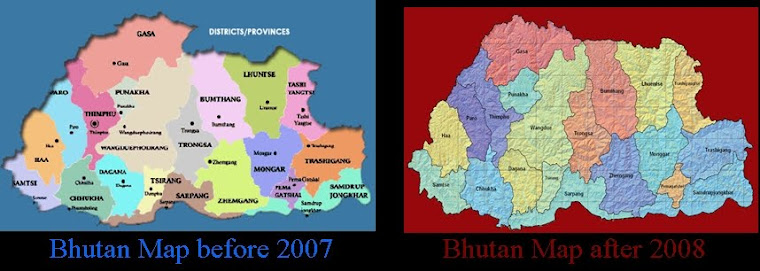
The Sorry Saga of Bhutan's North

The Sorry Saga of Bhutan's North
Click over the map to know the differences

Sunday, June 23, 2013

Basu: Bhutanese making Iowa home


The Asian kingdom of Bhutan, in the eastern Himalayas, puts a premium on happiness, measuring progress not in gross domestic product but according to a happiness index. That has earned the constitutional monarchy the reputation of the world’s happiest country.
Perhaps that’s why people forced out of Bhutan are among the saddest.
Bhutanese refugees have a suicide rate of 20 per 100,000 people, compared to a worldwide rate of 16 and a U.S. rate of 12. Depression among that population in the United States is 21 percent, nearly three times the overall rate.
Thankfully Iowa’s Bhutanese refugees, who began arriving in 2008 from refugee camps and now number around 800, have not witnessed such tragedies. Help from Iowans, good schools and the potential for upward mobility have helped pave their way.
Still, they face many challenges.
These refugees are ethnically Nepali (also called Nepalese) unlike Bhutan’s Tibetan majority. They speak the language of Nepal, their ancestral home, and practice its religion, Hinduism, rather than Buddhism. The Nepalis arrived in Bhutan in the 1860s as builders and settled in its south, once making up 44 percent of Bhutan’s 700,000 people. But beginning in the 1980s, they became targets of a national campaign for ethnic uniformity, according to Chidananda Dahal, one of Des Moines’ Bhutanese refugees. A new census classification declared them non-citizens unless they had land receipts dating back to 1958. The government also demanded everyone wear Tibetan-style dress.
The Nepalis protested, and the government responded by sending troops out, says Dahal. He says many people were jailed without trials and tortured. To win their release, sometimes after years, he says people were given documents to sign that they couldn’t understand, relinquishing their property rights.
Dahal’s father, a Hindu priest, was targeted after refusing to change his style of dress, according to his son. After getting a tip that he would be arrested, members of the family fled their country with nothing in 1991 and went to Nepal. “Chida” was in his early 20s and in college.

And then Iowa

The refugees streaming out of Bhutan set up camp near a river in eastern Nepal, with no food or drinking water. “One day 26 children died,” says Dahal. Eventually with help from international aid organizations, formal camps were organized.
“It was manageable but not like a home,” Dahal says of the crowded, thatch-roofed huts. Illnesses spread quickly among the up to 13,000 residents.
He lived there 19 years.
After talks brokered by international agencies ended with no resolution, other countries including the United States agreed to take in these refugees. Between 2007 and this spring, 100,000 were resettled around the world. The United States accepted 66,000.
Dahal, his wife, young son, parents and four of his five siblings moved to Des Moines in 2009.
The family has done well. Chida, who finished college in India and taught in a private school in Nepal, found work at a packing plant after eight months. But today he’s a bilingual community outreach worker for the Des Moines school district, based at Lincoln High School. He works with the district’s 110 Nepali-speaking students.
His wife, Bhima, whom he met in the camp, had no formal work experience. But after learning to drive, she was hired as a sales associate at a department store, where she has won sales awards the past two years.
Their son, Pradyumna, then 6, came home crying after his first day at school because he understood nothing. But within six months he had learned English, and he just completed fourth grade in the gifted and talented program. They live in a southeast-side apartment complex full of Bhutanese.
Bhima appreciates the ease of American life with its refrigerators, washers and dryers and working electricity. In the camps, where she lived since age 13, they relied on charcoal and kerosene. She dreamed of coming to America “because it’s a good life and there are a lot of opportunities.”

Adjustment difficult

Still, the displacement, past traumas and practical obstacles make adjustment hard for some Bhutanese refugees, including Dahal’s 72-year-old parents and others of their generation. They don’t speak English or drive, and they feel isolated. Some who were field workers never learned to read or write, even in their own language, so learning English is especially hard.
Some never even rode in a car before. There are cultural barriers. Strict Hindus still observe a caste system and won’t eat food prepared by others, Dahal says. According to national reports, some refugees arrive with undiagnosed mental health problems.
Though his father, Udaya Chandra Dahal, praises Americans as “good” and “truthful,” the stature he once commanded as a priest is gone. Chida’s mother, Chandra Kala Dahal, still misses Bhutan and laments the loss of their home and possessions, their friends and their cattle. With her son interpreting, she called it sad that “We have to stay alone and if people come, we can’t speak.”
Although living two decades in a refugee camp is hardly enviable, moving brings tradeoffs. Older people had more independence there than they do here, where they must rely on their children for transportation, interpreting and money. That changes relationships.
But while Bhutnese refugees in other U.S. states, have feared going out at night because of hostility and violence toward them, Dahal says Iowans are “very welcoming and ready to help.” In fact, Bhutanese refugees from other states have moved to Iowa for its low crime rate, affordability and jobs, boosting the population from the 513 originally resettled by the state.
Pabitra Bhattarai, a neighbor of Chida’s parents’ generation, appreciates that. Yet she weeps and talks of God in every breath. She longs to go to temple, but though the refugees have the freedom to practice their religion here, they have no Hindu temple they can go to. One in Madrid is too far away.
“The only thing that binds all the Bhutanese people that makes their life worth living is religion,” said Chida’s nephew, 20-year-old Paricxit Dahal, “but there are no opportunities to celebrate it here.”
Bhattarai and her two children came to Des Moines four years ago from the camps. They left Bhutan after her husband was released from prison there and died soon after, at age 45. She says he was tortured over two years and that she, too, was beaten on the head by government forces. Though all their land and property was confiscated, Bhattarai still wants to go home to Bhutan to die, because her husband died there.

Unexpected kindness

Chida is on the board of a nonprofit organization being formed called Bhutanese Community in Iowa, which will offer citizenship and language classes. Meanwhile, various others are working to make the refugees at home here.
The Bureau of Refugee Services provides initial financial support for three months. A partnership between Lutheran Services of Iowa and Catholic Charities helps furnish living quarters. Lutheran Services also offers classes like computer and photography, which Bhattarai has taken, and has an elder program for refugees 60 and older. It provides English lessons, recreational outings and other social activities. Through a project it runs on land owned by Valley Evangelical Free Church in West Des Moines, refugees from Bhutan and elsewhere learn to farm for sale.
Kindness toward the new neighbors shows up in unexpected ways. Mark Odegaard, for example, a stroke survivor and laid-off construction worker who works an overnight shift at Home Depot, has voluntarily taught more than 80 Bhutanese refugees to drive. It began, he says, when a family moved in next door and asked for help. Then word about him got around. He taught both Chida and Bhima and loaned them his car. He also gives rides to community members. “He is like a god to me,” says Bhima.
The Bhutanese hope they will soon get their own temple to fill the void many feel. Meanwhile, like Bhima, more of these new Iowans may find God comes in many forms.

Experiments With Democracy in Bhutan


A statue of Lord Buddha at Kuensel Phodrang in Thimphu, Bhutan on May 20, 2012.Singye Wangchuk/ReutersA statue of Lord Buddha at Kuensel Phodrang in Thimphu, Bhutan on May 20, 2012.
Bhutan does things differently in South Asia, and nothing illustrates this so as much as the way it has conducted its transition to democracy.
In December 2007, I was driving from Thimpu, the capital of Bhutan, to Paro, a small city 50 kilometers (30 miles) south of the capital. Along the way, just before a bridge spanning the river, I noticed a small bulletin board and saw my first election posters in Bhutan. The board was around two meter square, and a few neat A4-size election posters and notices by Bhutan’s Election Commission were pasted on it.
Coming from India, Bhutan’s closest ally and neighbor, this was bizarre. We are used to colorful campaigns, election posters casually pasted everywhere, defying any size regulations, and often accompanied by graffiti smeared over walls and buntings all over the place. Bangladesh, Sri Lanka, Pakistan and Nepal campaign in the same way, but in Bhutan, democracy has come in a measured, prescribed manner, with strict rules, one of them being not to litter the countryside with posters or graffiti.
Bhutanese villagers waiting to vote outside a polling station in Paro on May 31.Roberto Schmidt/Agence France-Presse — Getty ImagesBhutanese villagers waiting to vote outside a polling station in Paro on May 31.
The designed nature of Bhutan’s democracy is the direct outcome of the decision by Bhutan’s fourth king, King Jigme Singye Wangchuck’s decision to voluntarily hand over power to his people, and this is what makes it so very special. The test of how well established this new democracy has become is the second general election currently taking place in Bhutan, its first round completed on 31 May 2013, and the final round on 13 July 2013.
In April 2007, to help the Bhutanese understand the concept of voting for political parties, a mock election took place. Four “parties” were supposed to contest the elections, the Druk Blue Party, the Druk Green Party, the Druk Red Party and the Druk Yellow Party. Each color represented a certain value: blue for fairness and transparency, green for environmental concerns, red for development and industrialization, and yellow for traditional values. The Druk Yellow Party won 46 out of the 47 seats in the mock elections. It might have been a mere coincidence that yellow is the closest color to the saffron scarf worn by the kings and the Je Khenpo, the chief abbot of Bhutan.
In Bhutan’s first general election, held in 2008, the Druk Phuensum Tshogpa, loosely translated as the Bhutan Peace and Prosperity Party, achieved a similar dominance, winning 45 out of 47 seats. The rival People’s Democratic Party had one-third of the votes, but the winner-take-all system rewarded them with only two seats.
Tshering Tobgay, who went on to become the opposition leader in Parliament, was one of the first people to enter into politics, retiring from the prestigious post of Director at Ministry of Labor and Human Resources to serve his king and country by following the king’s wishes to set up a democratic fray by joining Bhutan’s first political party, the PDP, when it was formed in August 2007.
“Serving the nation has been a very important part of our culture,” he told me. “In Bhutan we call it serving Tsa Wa Sum,” which is often translated as “king, country, people.”
In the case of Mr. Tobgay, he defined his obligation as a family tradition. His father had been one of the raw recruits that the third king of Bhutan had recruited in the 1950s to build Bhutan’s first official standing army, and his mother had been one of the workers on the first modern road linking Bhutan to India. They met when the young soldier walked down the road to get supplies. Their meeting and marriage came about because of their service to their nation and their king.
Stories like this give us a sense of the popularity of the monarchy in Bhutan, and illustrate how truly different its transition to democracy has been.
We are used to democratic rights being snatched from the hands of desiccated dictators or vile monarchs, but there are remarkably few instances of an autocrat voluntarily devolving power. The fourth king of Bhutan, Jigme Singye Wangchuck, was enormously popular, and at the time of hisabdication in 2006, he was only 51 years old, making him younger than most politicians in their prime. There was no challenge to his rule, and that is precisely when he put in place the process that would eventually replace him, and a monarchical system, with a constitutional democracy.
Bhutan’s experiments with democracy have been a qualified success. The standards of living have risen during the rule of the Druk Phuensum Tshogpa, headed by Jigmi Yoezer Thinley, the first elected prime minister. Road connectivity, Internet connectivity and basic health indicators have gone up. Yet political machinations, allegations of corruption and wrongdoing by political leaders have also accompanied the advent of democracy. The home minister and the speaker of the Parliament were convicted on 8 March 2013, the day after the first Parliament finished its term, on the charges of corruption. The High Court has upheld the verdict, and they are currently appealing their conviction in the Supreme Court.
A Bhutanese voter getting his finger inked before casting his vote at a polling station in Paro on May 31.Roberto Schmidt/Agence France-Presse — Getty ImagesA Bhutanese voter getting his finger inked before casting his vote at a polling station in Paro on May 31.
The real test of democracy is always the second election, and Bhutan is currently in the middle of this grand process. In Bhutan, there are two rounds of elections, and the first ended May 31, with four political parties contesting. The two parties with the biggest vote share – the Druk Phuensum Tshogpa, which received about 40 percent of the vote, and the People’s Democratic Party, which received just over 30 percent – will face off on July 13.
There would have been five parties contesting, but according to Bhutan’s Election Act, every political party has to be a national party, fielding a candidate from all 47 constituencies, and every candidate has to have a university degree. The Bhutan Kuen-Nyam Party was disqualified by the Election Commission after the party had failed to find candidates with a university degree in the district of Gasa, which has a population of just over 3,000 people.
In a generous move that exemplifies the spirit of serving Tsa Wa Sum that has marked Bhutan’s transition to democracy, the four parties each sent a communiqué to the Election Commission asking it to reconsider the disqualification. Sonam Tobgay, the leader of the Bhutan Kuen-Nyam Party, said, “Four parties appealing for the fifth party, who couldn’t qualify, is something unprecedented universally and internationally, something special and noble.” Nevertheless the Election Commission refused to reconsider its decision.
For a small country the size of Bhutan, with a population of 700,000, internal cohesion is a prime security concern, and if a border region, no matter how small or remote, is neglected in any way, it is a threat to the country. In fact, the Bhutanese value unity so much that they had to invent a word for “opposition leader” because all the words implying dissent had a negative connotation.
Transitions to democracy are often violent and exact a terrible price from a populace. Bhutan’s rare example of managing this transition peacefully, and in a stable manner, makes it incredibly special and adds a profound meaning to its nascent democratic exercises.
Omair Ahmad is an author, most recently of “The Kingdom at the Center of the World: Journeys into Bhutan.” His novel “Jimmy the Terrorist” was shortlisted for the 2009 Man Asian Literary Prize and won the 2010 Vodafone Crossword Book Award.

Is there room for urbanisation in Bhutan?


Bhutan will have to "negotiate and compromise" other priorities to find adequate land for urban development, says Hee Nam-jung, a South Korean research fellow from the Korean Institute for Human Settlement (KRIHS).

"Bhutan will have to find a middle way," Nam-jung told urban planners and works and human settlement officials at a three-day South Asian regional workshop on "Promoting access to affordable land and housing" in Thimphu, which ended on June 5.

South Korea has 130 land laws that govern various elements like culture, agriculture and forests, among others. "So whenever we have an issue, we have meetings between various ministries, agencies and interest groups to negotiate, which takes a long time but minimises conflict within society," Nam-jung said.

South Korea, because it has very limited land, has given planned development the highest priority for urban development.

"In a democracy, people will have to have some role in the development of areas," he said.

Bhutan, the urban planning expert said, needed to change its plans for urban development from time to time as per the needs of the population.

Megraj Adhikari, an urban planner with the Ministry of Works and Human Settlement, said the Bhutanese were a bit too conservative, because the priority of the government was developing rural areas, where the majority of the Bhutanese people live.

While more and more people are pouring into the towns every year, he said the development of the urban centres has not received as much attention as the development of rural areas in the country.

"The reality is that people are now moving into urban areas. So we have a challenge there," he said. "The focus in Bhutan is on rural development rather than on urban development."

The constitution of Bhutan maintains that 60 per cent of the country should be covered by forest for all time to come.

"On one hand we have agricultural land to be protected, and on the other hand we have to maintain 60 per cent forest coverage," Megraj said. "So where do we go from here?"

Another Works and Human Settlement official said there were many problems in protecting the cultural and heritage precincts. The establishment in 1974 of a central town planning committee to guide urban development kicked off the process of town planning in the country. 

However, Works and Human Settlement officials said it was unsuccessful then because no donors were interested in supporting infrastructure development in the country.

The ministry's "Bhutan Urbanisation Strategy", drawn up to ensure balanced and equitable regional development, projects that by 2020 more than half of the country's population will live in urban areas.

Source

Murdered Bhutanese refugee came to St. Louis 'full of hopes and dreams'


June 11, 2013 6:30 am  •  


Mon Rai told friends, customers — anyone who would listen — that he was going to be the father of a baby girl. He told his manager at the 7-Eleven where he worked in south St. Louis that his overnight Monday shift would be his last for a while so he could spend time with his wife, who is expected to give birth any day.
About 12:30 a.m. Monday, a gunman walked into the store at Gravois Avenue and Bates Street and fatally shot Rai, a Bhutanese refugee who moved to St. Louis nine months ago.
Customers found him in an aisle, shot in the back. Police said nothing was apparently taken from the store, including money from the register, but employees are taking inventory.
For years, Rai had dreamed of coming to the U.S. He lived 19 of his 29 years in a refugee camp in Nepal, where there was a perpetual shortage of food, no toilets and poor medical care. He, like thousands of people from Bhutan, were forced to flee the country over cultural and religious differences and live in refugee camps throughout Nepal.
Rai came to St. Louis with his wife, Susila, 25, and their son, Sujal, 7, on Sept. 5, 2012. Six months earlier, his parents, brother and sister arrived here.
“I hoped it would be a better life than in the refugee camp in Nepal,” Rai wrote in an essay for a Thanksgiving program at the International Institute last year, two months after his arrival.
“When I came to St. Louis ... my heart was full of hopes and dreams.”
The International Institute is the region’s primary agency for resettling refugees. It’s where Rai was taking English classes and helping serve as interpreter for other Nepalese refugees.
“All of us at the Institute are devastated,” said Anna Crosslin, president and CEO of the International Institute. “He was somebody who worked hard to get others resettled as well.”
The personable Rai was excited about the birth of his daughter, Crosslin said.
“A first child born in America is a big occasion for refugees,” she said. “It symbolizes the start of a new life. In this case it’s tragic because this life starts with the passing of another.”
Rai lived with his family in a duplex in the 3800 block of Dunnica Avenue, where neighbors and friends stopped by throughout the day Monday to offer condolences.
“They’ve been crying all day long. They can’t believe it. They still hope he is coming back,” said Ranga Nepal, a caseworker for Rai and his family at the International Institute. A family spokesman said the family needed time to grieve for a few days before making a comment.
In his essay, Rai wrote about the struggles of settling in St. Louis, including language and culture. But the biggest challenge, he said, was finding a job. That’s why he was delighted to start his 7-Eleven clerk job three days after Christmas, Nepal said.
The convenience store was abuzz with activity Monday afternoon. Just outside the front door, a regular customer set up a memorial, using a milk crate as the base, draping it with an American flag and placing a pitcher with multicolored flowers on top. The man, who is Bosnian, also included a blue and yellow flag from his home country.
Late in the afternoon, Joseph Duke stopped by to drop off a bouquet of yellow and white roses at the memorial.
Duke lives nearby and is a frequent early morning customer, getting coffee on his way to work.
  
   
“He was very cheerful,” Duke said of Rai. “He talked about the kid. Said it was going to be a girl.”
Duke said he could not understand the violence, especially two convenience store shootings in St. Louis less than two weeks apart. In both cases, a refugee was fatally shot.
“Our neighborhood’s better than this,” Duke said.
Duke also knew Haris Gogic, 19, the Bosnian man killed in a robbery at his family’s Quick Stop convenience store at Chippewa Street and Alfred Avenue on May 31.
“My daughter went to Bayless High School with him,” said Duke, 45.
The two stores are about a mile apart on foot. Police said there was no reason to suspect the shootings were related.
“We have no other witnesses, and we believe only one suspect was involved” in the shooting of Rai, said Police Capt. Michael Sack. “We’re working on pulling surveillance video ... It’s just wide open right now.”
Police on Wednesday charged Joseph Fox, 23, of north St. Louis County, with murder in the death of Gogic. He is being held without bail.
St. Louis is home to more than 1,000 Bhutanese, who began resettling here as refugees in 2008.
“I am so glad to be here in the United States,” Rai wrote in his essay. “I will be a good citizen and help those who are in need of help.”
A fund has been set up at Southern Commercial Bank to help Rai’s family with expenses for his funeral — and to take care of his new daughter. Police are asking anyone with information to call CrimeStoppers at 1-877-725-8477.
Joel Currier and Christine Byers of the Post-Dispatch contributed to this report.

Bhutanese brave mountains and monsoon for election

THIMPHU, Bhutan (AFP) - Voters in Bhutan braved heavy rain and treacherous mountain paths to cast their ballots on Friday as the "land of the thunder dragon" began electing a government for only the second time.
Wearing traditional dress and sheltering under umbrellas, Bhutanese queued patiently at polling stations in the isolated Himalayan nation in the first round of voting to determine the lower house of parliament.
The centre-right Druk Phuensum Tshogpa (DPT) party, which has governed Bhutan for its first five years of democracy, beat the three other parties contesting with a 45 per cent share of the vote, officials said late Friday.
It will now go through to a final round on July 13 against the second-place People's Democratic Party, and the winners of that vote will form the next government.


Whose baby


In recent days several media reports have brought up an issue that is not quite on the campaign agenda – abandoned newborns.In one case, some villagers heard the cries just in time to save him.  Two days ago, children playing near a housing colony in Thimphu mistook the head of a newborn to be that of a doll.  It is assumed that strays might have eaten the body.This is not the first time babies have been abandoned and it is definitely not the last.  On the contrary, word about babies being abandoned is heard so often that it is no longer considered news. There is also feedback from readers, who do not want to read about a baby being found in the bin, or by the riverside, or in the drain.Yet the fact is that this is a serious and complex issue with moral and ethical implications  with no easy ready-made solutions.While babies born out of wedlock have been an issue even in traditional Bhutanese society, the social fabric was such that the baby was eventually taken care of, not discarded. Today, contemporary Bhutanese society just does not know how to handle such situations.There are laws in place nowadays to penalise those that resort to such actions, but laws themselves do not solve the problem, apart from sending a message to deter such behaviour.Some even question whether it makes any sense to penalise the mother, for example, who in most cases is a teenager, either in or out of school.It is obvious that social stigma, maybe even poverty, is driving such actions.  But even for the teenage mother, she must be wishing death to commit such an inhuman act. Yet the embarrassment to herself and her family summons the courage.  This is in contradiction to the fairly liberal society that Bhutan likes to see itself as.So what can be done to prevent young teenage mothers going through such a painful experience?Legalising abortions is out of the question, because many believe that goes against the very values and principles Bhutanese society considers itself to be built upon.  This has led some to try the dangerous clinics across the border at a late stage, which has resulted in complications and death in some cases.Perhaps the best way to go about dealing with the situation is greater awareness through sex education in schools and institutions, particularly for the age group on the verge of becoming sexually active.  Some kind of introduction on the subject is happening in schools that is perhaps not enough.There could be other interventions, such as a place where teenagers caught in a situation can seek refuge.  Changing the rules so that a baby without a father can get a census might also help


Source.

His Majesty reviews security situation along southern borders

Jul 21 2012

His Majesty the King was in Gelephu to review the security situation along the southern borders.  His Majesty arrived in Gelephu on the July 14 . On July 15, His Majesty made detailed tours of all areas important to the security of the people. His Majesty visited army camps and the headquarters of Wing IX besides security installations and observation posts in Jigmeling, Bhur, Dekiling and Gawathang areas.
His Majesty also visited the site where an RBA soldier was killed in an ambush, and areas where similar incidents have taken place in the past.
Royal commands were issued on ways to strengthen security and protect the civilians and soldiers on patrol.
His Majesty returned in the late afternoon to Gelephu and granted audience to the Dzongkhag administration staff and the local government officials.
On July 16, His Majesty visited Gelephu Hospital and interacted with medical staff and patients.His Majesty also visited Gelephu town and walked into every shop and commercial outlets. His Majesty interacted with shopkeepers and public.
On July 17, His Majesty granted audience to the troops and officers, visited the family line and met with the spouses separately. On July 18, His Majesty visited Gelephu Higher Secondary School while Her Majesty the Gyaltsuen visited a private day care centre.
His Majesty then traveled to Tsirang and granted audience to dzongkhag administration and gewog officials. His Majesty and the Gyaltsuen also made a walking tour of Damphu town.

In both the dzongkhags census kidu was granted to over 150 families. This has been a regular focus of His Majesty’s Kidu since 2006. In the last five years over 900 census kidus have been granted.


His Majesty the King returned to Thimphu on July 19 after reviewing the progress of retrieval of artifacts in Wangduephogdrang Dzong.

Royal Couple undergoes Hindu marriage


Oct 17 2011
His Majesty the King and Her Majesty the Queen yesterday visited the Durga Mandhir, located near the Thai Pavilion in Thimphu. The royal couple offered prayers and exchanged garlands as a part of a Hindu marriage.
His Majesty the King and Her Majesty the Queen were greeted by the members of the Hindu Samudaya of Bhutan, its chairman Dasho Meg Raj Gurung and the members. The royal couple then entered the temple in a procession with Naumati Baja which is performed during Hindu marriage. A long queue of excited people greeted the royal couple outside the temple.
Once inside the temple, His Majesty and Her Majesty the Queen lit butter lamps and offered prayers. The royal couple then exchanged flower garlands known as Soyambar mala as part of the Hindu marriage ceremony.
The Hindu Samudaya of Bhutan offered a Ramayana book and the statue of Vishnu and Laxmi to His Majesty the King and Her Majesty the Queen. Hindus believe kings and queens to be the incarnations of Vishnu and Laxmi.
In return, His Majesty donated money for the construction of the new Hindu temple below Kuenselphodrang and for the development of the Hindu Samudaya of Bhutan.
His Majesty the King and Her Majesty the Queen then met with the people who had gathered at the temple to meet them.
The Chairman of the Hindu Samudaya in Bhutan said the royal visit to the temple was of great significance for the Hindu Samudaya of Bhutan and the temple.
“We are deeply touched by His Majesty’s visit to the temple on the happy occasion of royal wedding”
The pundits and hundreds of people who gathered at the temple also offered Tashi Khadhar to the royal couple.

Sunday, June 16, 2013

Killed in 1990s


DEATH RECORD
nameageaddress im bhutancausedate
 Man Bdr. Chhetri
Di] Bdr. Ghafley
Amar Bdr. Bista
Bhim Bdr. Ghalley
Dhan Raj Gurung
Man Bdr. Dariee
Man! Biswa
Nar Bdr. Subba
Kharka Bdr. Rai
Deo N. Adh&ari
Tek Nath Adhikari
Guman Singh Khadga
Pem Doqi Tamang
Hom Nath Gautam
Thukpawaini
Lai Bdr. Rai
Nad Maya Rai
Ran Singh Subba
Bir Dhoj Subba
Yad Bdr. Karki
Dhan BdL Khapangi
Ratna Bdr. Sunar
Dhan Kumari Kharel
Saiii Mongami
Phul Maya Sunar
Januka Luitel
Nar Bdr. Taksari
Ganga Baniya
Tshering Tamang
Dharma Rai Gurung
Nar.B. Basnet
Punya Prasad Dhakal
Satya N. Oraon
Karpola Dukpa
Bhakta Bdr. Pokhrel
Bal Bir Subba
Khara Nanda Sharma
Tika Ram Subba
Tika Ram Dhimal
Ran Bdr. Rai
Tul Bdr. Gurung
Dal Bdr. Rai
Sukh Man Subba
H.B. Sapkota
Tanka Nath Pathak
Churamani Khatiwada
Gambir Rai
Sukbir Tamang
Biba Kumari Rai
Man Maya Ghalley
18
19
27
23
31
22
23
16
19
39
22
47
36
52
50
49
30
20
28
21
28
32
20
25
20
16
60
58
26
56
28
27
40
29
57
37
58
17
56
-
-
-
-
45
22
43
26
40
19
36
Samchi
Chengrnmi
Chengmarl
Nainital Samchi
Kalikhola Sarbhang
Bhangtar S/iongkar
Bhangtar S/Jongkar
Chengmari Samchi
Samchi
Lamidara C@
Lamidara Chirang
Lamidara Chirang
Lamidara
Emiray Dagana
Kalikhola Sarbhang
Emiray Dagana
Patalay Chirang
Pattalay Chirang
Pattalay ChimV
Gayleyphug
Naya Busty
Dhanabari Sa@
Chirangdara Chirang
Tshokana Chirang
Tshokana Chirang
Norbuling Sarbhang
Gaylegphug
Surey Sarbhang
Bokray Chirang
Dagapela Dagana
Samchi
Dagapela Dagana
Chengmari Samchi
Mar-sala S/Jongkar
Dalim S/Jongkar
Gulanti S/Jongkar
Lalai Sarbhang
Bakuli S/Jongkar
Lalai Sarbhang
Yaba Samchi
Yaba Samchi
Yaba Samchi
Yaba Samchi
Gaylegphug
Harpeni Chirang
Lamidara Chirang
Lharani Samchi
Chanauty Chirang
Biru Samchi
Betini Chirang
Torture
Bullet
Bullet
Bullet
Bullet
Bullet
Bullet
Bullet
Bullet
Bullet
Bullet
Bullet
Bullet
Torture
Rape
Torture
Rape
Torture
Torture
Bullet
Torture
Torture
Rape
Rape
Rape
Rape
Torture
Torture
Tortu
Torture
Bullet
Torture
Torture
Torture
Torture
Torture
Torture
Torture
Torture
Torture
Torture
Torture
Torture
Torture
Bullet
Torture
Torture
Bullet
Rape
Rape
 
3 Nov 1989
20 Sept 1990
21 Sept 1990
21 Sept 1990
21 Sept 1990
24 Oct 1990
24 Oct 1990
25 Oct 1990
27 Oct 1990
28 Oct 1990
28 Oct 1990
28 Oct 1990
28 Oct 1990
8 Dec 1990
17 Dec 1990
22 Dec 1990
19 Jan 1991
24 Jan 1991
15 Feb 1991
12 Mar 1991
23 Mar 1991
23 Mar 1991
6 Apr 1991
6 Apr 1991
6 Apr 1991
6 Apr 1991
25 Apr 1991
4 May 1991
16 Jun 1991
17 Jun 1991
28 Jun 1991
3 Aug 1991
12 Aug 1991
18 Aug 1991
18 Aug 1991
23 Aug 1991
1 Oct 1991
30 Oct 1991
15 Nov 1991
18 Dec 1991
19 Dec 1991
19 Dec 1991
27 Dec 1991
2 Jan 1992
17 Jan 1992
8 Feb 1992
12 Feb 1992
17 Feb 1992 Feb 1992
-